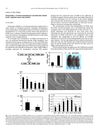
 7 citations
,
December 2008 in “Journal of Dermatological Science”
7 citations
,
December 2008 in “Journal of Dermatological Science” Progranulin overexpression leads to shorter, thinner hair and increased cell death in mouse hair follicles.
 December 2024 in “Genome Biology and Evolution”
 Snakes and worm lizards lost claw proteins due to similar evolutionary changes.
24 citations
,
January 2018 in “Development” Frizzled 3 and Frizzled 6 together control the orientation of mouse hair follicles.
 2 citations
,
November 2017 in “PloS one”
2 citations
,
November 2017 in “PloS one” Some vitamin D analogs can thicken skin and reduce pore size like a common acne treatment, with one analog also affecting skin growth factors.
February 2026 in “Figshare” February 2026 in “Figshare”  April 2022 in “Journal of applied science and environmental management”
 Alligator pepper seed extract improved wound healing in rats.
 131 citations
,
March 2004 in “The American journal of pathology”
131 citations
,
March 2004 in “The American journal of pathology” Modulating BMP activity changes the number, size, shape, and type of ectodermal organs.
28 citations
,
August 2005 in “Journal of Investigative Dermatology” TG5 helps maintain hair follicle health, while TG3 aids in hair shaft development.
 75 citations
,
October 2010 in “Mammalian genome”
75 citations
,
October 2010 in “Mammalian genome” Sphynx cats are hairless and Devon Rex cats have curly hair due to specific genetic mutations.
 6 citations
,
May 1997 in “Journal of Dermatological Science”
6 citations
,
May 1997 in “Journal of Dermatological Science” Researchers found a gene in hamsters that responds to male hormones and may be indirectly controlled by them.
 73 citations
,
April 2013 in “Stem cells”
73 citations
,
April 2013 in “Stem cells” LGR5 helps maintain corneal cell characteristics and prevents unwanted changes by controlling specific cell signaling pathways.
9 citations
,
October 2017 in “Frontiers in plant science” The peach gene CTG134 helps control the interaction between auxin and ethylene, which could lead to new agricultural chemicals.
33 citations
,
January 2015 in “Journal of Ginseng Research” Ginsenoside Rg3 from Panax ginseng can lighten skin by reducing melanin production.
 28 citations
,
November 2013 in “The journal of investigative dermatology/Journal of investigative dermatology”
28 citations
,
November 2013 in “The journal of investigative dermatology/Journal of investigative dermatology” GMG-43AC may help reduce unwanted hair growth and treat certain hair loss conditions.
49 citations
,
September 2016 in “Genes Brain & Behavior” Zfp462 deficiency in mice causes anxiety-like behaviors and excessive self-grooming.
25 citations
,
October 2002 in “The journal of investigative dermatology/Journal of investigative dermatology” Mouse profilaggrin helps in skin cell differentiation and may be involved in calcium signaling.
 May 2026 in “Research Square”
 The polyG fragment in Hoxc13 protein helps evolve mammalian skin and hair by enhancing gene interactions.
 February 2026 in “Frontiers in Medicine”
 Personalized sonidegib dosing can effectively treat Gorlin-Goltz syndrome with fewer side effects.
101 citations
,
November 2019 in “The Plant Cell” AtZP1 protein stops root hair growth in plants by blocking certain genes.
638 citations
,
October 1997 in “Nature”  14 citations
,
January 2017 in “Pharmacological Reports”
14 citations
,
January 2017 in “Pharmacological Reports” TP0427736 may help treat hair loss by blocking a specific protein and promoting hair growth.
 25 citations
,
June 2022 in “Developmental cell”
25 citations
,
June 2022 in “Developmental cell” Overactivating Hedgehog signaling makes hair follicle cells in mice grow hair faster and create more follicles.
34 citations
,
March 2007 in “Biochemical and Biophysical Research Communications” Thioredoxin reductase 1 does not affect glucocorticoid receptor activity in hair follicle cells.
September 1973 in “Primates” Par3–mInsc and Gαi3 work together to ensure proper cell division orientation in skin development.
 4 citations
,
August 2023 in “Nature Communications”
4 citations
,
August 2023 in “Nature Communications” Mouse zigzag hair bends form due to a 3-day cycle of changes in hair progenitors and their environment.
 3 citations
,
January 2021 in “Applied sciences”
3 citations
,
January 2021 in “Applied sciences” Fermented red ginseng and a traditional herb mix improved hair growth in mice.
 11 citations
,
January 2012 in “Journal of cell science”
11 citations
,
January 2012 in “Journal of cell science” Rac1 is essential for proper hair structure and color.
44 citations
,
August 2010 in “The veterinary clinics of North America. Exotic animal practice” Insulinomas and adrenocortical tumors are common in older ferrets, diagnosed with blood tests and ultrasounds, and treated with medications or surgery.