 May 2022 in “Journal of pharmacognosy and phytochemistry”
 The evaluation of Creeping Daisy leaves found important characteristics and compounds that support its use in medicine.
 March 2022 in “Marmara University Open Access System”
 Digital games are part of new media but need a deeper look at their complex nature and cultural roots.
 January 2022 in “Skin appendage disorders”
 A woman with alopecia totalis regrew dark hair in bands after using a corticosteroid ointment.
False daisy is a medicinal herb with many health benefits, including hair growth promotion.
 September 2021 in “International Ayurvedic Medical Journal”
 Bhringraj capsule and oil with Nasya effectively reduce hair fall and related symptoms.
 June 2021 in “bioRxiv (Cold Spring Harbor Laboratory)”
 The gene Tfap2b is essential for creating a type of stem cell in zebrafish that can become different pigment cells.
 June 2021 in “Journal of emerging technologies and innovative research”
 Onion and Aloe vera can help protect hair from damage caused by hair dyes.
 June 2021 in “Journal of Emerging Technologies and Innovative Research”
 Rice water and hibiscus can help improve hair health and growth.
 May 2021 in “GSC Advanced Research and Reviews”
 Hair color is influenced by genetics and can indicate certain health conditions.
 April 2021 in “The journal of investigative dermatology/Journal of investigative dermatology”
 The anti-hair loss shampoo effectively promotes hair growth and improves hair quality.
 February 2021 in “PDEAS International Journal of Research in Ayurved and Allied Sciences”
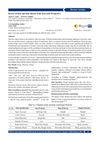
 Ayurveda views hair health as a reflection of overall well-being and uses herbal treatments for hair care.
 June 2020 in “Journal of Investigative Dermatology”
 Scientists successfully grew mini hair follicles using human skin cells, which could help treat baldness.
 January 2020 in “Asian journal of applied science and technology”
 Good nutrition is crucial for health and preventing disease, and supplements can help prevent nutrient deficiencies.
 September 2019 in “International journal of research in ayurveda and pharmacy”
 Ayurvedic treatment with Bhringraj Vati and coconut oil was safe and effective for reducing hair fall.
 October 2018 in “Ayurlog: national journal of research in ayurveda science”
 The review suggests that lifestyle, diet, and environment affect hair loss, and Ayurveda offers ways to maintain hair health.
 April 2018 in “Journal of Investigative Dermatology”
 BMP signaling is important for skin color, affecting melanin production, pigment spread, and cell movement.
 April 2018 in “Journal of Investigative Dermatology”
 The research found that a specific skin cell type not only triggers hair growth but also controls hair color, and that aging can lead to hair loss and color changes.
 April 2018 in “Journal of Investigative Dermatology”
 Researchers found that the Leptin receptor is a consistent marker for hair follicle dermal cells, which may help future hair research.
 April 2018 in “Journal of Investigative Dermatology”
 Fgf20 is important for the development and regulation of the cells that form the base of hair follicles.
 April 2018 in “Journal of Investigative Dermatology”
 Blocking a specific immune cell signal can trigger hair growth.
 October 2017 in “Indian heart journal”
 Obesity is an independent risk factor for early coronary artery disease (CAD) and its severity is not affected by age.
 July 2017 in “British Journal of Dermatology”
 The document concludes that scalp conditions have various causes and can present in many different ways.
 January 2017 in “Dermatology Review”
 Skin issues from chronic graft-versus-host disease greatly affect daily life, needing teamwork between blood and skin doctors.
 November 2016 in “Journal of Evolution of Medical and Dental Sciences”
 Elderly people often have skin issues like wrinkles, dryness, and benign tumors, needing special dermatology care.
 September 2016 in “Springer eBooks”
 Looking older on the outside might be linked to aging faster on the inside and can be affected by lifestyle choices and health risks.
Skin changes throughout life, from development before birth to aging effects like wrinkles, influenced by both genetics and environment.
 January 2014 in “Journal of Investigative Dermatology”
 Proteins like aPKC and PDGF-AA, substances like adenosine and ATP, and adipose-derived stem cells all play important roles in hair growth and health, and could potentially be used to treat hair loss and skin conditions.
 January 2012 in “Human health handbooks”
 Traditional Indian remedies are used for hair health, but more scientific evidence is needed to prove their safety and effectiveness.
 February 2008 in “Experimental dermatology”
 Oxidative stress plays a significant role in vitiligo, and both skin and non-skin cells may be involved.
 October 2007 in “Journal of Investigative Dermatology”
 The meeting highlighted the genetic basis of female pattern hair loss and various skin health insights.