 7 citations
,
December 2008 in “Journal of Dermatological Science”
7 citations
,
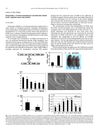
December 2008 in “Journal of Dermatological Science” Progranulin overexpression leads to shorter, thinner hair and increased cell death in mouse hair follicles.
578 citations
,
April 1993 in “Cell” TGFα gene mutation in mice causes abnormal skin, wavy hair, curly whiskers, and sometimes eye inflammation.
107 citations
,
June 1997 in “PubMed” EGFR is essential for normal hair development and follicle differentiation.
15 citations
,
September 1970 in “Journal of Animal Science” Copper in the diet helps maintain hair color and mineral balance in calves.
12 citations
,
July 1958 in “Journal of Endocrinology” Cortisone suppresses hair regrowth, especially undercoat hair, while adrenalectomy affects hair growth differently in rabbits and rats.
8 citations
,
March 2007 in “The journal of investigative dermatology/Journal of investigative dermatology” The near-naked hairless mutation causes hair loss but is not due to a mutation in the hairless gene itself.

Rex rabbits should not be slaughtered before 120 days for the best fur quality.
The curly mutation in SELH/Bc mice affects hair and may help study human genetic disorders.
 260 citations
,
June 2011 in “Cell”
260 citations
,
June 2011 in “Cell” Wnt signaling is crucial for pigmented hair regeneration by controlling stem cell activation and differentiation.
81 citations
,
September 2009 in “Birth defects research” Different body areas in mice produce different hair types due to interactions between skin layers.
 57 citations
,
April 2002 in “The journal of investigative dermatology/Journal of investigative dermatology”
57 citations
,
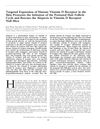
April 2002 in “The journal of investigative dermatology/Journal of investigative dermatology” Vitamin D receptor is crucial for starting hair growth after birth.
 11 citations
,
January 2012 in “Journal of cell science”
11 citations
,
January 2012 in “Journal of cell science” Rac1 is essential for proper hair structure and color.
1 citations
,
September 2024 in “Veterinary Dermatology” Trichography is important for diagnosing hair fragility in Pomeranian dogs with hair cycle issues.
1 citations
,
May 2024 in “Communications Biology” Dab2 protein is crucial for hair follicle stem cell renewal and preventing early aging.
 194 citations
,
May 2000 in “Journal of Investigative Dermatology”
194 citations
,
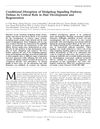
May 2000 in “Journal of Investigative Dermatology” The hedgehog signaling pathway is crucial for hair growth but not for the initial creation of hair follicles.
63 citations
,
April 2005 in “Mechanisms of development” Mice with too much Claudin-6 have skin barrier problems and abnormal hair growth.
 May 2026 in “Zenodo (CERN European Organization for Nuclear Research)”
 Natural hair dyes like henna and beetroot are safer but have limited colors and may fade easily.
 May 2026 in “Zenodo (CERN European Organization for Nuclear Research)”
 Natural hair dyes are safer but have limited shades and may fade with washing.
39 citations
,
July 1993 in “The journal of investigative dermatology/Journal of investigative dermatology” FGF and EGF are crucial for hair follicle development and growth.
 14 citations
,
March 1995 in “Journal of cell science”
14 citations
,
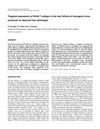
March 1995 in “Journal of cell science” SV40 T antigen in hair follicles causes abnormal hair and health issues in mice.
April 2026 in “The FASEB Journal” Exosomal miR-199a-3p from dermal papilla cells helps control hair color by affecting melanocytes.
 March 2025 in “Animal Bioscience”
 Goats' hair and color traits are linked to specific RNA expressions, useful for breeding and textiles.
 August 2024 in “Siberian Journal of Life Sciences and Agriculture”
 Melatonin and lyotritone improve hair growth and quality in white rats.
 120 citations
,
November 2014 in “Biological Reviews”
120 citations
,
November 2014 in “Biological Reviews” The telogen phase of hair growth is active and important for preparing hair follicles for regeneration, not just a resting stage.
 January 2026 in “Animal Advances”
 Genes linked to coat color and fiber length in Chinese goats were identified.
 104 citations
,
October 2016 in “PLoS ONE”
104 citations
,
October 2016 in “PLoS ONE” CRISPR/Cas9 gene editing in cashmere goats increases hair follicles and fiber length, boosting cashmere yield.
 20 citations
,
June 2014 in “BMC genomics”
20 citations
,
June 2014 in “BMC genomics” Poplar seed hairs grow from the placenta at the ovary base, with endoreduplication playing a key role in their development, and share similar cellulose synthesis processes with cotton fibers.
4 citations
,
January 1982 in “Neuroendocrinology” Dopamine affects coat color changes in agouti mice.
June 2026 in “Domestic Animal Endocrinology” Angus cattle grow faster and are more feed-efficient than Brahman, especially with growth-promoting systems, and gene expression changes with cold and treatments.
February 2026 in “Veterinary Dermatology” Coat-type differences in Pomeranians affect Alopecia X diagnosis and treatment.