 10 citations
,
September 2020 in “Biopolymers”
10 citations
,
September 2020 in “Biopolymers” Hair's structure and properties change with pH; acidic pH maintains strength and less swelling, while alkaline pH increases water content and swelling.
 10 citations
,
November 1984 in “Journal of Colloid and Interface Science”
10 citations
,
November 1984 in “Journal of Colloid and Interface Science” The study found that the Marangoni effect causes the uneven wetting of surfactant-coated hair due to the surfactant moving into the water.
 9 citations
,
January 1989 in “Sen'i Gakkaishi”
9 citations
,
January 1989 in “Sen'i Gakkaishi” Wool and hair fibers absorb moisture similarly due to their keratin structure, with the amount of non-crystalline areas affecting the moisture uptake.
 8 citations
,
December 2003 in “Materials Research-ibero-american Journal of Materials”
8 citations
,
December 2003 in “Materials Research-ibero-american Journal of Materials” Polyquaternium 7® builds up on hair, improving its look and feel, and AFM is good for measuring these changes.
 7 citations
,
August 2009 in “Applied Mathematics and Mechanics-English Edition”
7 citations
,
August 2009 in “Applied Mathematics and Mechanics-English Edition” Hair fibers have fractal patterns with properties related to the golden mean, which may affect their functionality.
 7 citations
,
November 2004 in “International Journal of Cosmetic Science”
7 citations
,
November 2004 in “International Journal of Cosmetic Science” Hair breaks differently when wet or dry and is affected by its condition and treatments like perms and bleaching.
 7 citations
,
July 2004 in “International Journal of Cosmetic Science”
7 citations
,
July 2004 in “International Journal of Cosmetic Science” Different hair types from various ethnic groups affect hair shine due to characteristics like thickness and shape.
 7 citations
,
January 1981 in “Springer eBooks”
7 citations
,
January 1981 in “Springer eBooks” Certain small molecules and polymers can change hair's physical properties and how it feels by affecting the bonds within the hair.
 5 citations
,
January 2015 in “Skin appendage disorders”
5 citations
,
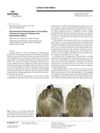
January 2015 in “Skin appendage disorders” Colored hair-thickening fibers can help hide hair loss in some people with Epidermolysis Bullosa but may cause scalp irritation.
 4 citations
,
March 2021 in “Journal of Surfactants and Detergents”
4 citations
,
March 2021 in “Journal of Surfactants and Detergents” Shampoo B, which uses water-soluble silicone, is better at detangling hair in wet conditions due to its two-layer conditioning film.
 4 citations
,
April 1955 in “Textile Research Journal”
4 citations
,
April 1955 in “Textile Research Journal” The effectiveness of reducing agents on hair fibers depends on their electrode potentials.
 3 citations
,
August 1980 in “Acs Symposium Series”
3 citations
,
August 1980 in “Acs Symposium Series” Hair increases in size when it absorbs water, and treatments like bleaching affect how much water it can take in.
 3 citations
,
September 2005 in “International Journal of Cosmetic Science”
3 citations
,
September 2005 in “International Journal of Cosmetic Science” Different oils penetrate hair differently; monounsaturated oils like olive oil penetrate better than polyunsaturated oils.
 2 citations
,
January 2020
2 citations
,
January 2020 The document describes a method for preparing hair for microscopy by embedding it in plastic, cutting it, and storing it cold before imaging.
 2 citations
,
January 2004 in “PubMed”
2 citations
,
January 2004 in “PubMed” Conditioners with PQ-10 soften the flat part of hair cuticles but harden the edges.
 1 citations
,
July 2019 in “Microscopy Today”
1 citations
,
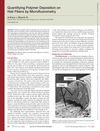
July 2019 in “Microscopy Today” Microfluorometry effectively measures how much polymer coats and penetrates hair, useful for evaluating hair products.
 1 citations
,
January 2009 in “Journal of S C C J”
1 citations
,
January 2009 in “Journal of S C C J” Changing disulfide bonds in human hair affects its melting behavior and thermal stability.
July 2025 in “International Journal of Cosmetic Science” A new 6-point scale reliably measures heat damage to hair from styling tools.
 May 2024 in “Ultramicroscopy”
 Atomic Force Microscopy is a more accurate way to assess hair damage and the effect of cosmetic treatments.

Hyaluronic acid in shampoo penetrated hair well, reduced frizz, and improved hair strength and moisture.
 February 2019 in “PubMed”
 The research found that twisting hair fibers can show changes in stiffness and damage, and help tell apart different hair treatments.

Hair thickening procedures can help people with early hair loss when combined with proper scalp and hair care.
 January 2018 in “Indian Dermatology Online Journal”
 Trichoscopy can help tell the difference between artificial hair fibers and other scalp artifacts.

The new method can tell how hair fibers react to moisture after treatments.
 March 2010 in “International Journal of Cosmetic Science”
 Disulfide bonds affect the melting behavior of hair's crystalline structure, but hair retains some stability even after these bonds are broken.
 August 2007 in “Microscopy and Microanalysis”
 Hair fibers break by cuticle cell slipping, shape changing, cuticle fraying, and surface cracking when stretched under specific conditions.

Hair coloring and bleaching can permanently break down hair protein and temporarily change its properties.
 March 2005 in “International Journal of Cosmetic Science”
 A new method helps understand hair shine and various products improve hair care.
109 citations
,
April 1997 in “Archives of Dermatological Research” Mast cell and nerve fiber interactions in mouse skin change with the hair cycle.
6 citations
,
April 2001 in “The Anatomical Record” A new method using hair pores can help align skin grafts better, improving results.