 12 citations
,
September 2010 in “Clothing and Textiles Research Journal”
12 citations
,
September 2010 in “Clothing and Textiles Research Journal” Poplar seed hair fibers could be an eco-friendly insulation for textiles.
 February 2024 in “bioRxiv (Cold Spring Harbor Laboratory)”
 Tandem repeats significantly influence hair color, especially darker shades, across different ancestries.
 December 2019 in “Ukrainian Journal of Veterinary and Agricultural Sciences”
 Donkey and horse hair have different microscopic structures, which can help tell them apart.
 January 2025 in “Journal of Pharmacognosy and Phytochemistry”
 Marine-derived supplements may improve skin and hair health.
 November 2025 in “Frontiers in Oral Health”
 Accurate diagnosis and management of rare genian fistulas require combined clinical, radiologic, and histopathologic evaluations.
 8 citations
,
May 2004 in “Textile Research Journal”
8 citations
,
May 2004 in “Textile Research Journal” Scientists made antibodies to tell cashmere and wool apart, which could improve how we identify animal fibers.
 1 citations
,
October 2017 in “ecancermedicalscience”
1 citations
,
October 2017 in “ecancermedicalscience” Breast cancer alters specific molecular structures in hair, which revert after cancer removal.
The model explains how mammal ear hair cells respond to sound and adapt.
 October 2023 in “Animal production science”
 Vitamin A deficiency changes cattle hair structure, while pregnancy may improve it, suggesting hair can indicate cattle health.
 January 2014 in “Sen i Gakkaishi”
 Liposome-encapsulated thioglycolic acid improves hair perming effectiveness and durability.
 36 citations
,
September 2015 in “Forensic Science International: Genetics”
36 citations
,
September 2015 in “Forensic Science International: Genetics” Certain DNA variants can predict straight hair in Europeans but are not highly specific.
 24 citations
,
July 2015 in “Biogeosciences”
24 citations
,
July 2015 in “Biogeosciences” A fungus is essential for forming and shaping hair ice on dead wood.

Curly wool has more orthocortex than straight wool.
 September 2023 in “Small animal advances”
 The kitten's skin infection was cured with medication in three weeks.
 8 citations
,
August 2015 in “Journal of dermatological science”
8 citations
,
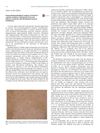
August 2015 in “Journal of dermatological science” Rhododendrol in skin-whitening products can cause skin depigmentation and immune reactions.
 2 citations
,
September 2022 in “Frontiers in genetics”
2 citations
,
September 2022 in “Frontiers in genetics” Different proteins are linked to the varying thickness of sheep and goat hair types.
 April 2019 in “Journal of Investigative Dermatology”
 Differences in growth factors in platelet-rich plasma therapy for hair loss can vary between patients and can be influenced by the devices used, possibly leading to inconsistent results.
 7 citations
,
December 2011 in “Annals of anatomy”
7 citations
,
December 2011 in “Annals of anatomy” Involucrin helps strengthen the inner parts of human hair.
 May 2026 in “International Journal of Versatile Research and Analysis”
 Air wedge interferometry is a precise, cost-effective way to measure hair thickness.
 38 citations
,
June 2018 in “Plant & cell physiology/Plant and cell physiology”
38 citations
,
June 2018 in “Plant & cell physiology/Plant and cell physiology” Changing the amount of PLC5 in Arabidopsis affects root growth and drought resistance, with less PLC5 slowing root growth and more PLC5 improving drought tolerance but hindering root hair growth.
47 citations
,
September 2004 in “Journal of Biological Chemistry” Hoxc13 regulates specific hair protein genes on mouse chromosome 16.
53 citations
,
June 2005 in “The journal of investigative dermatology/Journal of investigative dermatology” KAP genes show significant genetic variability, but its impact on hair traits is unclear.
11 citations
,
May 2013 in “Journal of Investigative Dermatology” KRTAP10 proteins help form the hair shaft's tough outer layer by interacting with specific hair keratins.
13 citations
,
November 2007 in “Journal of Structural Biology” Keratin heterodimers are preferred for their specific and structural advantages.
248 citations
,
April 1988 in “Differentiation” Human and bovine hair follicles have distinct cytokeratins specific to hair-forming cells.
23 citations
,
April 2003 in “Journal of Structural Biology” Keratin structure changes during keratinization, but the exact model remains uncertain.
15 citations
,
August 2020 in “Analytical chemistry” Hair lipids do not protect against humidity.
11 citations
,
January 1997 in “Journal of Dermatological Science” A new protein linked to hair strength was identified, aiding in understanding brittle hair conditions.
10 citations
,
January 1989 in “Archives of Dermatological Research” The method effectively analyzes human hair proteins, especially nonfilamentous ones.
6 citations
,
January 2006 in “Journal of dermatological science” Runx1 helps control the KAP5 gene in human hair follicles.