 18 citations
,
January 2017 in “Annals of dermatology/Annals of Dermatology”
18 citations
,
January 2017 in “Annals of dermatology/Annals of Dermatology” Certain immune cells contribute to severe hair loss in chronic alopecia areata, with Th17 cells possibly having a bigger impact than cytotoxic T cells.
 5 citations
,
March 2019 in “Scientific Reports”
5 citations
,
March 2019 in “Scientific Reports” The technique can isolate cells to help treat skin pigmentation issues.
 5 citations
,
September 2018 in “Acta histochemica”
5 citations
,
September 2018 in “Acta histochemica” The mTOR pathway proteins are altered in the hair follicles of patients with Lichen Planopilaris and Frontal Fibrosing Alopecia.
 4 citations
,
May 2025 in “Frontiers in Immunology”
4 citations
,
May 2025 in “Frontiers in Immunology” JAK inhibitors effectively and safely treat alopecia areata with few serious side effects.
 28 citations
,
March 2010 in “Histochemistry and Cell Biology”
28 citations
,
March 2010 in “Histochemistry and Cell Biology” Different markers are found in stem cells of the scalp's hair follicle bulge and the surrounding skin.
8 citations
,
February 2021 in “Journal of Clinical Medicine” Hair follicle stem cells are promising for blood vessel formation and tissue repair.
 5 citations
,
June 2022 in “Frontiers in immunology”
5 citations
,
June 2022 in “Frontiers in immunology” Increasing Treg cells in the skin does not cure hair loss from alopecia areata in mice.
 July 2026 in “International Journal of Drug Delivery Technology”
 New drug delivery systems show promise for better alopecia treatment but need more safety tests and standardization.
 June 2026 in “International Journal of Homoeopathic Sciences”
 Understanding hair loss causes can improve treatments and quality of life.
 February 2023 in “International Journal of Medical Arts”
 Trichloroacetic acid is a safe and effective treatment for hair loss in alopecia areata patients.
 December 2018 in “IntechOpen eBooks”
 Neurohormones help control skin health and could treat skin disorders.
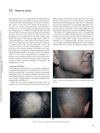 April 2012 in “Informa Healthcare eBooks”
 Alopecia areata is a common autoimmune condition causing varying hair loss, diagnosed by specific patterns of inflammation around hair follicles, with several treatment options available.
 7 citations
,
January 2012 in “International Journal of Trichology”
7 citations
,
January 2012 in “International Journal of Trichology” Two siblings both had a rare case of alopecia areata at the same time.
 156 citations
,
August 2016 in “Journal of controlled release”
156 citations
,
August 2016 in “Journal of controlled release” Tight junctions are key for skin protection and controlling what gets absorbed or passes through the skin.
112 citations
,
September 2021 in “BMC Biology” Key genes and factors crucial for hair follicle development and wool traits in Merino sheep were identified.
 9 citations
,
February 2022 in “BMC Genomics”
9 citations
,
February 2022 in “BMC Genomics” Melatonin affects gene expression in goat hair follicles, potentially increasing cashmere production.
 April 2017 in “Journal of Investigative Dermatology”
 A virus protein can activate a pathway that may lead to abnormal hair follicle development.
November 2022 in “Regenerative Therapy” Advancements in tissue engineering show promise for hair follicle regeneration to treat hair loss.
3 citations
,
June 2025 in “Stem Cell Research & Therapy” Hair follicle-derived melanocyte transplant could effectively treat vitiligo by restoring skin color.
October 2025 in “Cell Reports” Regulatory T cells help hair growth by using the Cxcr4-Cxcl12 pathway.
 August 2025 in “Scientific Reports”
 Hair follicle transplantation speeds up wound healing in diabetic mice.
 December 2023 in “EPRA international journal of multidisciplinary research”
 Alopecia areata causes sudden hair loss, has genetic links, and can be managed but not cured.
 April 2018 in “Journal of Investigative Dermatology”
 A new treatment using AGED to modulate PPAR-γ shows promise for treating scarring hair loss by protecting and repairing hair follicle cells.
 April 2018 in “Journal of Investigative Dermatology”
 Macrophages are more involved in Lichen planopilaris than in Frontal fibrosing alopecia.
 April 2018 in “Journal of Investigative Dermatology”
 Different types of stem cells in the skin contribute to the variety of melanoma forms.
 November 2024 in “Aging Cell”
 Removing senescent cells can improve hair growth and regeneration.
 April 2018 in “Journal of Investigative Dermatology”
 Hair pattern in androgenetic alopecia overlaps with scalp and bone demarcations, with distinct gene profiles affecting susceptibility.
 26 citations
,
January 2007 in “Organogenesis”
26 citations
,
January 2007 in “Organogenesis” Bioengineering can potentially treat hair loss by regenerating hair follicles and cloning hair, but the process is complex and needs more research.
 April 2026 in “bioRxiv (Cold Spring Harbor Laboratory)”
 Hair follicles protect melanocytes from sun damage, helping them replenish skin.
 90 citations
,
July 2008 in “Dermatologic therapy”
90 citations
,
July 2008 in “Dermatologic therapy” Lichen planopilaris is a chronic, scarring hair loss condition with no definitive cure, requiring accurate diagnosis and treatment to manage symptoms.