86 citations
,
May 2002 in “Journal of comparative neurology” Nerve growth in mouse skin and hair follicles happens in stages and is closely linked to hair development.
7 citations
,
October 1992 in “PubMed” Sinus hair follicles in mammals have different nerve fiber types with species-specific patterns, especially in cats.
14 citations
,
March 2016 in “PloS one” Spaceflight changes how genes work in astronauts' hair follicles, possibly affecting hair growth.
 August 2022 in “bioRxiv (Cold Spring Harbor Laboratory)”
 Mouse touch-sensitive nerve cells adjust their connections based on competition with other similar cells.
 5 citations
,
June 2024 in “Developmental Cell”
5 citations
,
June 2024 in “Developmental Cell” Activating TRPV1 can boost hair growth by involving neurons, macrophages, and fibroblasts.
January 2016 in “Minerva Access (University of Melbourne)” Hair follicle transplantation can improve wound healing and nerve growth.
 July 1998 in “Dermatologic Surgery”
 Various techniques and tools for hair restoration were presented in 1998, including a mathematical model for donor area, use of lasers in surgery, methods for controlling grafted hair direction, and ways to increase graft yield. Satisfaction rates were around 39%, and studies showed trauma and dehydration can damage hair follicles.
June 2025 in “Materials Today Bio” A silk fibroin hydrogel boosts wound healing and hair growth by increasing collagen and hair follicles.
 March 2025 in “International Journal of Trichology”
 3D printing can greatly improve hair restoration and scalp treatments but faces challenges in clinical use.
Scalp cooling can effectively reduce hair loss during chemotherapy, with modern methods improving comfort and accessibility.
 8 citations
,
January 2015 in “Experimental Dermatology”
8 citations
,
January 2015 in “Experimental Dermatology” Dr. Shoji Okuda's pioneering work on hair transplantation was overlooked and could have significantly advanced the field if recognized sooner.
 13 citations
,
November 2017 in “Journal of Cellular and Molecular Medicine”
13 citations
,
November 2017 in “Journal of Cellular and Molecular Medicine” The workshop discussed the role of a protein called calreticulin in health and disease, its potential as a treatment target, and its possible use as a disease marker.
January 2019 in “Cell & developmental biology” 3D cultivation and prenatal stem cell exosomes improve stem cell treatment results, especially for hair loss and age-related issues.
 142 citations
,
September 2020 in “Journal of neurophysiology”
142 citations
,
September 2020 in “Journal of neurophysiology” Young adults have about 230,000 tactile nerve fibers, decreasing 5-8% per decade with age.
122 citations
,
June 1998 in “PubMed” Neurotrophins regulate nerve growth by balancing promotion and suppression.
 April 2017 in “The journal of investigative dermatology/Journal of investigative dermatology”
 HSD11b1 affects skin nerves and increases non-histaminergic itch.
 39 citations
,
August 2021 in “JAAD International”
39 citations
,
August 2021 in “JAAD International” COVID-19 patients often experience hair loss and scalp pain, which may be related to the severity of their infection and treatment drugs.
1 citations
,
January 2004 Understanding hair growth phases and signals can help treat hair disorders.
 January 2026 in “European Journal of Dermatology”
 Advanced dermocosmetics can effectively manage androgenetic alopecia and improve quality of life.
 101 citations
,
January 1997 in “Journal of Investigative Dermatology Symposium Proceedings”
101 citations
,
January 1997 in “Journal of Investigative Dermatology Symposium Proceedings” Nerves and chemicals in the body can affect hair growth and loss.
 3 citations
,
April 2016 in “Wound Repair and Regeneration”
3 citations
,
April 2016 in “Wound Repair and Regeneration” Researchers successfully transplanted hair follicles in mice, which survived well and helped in wound healing.
 January 2023 in “Burns & Trauma”
 The study concluded that the new wound model can be used to evaluate skin regeneration and nerve growth.
November 2021 in “International Journal of Pharma and Bio Sciences” Alopecia causes hair loss, and scarring alopecia leads to permanent hair loss due to inflammation.
32 citations
,
February 2019 in “eLife” BMP signaling is essential for the development of touch domes.
34 citations
,
July 2006 in “The Journal of Comparative Neurology” Increasing neurotrophin 4 in skin boosts nerve endings but not sensory neuron count.
9 citations
,
October 1994 in “Brain Research” Fetal sheep develop skin nerve pathways and responses to touch and heat between 75 and 134 days of gestation.
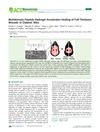 86 citations
,
March 2018 in “ACS Biomaterials Science & Engineering”
86 citations
,
March 2018 in “ACS Biomaterials Science & Engineering” MDP hydrogel heals wounds faster and better than other treatments in diabetic mice.
 69 citations
,
June 2017 in “Experimental Biology and Medicine”
69 citations
,
June 2017 in “Experimental Biology and Medicine” Advanced human skin models improve drug development and could replace animal testing.
RNase L hinders hair follicle regeneration by altering immune signals.
EGF and FGF signaling stops hair follicle development in mice.