 January 2014 in “Journal of Clinical and Investigative Dermatology”
 Young rats are better for testing hair loss treatments after chemotherapy.
21 citations
,
November 2020 in “European Journal of Pharmaceutics and Biopharmaceutics” Low-frequency skin massage helps nanoparticles penetrate hair follicles better.
20 citations
,
April 2000 in “Experimental dermatology” ODC transgenic mice can model human hair loss with skin lesions.
 November 2022 in “The journal of investigative dermatology/Journal of investigative dermatology”
 Deleting the CD271 gene in mouse skin cells leads to disorganized skin and increased hair growth, suggesting CD271 is important for skin health.
January 2013 in “Chinese Archives of Traditional Chinese Medicine” Traditional Chinese medicine liniment helps regrow hair in androgenetic alopecia.
19 citations
,
January 2008 in “Journal of Pharmacy and Pharmacology” Porcine hair follicles can effectively model human hair follicles for drug absorption.
 August 2025 in “Arabixiv (OSF Preprints)”
 Male pattern baldness is mainly caused by brain heat stress, not DHT.
April 2019 in “Journal of Investigative Dermatology” Researchers created a new mouse model for studying scleroderma.
MSC-CM cream may help repair and improve aging skin.
November 2025 in “Journal of Investigative Dermatology” Radiation-induced hair loss may be caused by hair growth stopping and inflammation in blood vessels.
179 citations
,
June 2000 in “The American journal of pathology” The absence of functional sebaceous glands causes hair follicle destruction and scarring alopecia.
 80 citations
,
April 2018 in “Trends in Molecular Medicine”
80 citations
,
April 2018 in “Trends in Molecular Medicine” Lichen Planopilaris and Frontal Fibrosing Alopecia may help us understand hair follicle stem cell disorders and suggest new treatments.
57 citations
,
July 2000 in “Toxicology Letters” K6/ODC transgenic mice are effective for quickly identifying cancer-causing chemicals.
27 citations
,
March 2008 in “Cell stress & chaperones” Localized heat or specific injections can prevent chemotherapy-induced hair loss without affecting cancer treatment.
 4 citations
,
September 2020 in “Cell division”
4 citations
,
September 2020 in “Cell division” XMU-MP-1 stops cell growth in a human mini-organ and reduces the effectiveness of the chemotherapy drug paclitaxel.
 1 citations
,
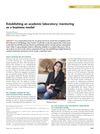
October 2014 in “Molecular Biology of the Cell”
1 citations
,
October 2014 in “Molecular Biology of the Cell” Valentina Greco emphasizes the importance of combining business management with mentoring to run a successful academic lab.
September 2025 in “Biological Procedures Online” The improved surgical method increases success and reduces fetal loss in fetal mouse models for scarless skin healing.
September 2017 in “Journal of Investigative Dermatology” Activating the hexosamine pathway can improve skin health and increase hair follicle stem cells.
March 2007 in “Journal of Plastic Reconstructive & Aesthetic Surgery” A new method was developed to create better skin models for healing and reconstruction.
201 citations
,
April 2017 in “Regeneration” Macrophages and fibroblasts help repair organs after injury, affecting whether they regenerate or scar.
 130 citations
,
August 2015 in “Experimental Dermatology”
130 citations
,
August 2015 in “Experimental Dermatology” Human hair follicle organ culture is a useful model for hair research with potential for studying hair biology and testing treatments.
 19 citations
,
February 2017 in “Journal of radiation research”
19 citations
,
February 2017 in “Journal of radiation research” High-dose radiation speeds up aging in skin stem cells.
 June 2026 in “Reports of Morphology”
 A nutrient-rich diet improved skin and hair health in stressed rats.
 April 2023 in “The journal of investigative dermatology/Journal of investigative dermatology”
 The study found that a key immune pathway protecting hair follicles is reduced in a mouse model of scarring hair loss.
Xiaochuang Drink effectively treats rabbit ear acne and is safe at clinical doses.
January 2011 in “The Chinese Journal of Dermatovenereology” Curcuma anti-acne gel effectively reduces acne symptoms.
 January 2007 in “The Year book of surgery”
 Mast cells and VEGF contribute to post-surgery adhesions, and blocking VEGF can reduce these adhesions; also, certain factors affect wound healing and fetal skin heals differently with age.
23 citations
,
March 2017 in “PTR. Phytotherapy research/Phytotherapy research” Butin is effective in treating vitiligo in mice.
January 2009 in “Journal of Zhengzhou University” LAIC cream can improve acne by making skin thinner and softer.
 June 2023 in “Frontiers in Bioengineering and Biotechnology”
 The conclusion is that accurately replicating the complexity of the extracellular matrix in the lab is crucial for creating realistic human tissue models.