 6 citations
,
January 2023 in “npj regenerative medicine”
6 citations
,
January 2023 in “npj regenerative medicine” Transplanting growing hair follicles into scars can help regenerate and improve scar tissue.
 6 citations
,
January 2007 in “Actas dermo-sifiliográficas/Actas dermo-sifiliográficas”
6 citations
,
January 2007 in “Actas dermo-sifiliográficas/Actas dermo-sifiliográficas” Gray hair regained color after thyroid hormone treatment.
Hair transplants are effective for male and female pattern baldness, have evolved in technique, and require careful planning for natural results and managing complications.
 June 2024 in “Archives of Plastic Surgery”
 Hair transplantation on a reconstructed scalp can effectively improve hair growth and appearance.
 June 2001 in “International Journal of Cosmetic Surgery and Aesthetic Dermatology”
 The Hair Implanter Pen increases speed and is gentle on grafts, with users mastering it after a few tries.
 521 citations
,
January 1954 in “Physiological Reviews”
521 citations
,
January 1954 in “Physiological Reviews” Hair growth is cyclic and influenced mainly by local factors.
 418 citations
,
September 2012 in “Nature”
418 citations
,
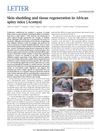
September 2012 in “Nature” African spiny mice can regenerate skin, hair, and cartilage, but not muscle, and their unique abilities could be useful for regenerative medicine.
 408 citations
,
January 2017 in “Science”
408 citations
,
January 2017 in “Science” Some wound-healing cells can turn into fat cells around new hair growth in mice.
 240 citations
,
April 2011 in “Pigment Cell & Melanoma Research”
240 citations
,
April 2011 in “Pigment Cell & Melanoma Research” Melanocyte stem cells in hair follicles are key for hair color and could help treat greying and pigment disorders.
236 citations
,
April 2015 in “Cell” Plucking some hairs can trigger nearby unplucked hairs to grow back more due to a collective response.
 232 citations
,
October 2015 in “International journal of molecular sciences”
232 citations
,
October 2015 in “International journal of molecular sciences” Stem cells are crucial for skin repair and new treatments for chronic wounds.
219 citations
,
July 1995 in “PubMed” Keratinocyte growth factor promotes hair growth and reduces hair loss from chemotherapy.
 211 citations
,
February 2009 in “European journal of pharmaceutics and biopharmaceutics”
211 citations
,
February 2009 in “European journal of pharmaceutics and biopharmaceutics” Hair follicles help absorb and store topical compounds, aiding targeted drug delivery.
 202 citations
,
August 2007 in “Biomaterials”
202 citations
,
August 2007 in “Biomaterials” Artificial skin development has challenges, but new materials and understanding cell behavior could improve tissue repair. Also, certain growth factors and hydrogel technology show promise for advanced skin replacement therapies.
 160 citations
,
April 2012 in “Journal of Cellular and Molecular Medicine”
160 citations
,
April 2012 in “Journal of Cellular and Molecular Medicine” Telocytes might help with skin repair and regeneration.
 135 citations
,
December 2015 in “Expert Opinion on Biological Therapy”
135 citations
,
December 2015 in “Expert Opinion on Biological Therapy” Exosomes could potentially enhance tissue repair and regeneration with lower rejection risk and easier production than live cell therapies.
 106 citations
,
March 2014 in “BioEssays”
106 citations
,
March 2014 in “BioEssays” We need more research to better understand human hair follicle stem cells for improved treatments for hair loss and skin cancer.
 103 citations
,
November 2014 in “Journal of Cell Biology”
103 citations
,
November 2014 in “Journal of Cell Biology” MicroRNA-214 is important for skin and hair growth because it affects the Wnt pathway.
 68 citations
,
August 2014 in “Stem Cells Translational Medicine”
68 citations
,
August 2014 in “Stem Cells Translational Medicine” Dermal papilla cells help wounds heal better and can potentially grow new hair.
 67 citations
,
August 2013 in “International Journal of Cosmetic Science”
67 citations
,
August 2013 in “International Journal of Cosmetic Science” Hair greying is caused by oxidative stress damaging hair follicles and melanocytes.
 60 citations
,
April 2012 in “Physiology”
60 citations
,
April 2012 in “Physiology” The document concludes that understanding hair and feather regeneration can help develop new regenerative medicine strategies.
 58 citations
,
January 2020 in “International Journal of Molecular Sciences”
58 citations
,
January 2020 in “International Journal of Molecular Sciences” Different methods of preparing Platelet-Rich Plasma (PRP) can affect wound healing and hair regrowth in plastic surgery. Using a kit with specific standards helps isolate PRP that meets quality criteria. Non-Activated PRP and Activated PRP have varying effects depending on the tissue and condition treated. For hair regrowth, Non-Activated PRP increased hair density more than Activated PRP. Both treatments improved various aspects of scalp health.
 54 citations
,
June 1985 in “American Journal of Dermatopathology”
54 citations
,
June 1985 in “American Journal of Dermatopathology” Minoxidil helps grow longer, thicker hair in bald scalps of stumptailed macaques, and early treatment is more effective.
 51 citations
,
May 2019 in “Biomaterials”
51 citations
,
May 2019 in “Biomaterials” Researchers developed a method to grow hair follicles using special beads that could help with hair loss treatment.
 48 citations
,
May 2008 in “Drug Discovery Today: Disease Mechanisms”
48 citations
,
May 2008 in “Drug Discovery Today: Disease Mechanisms” Hair follicles offer promising targets for delivering drugs to treat hair and skin conditions.
 44 citations
,
April 2017 in “Genes & development”
44 citations
,
April 2017 in “Genes & development” Scientists found cells in hair that are key for growth and color.
 42 citations
,
January 2014 in “Cold Spring Harbor Perspectives in Medicine”
42 citations
,
January 2014 in “Cold Spring Harbor Perspectives in Medicine” Hair growth is influenced by various body and external factors, and neighboring hairs communicate to synchronize regeneration.
 41 citations
,
June 2013 in “PLOS ONE”
41 citations
,
June 2013 in “PLOS ONE” Engineered skin substitutes can grow hair but have limitations like missing sebaceous glands and hair not breaking through the skin naturally.
 38 citations
,
June 2019 in “International Journal of Molecular Sciences”
38 citations
,
June 2019 in “International Journal of Molecular Sciences” Tiny particles called extracellular vesicles could help with skin healing and hair growth, but more research is needed.
 33 citations
,
October 2010 in “Journal of Dermatological Science”
33 citations
,
October 2010 in “Journal of Dermatological Science” Hair follicle stem cells are a practical and ethical option for nerve repair in regenerative medicine.