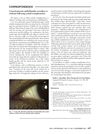
 December 2012 in “Canadian journal of ophthalmology”
 Eyelash transplantation can cause eye damage and pain if not done carefully.
November 2009 in “Cambridge University Press eBooks” Hair restoration surgery is generally safe, but emergency preparedness is crucial.
 June 2008 in “Springer eBooks”
 The document concludes that permanent hair loss conditions are complex, require early specific treatments, and "secondary permanent alopecias" might be a more accurate term than "secondary cicatricial alopecia."
 May 2004 in “Facial Plastic Surgery Clinics of North America”
 Better understanding of hair patterns and advanced techniques are crucial for improving hair restoration and removal outcomes.
 October 2001 in “Dermatologic Surgery”
 Cutting and implanting hair follicles can create finer, more natural-looking hairlines, with about half of the implanted hairs growing back.
 June 1997 in “The American Journal of Cosmetic Surgery”
 Gradual improvements in hair restoration techniques are safer and more effective than drastic changes.
 March 1997 in “The American Journal of Cosmetic Surgery”
 A new hair transplant method showed promising results and a study found how deep a CO₂ laser can penetrate skin.
March 2023 in “International Journal of Molecular Sciences” ADSC-Exos with miR-122-5p can help treat hair loss by promoting hair growth.
 February 2023 in “Journal of Advanced Research”
 A new method using Platelet-rich Plasma (PRP) in a microneedle can promote hair regrowth more efficiently and is painless, minimally invasive, and affordable.
September 2022 in “Applied sciences” Combining micro-needling, LED therapy, and growth factors with Finasteride® significantly improves hair growth.
 January 2022 in “Tissue & Cell”
 Using both platelet-rich plasma and minoxidil together gives the best results for hair growth in male rats with hair loss.
 July 2020 in “Journal of Cosmetic and Laser Therapy”
 Using your own platelet-rich plasma (PRP) can effectively treat hair loss, increasing hair density and width with no side effects.
 November 2015 in “Springer eBooks”
 Hair loss treated with minoxidil, finasteride, laser/light, hair transplant, and scalp prostheses; more research needed for skin of color.
 November 1999 in “Journal of Cutaneous Medicine and Surgery”
 Treatments for hair loss include hormone modifiers, minoxidil, and hair transplant surgery.
 1 citations
,
June 2018 in “Advances in Cosmetic Surgery”
1 citations
,
June 2018 in “Advances in Cosmetic Surgery” PRP might help with hair growth and skin rejuvenation, but more research is needed to prove its effectiveness.
 57 citations
,
March 2018 in “International Journal of Molecular Sciences”
57 citations
,
March 2018 in “International Journal of Molecular Sciences” The extracellular matrix is crucial for controlling skin stem cell behavior and health.
 43 citations
,
January 2011 in “Plastic and Reconstructive Surgery”
43 citations
,
January 2011 in “Plastic and Reconstructive Surgery” Stem cells have great potential for improving wound healing, but more research is needed to find the best types and ways to use them.
 26 citations
,
July 2006 in “Current Opinion in Otolaryngology & Head and Neck Surgery”
26 citations
,
July 2006 in “Current Opinion in Otolaryngology & Head and Neck Surgery” New techniques in scalp reconstruction have improved cosmetic results and reduced complications, especially for large defects.
 March 2025 in “International Journal of Trichology”
 3D printing can greatly improve hair restoration and scalp treatments but faces challenges in clinical use.
 34 citations
,
April 2009 in “Expert Opinion on Pharmacotherapy”
34 citations
,
April 2009 in “Expert Opinion on Pharmacotherapy” Some treatments work for common baldness, but there's less evidence for other hair loss types, and more research is needed.
 32 citations
,
April 1999 in “Expert Opinion on Investigational Drugs”
32 citations
,
April 1999 in “Expert Opinion on Investigational Drugs” Finasteride effectively treats male hair loss, improving growth and density.
 25 citations
,
August 1998 in “Dermatologic Surgery”
25 citations
,
August 1998 in “Dermatologic Surgery” Dissecting microscopes give more and better quality hair grafts than magnifying loupes.
 25 citations
,
March 2009 in “Dermatologic Surgery”
25 citations
,
March 2009 in “Dermatologic Surgery” Eyebrow transplantation can be successful for Asians with the right technique and care, but regular maintenance is necessary.
 24 citations
,
September 2002 in “Dermatologic Surgery”
24 citations
,
September 2002 in “Dermatologic Surgery” The study found that hair follicles are above muscle connections in the scalp, which may help protect stem cell areas.
 22 citations
,
May 1999 in “International Journal of Dermatology”
22 citations
,
May 1999 in “International Journal of Dermatology” Hair loss from genetics and hormones can be treated with drugs or surgery.
 17 citations
,
June 2002 in “Dermatologic Surgery”
17 citations
,
June 2002 in “Dermatologic Surgery” Chinese patients have fewer hair follicles than Caucasians, and transplanting hair at 40% of normal density works for natural-looking hairlines.
 15 citations
,
September 2016 in “Hair transplant forum international”
15 citations
,
September 2016 in “Hair transplant forum international” The "open punch" technique for hair transplantation can help reduce damage to hair grafts and may be especially useful for beginners and in cases with curly hair.
 15 citations
,
January 1999 in “Archives of Facial Plastic Surgery”
15 citations
,
January 1999 in “Archives of Facial Plastic Surgery” Advancements in hair transplantation have resulted in more natural-looking hair and increased patient satisfaction.
 13 citations
,
November 2018 in “Annals of Plastic Surgery”
13 citations
,
November 2018 in “Annals of Plastic Surgery” Nonshaven follicular unit extraction is a good hair transplant option that doesn't require shaving and can transplant up to 3000 grafts daily.
 12 citations
,
January 2010 in “Hair transplant forum international”
12 citations
,
January 2010 in “Hair transplant forum international” The survival rates of hair grafts are similar regardless of how they are trimmed.