February 2021 in “PubMed” A 2-year-old girl had a hair disorder not shared by her identical twin.
 January 2021 in “Journal of Pakistan Association of Dermatology”
 COVID-19 recovery can lead to temporary hair loss called telogen effluvium.
 January 2021 in “International journal of dermatology, venereology and leprosy sciences”
 Trichoscopy shows black dots, yellow dots, and empty follicles are common in Alopecia Areata, with broken and exclamation mark hair as typical patterns.

Topical calcipotriol successfully treated hair loss in three patients with Alopecia Totalis.
Loose anagen syndrome causes easy hair shedding in children, often resolving on its own.
October 2019 in “International Journal of Ayurvedic Medicine” Yastimadhuk Tail Pratimarsha Nasya effectively reduces hair fall symptoms.
 August 2019 in “Jurnal Biosains Pascasarjana”
 Acupuncture therapy significantly reduced hair loss in women aged 31-50 with female pattern hair loss.
 July 2018 in “Elsevier eBooks”
 Telogen Effluvium is a common, usually reversible hair loss condition, often improved by removing the trigger and possibly treated with various products, though their effectiveness is uncertain.
 September 2016 in “Más dermatología”
 Postpartum hair loss usually stops within 4-6 months.
Acupuncture and herbal treatments effectively reduced hair loss in androgenetic alopecia.
 January 2016 in “Journal of The Korean Medical Association”
 The document says how to diagnose and treat hair loss from alopecia areata, but there's no cure and treatments vary.

Millet extract, wheat germ oil, L-cystine, and calcium pantothenate reduced hair loss and improved hair growth in women with diffuse alopecia.
January 2012 in “Guangdong Medical Journal” Family history affects onset and severity of androgenic alopecia, but treatment success depends more on therapy duration.
 January 2011 in “Medicina interna de México”
 The document concludes that treating the underlying causes of telogen effluvium usually results in hair regrowth.
 November 2006 in “Reactions Weekly”
 A woman's hair grew back after she stopped taking the Parkinson's disease medication pramipexole.
 March 2004 in “Journal of The American Academy of Dermatology”
 Patients with SLE experienced non-scarring hair loss with fewer hair follicles, and DIF did not help identify lupus.

A brain injury can lead to compulsive hair-pulling and psychosis-like symptoms, needing comprehensive treatment.
 February 2026 in “International Journal of Homoeopathic Sciences”
 Homeopathy may help reduce hair pulling and improve hair regrowth in trichotillomania.
 May 2024 in “CRC Press eBooks”
 Children's hair loss can have various causes, including infections, autoimmune issues, physical stress, nutritional problems, and genetic factors.
 May 2024 in “Actas dermo-sifiliográficas/Actas dermo-sifiliográficas”
 Effective treatments for trichotillomania include cognitive-behavioral therapy, certain medications, and alternative support tools.
 July 2023 in “Al-Azhar Assiut Medical Journal”
 Trichoscopy helps diagnose and manage hair and scalp disorders in children.
January 2023 in “Odisha Journal of Psychiatry” Thorough patient interviews are crucial to identify self-inflicted hair loss.
 May 2022 in “European medical journal”
 An 11-year-old girl with Trichotillomania developed a large hairball in her stomach, treated with medication, therapy, and family education.
 August 2021 in “Acta medica Philippina”
 A girl's hair loss was found to be caused by both a hair-pulling disorder and another hair loss condition.
 January 2019 in “Clinical neuropharmacology”
 A girl's hair-pulling condition improved greatly after she started vitamin D treatment.
 January 2018 in “Springer eBooks”
 Trichotillomania is a condition where people repeatedly pull out their hair, which can be triggered by stress and has various physical signs.
 November 2017 in “Pediatrics in Review”
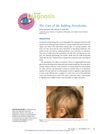
 A 4-year-old girl with hair loss was diagnosed with early-onset trichotillomania and improved with behavioral interventions.
 May 2017 in “InTech eBooks”
 Hair pulling disorder is treated with therapy and medication; hair loss from tension can be reversed if caught early.
 January 2017 in “International journal of science and research”
 Trichotillomania is a chronic hair-pulling disorder, more common in females, treated with therapy and sometimes medication.
 January 2015 in “Independent Nurse”
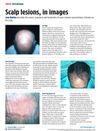
 Different scalp conditions can lead to hair loss or tumors, with treatments varying from creams to surgery; early detection is crucial.