 33 citations
,
September 2017 in “Molecules”
33 citations
,
September 2017 in “Molecules” Red ginseng oil and its components help promote hair regrowth and could treat hair loss.
 12 citations
,
September 2018 in “Journal of Drug Delivery Science and Technology”
12 citations
,
September 2018 in “Journal of Drug Delivery Science and Technology” The silk fibroin hydrogel with FGF-2-liposome can potentially treat hair loss in mice.
8 citations
,
June 2023 in “Acta Biochimica et Biophysica Sinica” rRSPO1 protein boosts hair growth by activating a key signaling pathway.
11 citations
,
May 2023 in “Proceedings of the National Academy of Sciences” MicroRNA-205 helps hair regrow by making hair follicle stem cells less stiff.
 June 2026 in “Research Square”
 THBS4 helps hair grow by activating hair follicle stem cells.
 21 citations
,
October 2009 in “Biochemical Engineering Journal”
21 citations
,
October 2009 in “Biochemical Engineering Journal” Stem cell therapy is a promising approach for hair regrowth despite potential side effects.
 60 citations
,
June 2019 in “Ageing Research Reviews”
60 citations
,
June 2019 in “Ageing Research Reviews” Fat from the body can help improve hair growth and scars when used in skin treatments.
 16 citations
,
December 2019 in “Journal of Cellular and Molecular Medicine”
16 citations
,
December 2019 in “Journal of Cellular and Molecular Medicine” Sonicated platelet-rich plasma boosts hair growth by activating stem cells.
15 citations
,
March 2022 in “Acta Biomaterialia” The new 3D bioprinting method successfully regenerated hair follicles and shows promise for treating hair loss.
 7 citations
,
July 2020 in “Pigment cell & melanoma research”
7 citations
,
July 2020 in “Pigment cell & melanoma research” RT1640 treatment reverses gray hair and promotes hair growth in mice.
 7 citations
,
January 2018 in “Journal of Tissue Viability”
7 citations
,
January 2018 in “Journal of Tissue Viability” An 80-year-old patient grew new hair on a wound, showing that elderly people can still regenerate hair.
 2 citations
,
January 2022 in “Experimental Dermatology”
2 citations
,
January 2022 in “Experimental Dermatology” GDNF signaling helps in hair growth and skin healing after a wound.
January 2026 in “International Journal of Molecular Sciences” Understanding molecular signals and genetics is key to improving hair regeneration therapies.
June 2025 in “Molecular Therapy — Nucleic Acids” A new treatment using a DNA aptamer can promote hair growth by targeting a specific receptor.
 June 2025 in “Journal of Cluster Science”
 Metal nanoparticles show promise for treating hair loss but need more research to ensure safety.
 January 2024 in “Pharmacy information”
 New treatments using stem cells and other methods show promise for promoting hair growth in androgenetic alopecia.
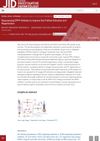 May 2023 in “Journal of Investigative Dermatology”
 Blocking DPP4 can potentially speed up hair growth and regeneration, especially after injury or in cases of hair loss.
 April 2019 in “Advances in Cosmetic Surgery”
 The document concludes that ongoing medical therapy is crucial for preventing hair loss, and surgical options can restore hair, with future treatments for hair loss being promising.
 April 2018 in “Journal of Investigative Dermatology”
 DPP4 is important for scarring and skin regeneration, and managing its activity could improve skin healing treatments.
 October 2015 in “Regenerative Medicine”
 Two growth factors, PDGF and FGF2, can potentially be used together to grow enough cells for a hair loss treatment, but their exact function on human cells needs further confirmation.
April 2023 in “ACS Biomaterials Science & Engineering” 3D scaffolds mimicking the extracellular matrix are crucial for effective hair follicle regeneration.
December 2022 in “Nature Communications” Bead-jet printing of stem cells improves muscle and hair regeneration.
 194 citations
,
May 2000 in “Journal of Investigative Dermatology”
194 citations
,
May 2000 in “Journal of Investigative Dermatology” The hedgehog signaling pathway is crucial for hair growth but not for the initial creation of hair follicles.
 56 citations
,
May 2017 in “Nature Cell Biology”
56 citations
,
May 2017 in “Nature Cell Biology” Hair can regrow after certain stem cells are lost because other stem cells can take over their role.
24 citations
,
June 2018 in “PubMed” Serenoa repens extract helps regrow hair and repair hair loss by activating certain cell growth pathways.
3 citations
,
January 2022 in “Neurotoxicity Research” Botulinum toxin may help reduce stress-related hair loss.
 3 citations
,
April 2021 in “Biomolecules & Therapeutics”
3 citations
,
April 2021 in “Biomolecules & Therapeutics” The protein ER71/ETV2 helps regrow hair after chemotherapy by improving the growth of new blood vessels.
 3 citations
,
May 2018 in “Biochemical and Biophysical Research Communications”
3 citations
,
May 2018 in “Biochemical and Biophysical Research Communications” iNOS contributes to hair loss in obese diabetic mice and blocking it may encourage hair growth.
2 citations
,
June 2022 in “Phytomedicine” Shi-Bi-Man helps hair regrowth by activating the FGF pathway in cells.
 2 citations
,
March 2013 in “Hair transplant forum international”
2 citations
,
March 2013 in “Hair transplant forum international” Research on "hair cloning" for hair loss shows potential for hair thickening but has not yet achieved new hair growth in humans.