 1 citations
,
April 2015 in “Current problems in dermatology”
1 citations
,
April 2015 in “Current problems in dermatology” The document concludes that the trichogram is a useful tool for diagnosing hair loss and suggests semi-organ cultures for practical trichological research.
 23 citations
,
July 1982 in “International Journal of Dermatology”
23 citations
,
July 1982 in “International Journal of Dermatology” The review concludes that accurate diagnosis of different types of hair loss requires proper biopsy techniques and understanding the hair growth cycle and underlying causes.
 142 citations
,
September 2020 in “Journal of neurophysiology”
142 citations
,
September 2020 in “Journal of neurophysiology” Young adults have about 230,000 tactile nerve fibers, decreasing 5-8% per decade with age.
 309 citations
,
May 1993 in “Journal of The American Academy of Dermatology”
309 citations
,
May 1993 in “Journal of The American Academy of Dermatology” Horizontal scalp biopsy sections effectively diagnose and predict MPAA, with follicular density and inflammation impacting hair regrowth.
 233 citations
,
November 2002 in “The journal of investigative dermatology/Journal of investigative dermatology”
233 citations
,
November 2002 in “The journal of investigative dermatology/Journal of investigative dermatology” Creating stronger blockers for skin enzymes might lead to better treatment for conditions like acne and excessive hair growth.
 17 citations
,
January 2010 in “Acta Dermato Venereologica”
17 citations
,
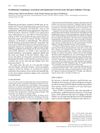
January 2010 in “Acta Dermato Venereologica” EGFR inhibitors can cause yellowish skin eruptions.
 15 citations
,
August 2006 in “Journal of Cutaneous Pathology”
15 citations
,
August 2006 in “Journal of Cutaneous Pathology” HIV-1 may cause increased stem cell death in hair follicles, leading to hair loss.
 129 citations
,
January 2009 in “International Journal of Trichology”
129 citations
,
January 2009 in “International Journal of Trichology” Trichoscopy can diagnose female hair loss with high accuracy by looking for specific patterns in hair and scalp appearance.
 28 citations
,
January 2007 in “Dermatology”
28 citations
,
January 2007 in “Dermatology” Chemotherapy can cause rapid, extensive hair loss, with patterns varying between individuals.
 5 citations
,
May 2008 in “Nature Precedings”
5 citations
,
May 2008 in “Nature Precedings” Trichoscopy is a useful non-invasive method to diagnose female hair loss with high accuracy.