8 citations
,
September 2016 in “Journal of the American Academy of Dermatology” It's important to tell the difference between hair casts, pseudocasts, and nits.
KRTAP6 genes affect wool quality in sheep.
77 citations
,
April 2005 in “Journal of Investigative Dermatology” Repetin is a protein involved in skin and hair development, binding calcium and compensating for other proteins when needed.
28 citations
,
September 2013 in “European Journal of Histochemistry” Keratins in Malayan pangolins vary by region, suggesting scales evolved from the tail towards the head.
 12 citations
,
September 2018 in “Dermatologic Therapy”
12 citations
,
September 2018 in “Dermatologic Therapy” Daily low-dose aspirin lowers minoxidil's effectiveness for hair loss treatment.
 21 citations
,
February 2017 in “Dermatologic surgery”
21 citations
,
February 2017 in “Dermatologic surgery” Different techniques for vitiligo treatment work similarly well, with some better for specific body areas.
 555 citations
,
July 2001 in “Genes & Development”
555 citations
,
July 2001 in “Genes & Development” Tcf3 and Lef1 are key in deciding skin stem cell roles.
 June 2017 in “Journal of The American Academy of Dermatology”
 LED light helps hair follicle cells grow and prevents them from dying by activating certain cell pathways.
1 citations
,
March 1991 in “PubMed” Naevoid bundle hair is an unusual hair growth pattern where multiple hairs fuse together.
9 citations
,
January 1990 in “Skin Pharmacology and Physiology” The method and source of keratinocytes affect the structure of reconstructed skin.
 January 2025 in “International Journal of Dermatology”
 Consider TFI in facial hypopigmentation diagnoses and confirm with a biopsy.
Natural α-hydroxyl acids cause skin exfoliation by activating TRPV3 channels.
 January 2019 in “Springer eBooks”
 Transplanting skin cells is a safe, effective, and affordable treatment for vitiligo.
13 citations
,
September 2020 in “Sensors” Hair follicles have a pH gradient, increasing towards the root.
 6 citations
,
May 1987 in “Acta dermato-venereologica”
6 citations
,
May 1987 in “Acta dermato-venereologica” Syphilis patients showed abnormal hair root changes, with no difference between primary and secondary stages.
 32 citations
,
December 1969 in “The Lancet”
32 citations
,
December 1969 in “The Lancet” Children with marasmus have more resting hair follicles and thinner, less pigmented hair, showing long-term malnutrition.
 December 2025 in “Russian Journal of Skin and Venereal Diseases”
 Hair follicles are thinner in alopecia patients, especially in alopecia areata.
 63 citations
,
November 1999 in “British journal of dermatology/British journal of dermatology, Supplement”
63 citations
,
November 1999 in “British journal of dermatology/British journal of dermatology, Supplement” Hair sensitivity to androgens is partly controlled by specific enzyme expressions in different hair areas.
 January 2015 in “Journal of Cytology and Histology”
 Hair loss in Androgenetic Alopecia is not caused by damage to follicular stem cells.
 April 2023 in “Journal of Investigative Dermatology”
 The research developed methods to test drugs that could protect and restore hair follicle protection in a hair loss condition.
35 citations
,
December 2014 in “Lasers in surgery and medicine” Red light promotes hair growth by directly stimulating hair cells and improving cell communication.
 7 citations
,
June 2015 in “The anatomical record”
7 citations
,
June 2015 in “The anatomical record” Hexi cashmere goats' hair growth varies by stage, with Hoxc13 linked to hair activity.
4 citations
,
July 2006 in “British journal of dermatology/British journal of dermatology, Supplement” Testosterone increases hair follicle cell growth when beard or axillary skin cells are present together.
 March 2014 in “Journal of The American Academy of Dermatology”
 TNF-a may not be as involved in certain types of hair loss as previously thought.
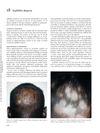 April 2012 in “Informa Healthcare eBooks”
 Syphilitic alopecia is a rare hair loss condition in secondary syphilis that looks similar to another condition but can be diagnosed with specific tests and responds to antibiotics.
48 citations
,
April 1995 in “PubMed” Testosterone helps beard and axillary hair cells grow by releasing growth factors from dermal papilla cells.
 February 2024 in “Scientific reports”
 Four genes are potential markers for hair loss condition alopecia areata, linked to a specific type of cell death.
20 citations
,
February 1968 in “Journal of Histochemistry & Cytochemistry” A new test more accurately detects citrulline in hair follicles and pilomatrixomas.
14 citations
,
July 1994 in “Journal of Dermatological Science” Keratin mutations may cause scarring alopecia by damaging hair structure.
 17 citations
,
August 1979 in “Journal of The American Academy of Dermatology”
17 citations
,
August 1979 in “Journal of The American Academy of Dermatology” A new staining method helps tell growing from resting hairs to diagnose hair loss.