 26 citations
,
December 2011 in “Journal of Investigative Dermatology”
26 citations
,
December 2011 in “Journal of Investigative Dermatology” New gene identification techniques have improved the understanding and classification of inherited hair disorders.
 18 citations
,
January 2013 in “Postepy Dermatologii I Alergologii”
18 citations
,
January 2013 in “Postepy Dermatologii I Alergologii” Puberty often causes skin issues like acne and excessive sweating, and treatments require patience as results may vary.
4 citations
,
August 2016 in “PubMed” Repeated dyeing and shampooing cause hair color loss and damage.
 72 citations
,
September 1997 in “Dermatologic Surgery”
72 citations
,
September 1997 in “Dermatologic Surgery” Careful planning and patient counseling can lead to excellent hair transplant results, often in one or two sessions.
10 citations
,
January 2011 in “Journal of biomedical optics” OCT is a reliable, noninvasive way to measure hair thickness.
December 2025 in “Rapid Communications in Mass Spectrometry” Pepsin digestion improves accuracy in analyzing proteins in human hair.
 October 2022 in “International journal of Ayurvedic medicine”
 Karaviradya taila reduces hair growth and hair follicles.
 January 2016 in “Elsevier eBooks”
 Trichoscopy is a key method for dermatologists to quickly and effectively diagnose hair and scalp conditions.
 23 citations
,
October 2021 in “Cell Stem Cell”
23 citations
,
October 2021 in “Cell Stem Cell” Hair thinning causes stem cell loss through a process involving Piezo1, calcium, and TNF-α.
 15 citations
,
August 2015 in “Scanning”
15 citations
,
August 2015 in “Scanning” Corkscrew and cigarette-ash-shaped hairs in tinea capitis are caused by internal hair degradation and external resistance.
 1 citations
,
October 2022 in “Dermatology practical & conceptual”
1 citations
,
October 2022 in “Dermatology practical & conceptual” Isolated patchy heterochromia with pili annulati can occur without other health issues.
 April 2025 in “Health Science Reports”
 Smoking and lighter hair color increase alopecia risk, especially in women and those over 25.
 January 2003 in “Research Portal (King's College London)”
 Hair color affects light reflection, with black hair having higher cuticle angles and lighter hair showing less specular reflection.
 42 citations
,
October 2012 in “Dermatologic Clinics”
42 citations
,
October 2012 in “Dermatologic Clinics” Trichoscopy is a useful tool for diagnosing different hair and scalp diseases without surgery.
 243 citations
,
September 2016 in “Dermatology and Therapy”
243 citations
,
September 2016 in “Dermatology and Therapy” Dermoscopy is a useful tool for identifying features of skin conditions, but more research is needed to define its role in dermatology.
 210 citations
,
July 1993 in “The journal of investigative dermatology/Journal of investigative dermatology”
210 citations
,
July 1993 in “The journal of investigative dermatology/Journal of investigative dermatology” Hair color production in mice is closely linked to the hair growth phase and may also influence hair growth itself.
119 citations
,
November 2016 in “American journal of human genetics” Mutations in three genes cause Uncombable Hair Syndrome, leading to frizzy hair that can't be combed flat.
 109 citations
,
July 1993 in “The journal of investigative dermatology/Journal of investigative dermatology”
109 citations
,
July 1993 in “The journal of investigative dermatology/Journal of investigative dermatology” Hair color production is closely linked to the active growth phase of hair in mice and may also influence hair growth itself.
 98 citations
,
June 2001 in “Journal of biological chemistry/The Journal of biological chemistry”
98 citations
,
June 2001 in “Journal of biological chemistry/The Journal of biological chemistry” A cluster of sulfur-rich hair protein genes was found on chromosome 17.
 30 citations
,
June 2006 in “British journal of dermatology/British journal of dermatology, Supplement”
30 citations
,
June 2006 in “British journal of dermatology/British journal of dermatology, Supplement” Oral zinc sulphate reduces dark hair color in mice.
 16 citations
,
April 2012 in “Journal of mammalogy”
16 citations
,
April 2012 in “Journal of mammalogy” Young female Australian fur seals are losing hair due to low tyrosine and zinc levels and high pollution exposure.
 16 citations
,
April 2009 in “Dermatologic Surgery”
16 citations
,
April 2009 in “Dermatologic Surgery” The place where hair is transplanted can change its growth rate and length but not its thickness.
13 citations
,
January 2016 in “Annals of Dermatology” Stress can slow hair growth by affecting certain cells and pathways.
 13 citations
,
January 2012 in “International journal of trichology”
13 citations
,
January 2012 in “International journal of trichology” The study found that hair fragility in Pili annulati may be caused by cavities and damage within the hair shafts.
 7 citations
,
November 2000 in “Clinics in Dermatology”
7 citations
,
November 2000 in “Clinics in Dermatology” Most hair loss in children is caused by a few common conditions and is easy to diagnose, but rare types require careful evaluation.
 3 citations
,
February 2008 in “Basic and clinical dermatology”
3 citations
,
February 2008 in “Basic and clinical dermatology” Telogen Effluvium is a hair loss condition where treatment involves identifying and managing its triggers.
 May 2019 in “Small Animal Dermatology”
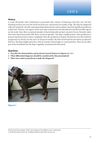
 The dog has Color Dilution Alopecia, causing hair loss and increased risk of skin infections.
 January 2009 in “Actas dermo-sifiliográficas/Actas dermo-sifiliográficas”
 Lasers and light treatments are now the most common ways to remove hair.
 January 2006 in “Carl von Ossiezky University of Oldenburg”
 Unpigmented keratinocytes absorb substances faster, while melanocytes bind more strongly to melanin.
173 citations
,
September 2011 in “Journal of Investigative Dermatology” IL-6 contributes to hair loss by shortening the growth phase and causing hair follicles to regress.