75 citations
,
April 2000 in “Developmental Dynamics” Whn is essential for hair growth, and its malfunction causes hair loss.
64 citations
,
January 2013 in “The journal of investigative dermatology/Journal of investigative dermatology” Human stem cells can help form hair follicles in mice.
9 citations
,
September 2012 in “Journal of Cosmetic Dermatology” Hair capacitance mapping effectively measures hair surface moisture changes.
 April 2017 in “IOSR journal of dental and medical sciences”
 Netherton Syndrome is a non-treatable genetic disorder in children causing skin, hair, and allergy issues.
 3 citations
,
July 2018 in “International Journal of Research -GRANTHAALAYAH”
3 citations
,
July 2018 in “International Journal of Research -GRANTHAALAYAH” Human hair and mouse whiskers emit similar biomagnetic fields.
32 citations
,
February 1993 in “British Journal of Clinical Pharmacology” Measuring OPC-17116 in hair can reliably indicate drug exposure and timing.
 October 2018 in “InTech eBooks”
 The gene Foxn1 is important for hair growth, and understanding it may lead to new alopecia treatments.
 38 citations
,
February 2016 in “Surgery Journal”
38 citations
,
February 2016 in “Surgery Journal” Facial plastic surgery has evolved to focus on less invasive techniques and innovative technologies for cosmetic and reconstructive procedures.
 September 1997 in “Dermatologic Surgery”
 The article concludes that uniform density hair restoration is generally preferred for its natural look, but the best approach depends on the individual's characteristics and preferences.
3 citations
,
June 2002 in “PubMed” Two sisters with Netherton's syndrome had skin and hair issues, needing special diet and ointments.
 10 citations
,
May 2010 in “Journal of The American Academy of Dermatology”
10 citations
,
May 2010 in “Journal of The American Academy of Dermatology” A 38-year-old African American woman has a rare condition that prevents her from growing long hair.
44 citations
,
March 2019 in “Experimental Dermatology” A wide range of proteins are integrated into the skin's protective layer.
 19 citations
,
March 1988 in “International Journal of Dermatology”
19 citations
,
March 1988 in “International Journal of Dermatology” Hair shaft dysplasias are abnormal hair conditions that can be inherited or acquired and may signal other health issues, with limited treatment options available.
 86 citations
,
October 2013 in “Dermatologic Clinics”
86 citations
,
October 2013 in “Dermatologic Clinics” Trichoscopy is a useful non-invasive method for diagnosing different hair loss conditions.
 5 citations
,
September 2015 in “BMC Medical Genetics”
5 citations
,
September 2015 in “BMC Medical Genetics” The EDAR gene mutation leads to thinner and more deformed hair shafts.
 68 citations
,
August 2012 in “Journal of the American Academy of Dermatology”
68 citations
,
August 2012 in “Journal of the American Academy of Dermatology” Dermatoscopy is a useful tool for diagnosing hair disorders and can help choose samples for more detailed analysis.
 44 citations
,
January 2005 in “Dermatology”
44 citations
,
January 2005 in “Dermatology” Hair problems can be caused by genetics or the environment, and treatment should focus on the cause and reducing hair damage.
 December 2021 in “Molecular genetics and genomics”
 Cats with abnormal hair had DSG4 gene changes causing hair problems.
 17 citations
,
January 2011 in “Skin Research and Technology”
17 citations
,
January 2011 in “Skin Research and Technology” Hair from people with seborrheic dermatitis is thicker scaled, more damaged, and thinner than healthy hair, and atomic force microscopy can help monitor the condition.
 7 citations
,
August 2018 in “Journal of cosmetic dermatology”
7 citations
,
August 2018 in “Journal of cosmetic dermatology” Chemical hair straightening improves smoothness and shine but may cause side effects, suggesting a need for safer methods.
 5 citations
,
October 2020 in “Experimental dermatology”
5 citations
,
October 2020 in “Experimental dermatology” A specific type of skin cell creates an opening for hair to grow out, and problems with this process can lead to skin conditions.
 4 citations
,
January 2014 in “Indian dermatology online journal”
4 citations
,
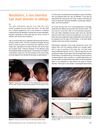
January 2014 in “Indian dermatology online journal” Monilethrix is a genetic hair disorder causing fragile, beaded hair with no effective treatment.
 December 2025 in “IP Indian Journal of Clinical and Experimental Dermatology”
 Hair shaft disorders often indicate genetic or systemic issues and are managed by minimizing damage.
A young athlete's fragile hair condition improved by cutting hair and using gentle shampoo.
 February 2022 in “International journal of research in dermatology”
 The document concludes that proper diagnosis and treatment of hair shaft disorders require understanding their unique causes and avoiding hair-damaging practices.
 January 1991 in “Journal of Society of Cosmetic Chemists of Japan”
 Hair treatments can damage hair by changing its chemical content.
 March 2021 in “British Journal of Dermatology”
 PRP helps hair regrowth and thickness.
The research found that people's hair proteins vary, especially by ethnicity and body part, which could help identify individuals in forensic science.
The research found that people's hair proteins vary by individual and body part, with some differences between ethnic groups, which could help in forensics.
 46 citations
,
January 2010 in “The journal of investigative dermatology/Journal of investigative dermatology”
46 citations
,
January 2010 in “The journal of investigative dermatology/Journal of investigative dermatology” Mice lacking Insig proteins had hair growth problems due to cholesterol buildup, but this was fixed by the drug simvastatin.