February 2022 in “Actas dermo-sifiliográficas/Actas dermo-sifiliográficas” Hair shaft disorders, often due to genetics or environment, lack specific treatments but can be managed with gentle hair care and may improve with age or topical treatments.
22 citations
,
January 2020 in “PeerJ” Keratin peptides in hair might help identify gender and ethnicity.
 19 citations
,
June 2021 in “Tissue Engineering and Regenerative Medicine”
19 citations
,
June 2021 in “Tissue Engineering and Regenerative Medicine” Fat stem cell particles help regrow hair.
122 citations
,
January 2006 in “Molecular & Cellular Proteomics” Human hair contains many proteins, with some being highly abundant and modified.
119 citations
,
November 2016 in “American journal of human genetics” Mutations in three genes cause Uncombable Hair Syndrome, leading to frizzy hair that can't be combed flat.
 24 citations
,
January 2011 in “International Journal of Trichology”
24 citations
,
January 2011 in “International Journal of Trichology” Light microscopy is useful for diagnosing different hair disorders.
 12 citations
,
January 2007 in “Current problems in dermatology”
12 citations
,
January 2007 in “Current problems in dermatology” Environmental and cosmetic factors, including heat, chemicals, and sun exposure, can cause hair loss and damage.
 3 citations
,
January 2016 in “Journal of cosmetology & trichology”
3 citations
,
January 2016 in “Journal of cosmetology & trichology” Taking vitamins, minerals, and amino acids can improve hair strength and quality in people with Monilethrix.
 2 citations
,
July 2018 in “Elsevier eBooks”
2 citations
,
July 2018 in “Elsevier eBooks” Trichoscopy is a useful tool for diagnosing and managing hair and scalp conditions, often better than traditional methods.
 November 2019 in “Harper's Textbook of Pediatric Dermatology”
 Understanding normal hair growth and loss in children is key to diagnosing and treating hair disorders.
 146 citations
,
May 2002 in “The American journal of pathology”
146 citations
,
May 2002 in “The American journal of pathology” Cathepsin L is essential for normal hair growth and development.
 127 citations
,
March 2016 in “PLoS ONE”
127 citations
,
March 2016 in “PLoS ONE” Key genes and pathways crucial for hair follicle development in cashmere goats were identified, aiding fleece production improvement.
 31 citations
,
September 2013 in “Stem Cells”
31 citations
,
September 2013 in “Stem Cells” Smad1 and Smad5 are essential for hair follicle development and stem cell sleepiness.
 12 citations
,
June 2009 in “Journal of Cosmetic Dermatology”
12 citations
,
June 2009 in “Journal of Cosmetic Dermatology” Loose Anagen Hair syndrome occurs in dark-skinned children and often improves on its own.
 10 citations
,
November 2017 in “Journal of Investigative Dermatology”
10 citations
,
November 2017 in “Journal of Investigative Dermatology” A mutation in the FAM83G gene is linked to skin and hair abnormalities in two related individuals.
 9 citations
,
January 1980 in “Dermatology”
9 citations
,
January 1980 in “Dermatology” Hair casts may be caused by repetitive hair pulling or styling and are often misdiagnosed.
 June 2024 in “Annals of Medicine and Surgery”
 A 23-year-old Syrian woman has two rare hair disorders, and avoiding hair treatments plus using vitamins and minoxidil may help.
 May 2021 in “GSC Advanced Research and Reviews”
 Hair color is influenced by genetics and can indicate certain health conditions.
 September 1998 in “JEADV. Journal of the European Academy of Dermatology and Venereology/Journal of the European Academy of Dermatology and Venereology”
 The document concludes that individualized treatments for hair issues are effective, certain hair changes can indicate neurocutaneous diseases, specific lotions improve skin health, laser hair removal works but needs more study on long-term effects, men's cosmetics are diverse, peeling is effective but can have side effects, and facial pigmentation is often due to overactive skin cells.
 January 2025 in “Case Reports in Dermatological Medicine”
 Exosome therapy improved hair growth and quality in a child with hair issues.
 August 2018 in “Journal of Investigative Dermatology”
 Polyunsaturated fatty acids, like arachidonic acid and eicosapentaenoic acid, can promote hair growth and may help treat hair loss.
 128 citations
,
March 2006 in “American Journal of Pathology”
128 citations
,
March 2006 in “American Journal of Pathology” Prolactin contributes to hair loss by promoting hair follicle shrinkage and cell death.
 72 citations
,
October 2009 in “The FASEB journal”
72 citations
,
October 2009 in “The FASEB journal” TRH stimulates human hair growth and extends the hair growth phase.
 32 citations
,
July 2012 in “Stem Cells Translational Medicine”
32 citations
,
July 2012 in “Stem Cells Translational Medicine” Vitamin D3 can help improve hair growth by enhancing the function of specific skin cells and could be useful in hair regeneration treatments.
 12 citations
,
May 2014 in “International Journal of Molecular Medicine”
12 citations
,
May 2014 in “International Journal of Molecular Medicine” Chrysanthemum zawadskii extract helps hair grow by stimulating hair cells.
 11 citations
,
January 2017 in “Evidence-based Complementary and Alternative Medicine”
11 citations
,
January 2017 in “Evidence-based Complementary and Alternative Medicine” DA-5512 effectively improves hair growth and health, performing better than minoxidil.
 5 citations
,
July 2020 in “JAMA Dermatology”
5 citations
,
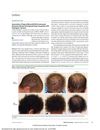
July 2020 in “JAMA Dermatology” Minoxidil solution applied twice daily improved hair growth in patients with Woolly Hair/Hypotrichosis due to LIPH gene issues, with mild side effects.
 2 citations
,
January 2013 in “International Journal of Dermatology”
2 citations
,
January 2013 in “International Journal of Dermatology” ALDOA levels drop in hair cells during hair loss.
 1 citations
,
January 2012 in “Journal of The Society of Japanese Women Scientists”
1 citations
,
January 2012 in “Journal of The Society of Japanese Women Scientists” Murine hair has specific types of ceramides and glucosylceramides but lacks acylceramides.

Hair shaft characteristics can affect mitochondrial DNA metrics, but more research is needed.