Yak hair stretches mainly due to macromolecules slipping past each other.
 3 citations
,
December 2013 in “Journal of Dermatology”
3 citations
,
December 2013 in “Journal of Dermatology” Scanning electron microscopy revealed four distinct hair root shapes in alopecia areata, suggesting a less invasive diagnostic method.
 1 citations
,
March 2019 in “Actas Dermo-Sifiliográficas”
1 citations
,
March 2019 in “Actas Dermo-Sifiliográficas” New cancer treatments are less harmful to hair but can still cause hair loss, color, shape, and growth changes.
5 citations
,
November 2023 in “Journal of Advanced Research” New methods may change hair color and shape from the root, revolutionizing hair styling.
 3 citations
,
August 2022 in “Cutis”
3 citations
,
August 2022 in “Cutis” Certain nail conditions can suggest thyroid problems, with different symptoms for underactive (slow, thin nails) and overactive (spoon-shaped, brittle nails) thyroid.
 47 citations
,
January 2017 in “RSC Advances”
47 citations
,
January 2017 in “RSC Advances” Keratin peptides can change hair shape gently without harsh chemicals.
 7 citations
,
October 1963 in “Textile Research Journal”
7 citations
,
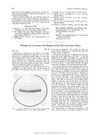
October 1963 in “Textile Research Journal” Merino wool fibers change shape with moisture, while human hair shape stays the same.
11 citations
,
May 2016 in “PubMed” New imaging and testing methods can effectively assess hair shape changes and damage.
 2 citations
,
October 2022 in “Journal of structural biology”
2 citations
,
October 2022 in “Journal of structural biology” Older thin hair is not just thinner but also has different shape, structure, and stiffness.
 April 2023 in “The journal of investigative dermatology/Journal of investigative dermatology”
 Developing hair follicles form from ring-shaped patterns, with future stem cells originating from the outer ring, not the upper layers, as previously thought.
 56 citations
,
July 2005 in “Journal of The American Academy of Dermatology”
56 citations
,
July 2005 in “Journal of The American Academy of Dermatology” Using both vertical and transverse sections gives a better diagnosis of alopecia than using one method alone.
 February 2021 in “International journal of men's social and community health”
 Online forums help understand men's concerns about baldness and show the need for better support that changes how baldness is viewed.
 June 2020 in “The journal of investigative dermatology/Journal of investigative dermatology”
 The enzymes Tet1, Tet2, and Tet3 are important for the development of hair follicles and determining hair shape by controlling hair keratin genes.
 20 citations
,
June 2014 in “BMC genomics”
20 citations
,
June 2014 in “BMC genomics” Poplar seed hairs grow from the placenta at the ovary base, with endoreduplication playing a key role in their development, and share similar cellulose synthesis processes with cotton fibers.
23 citations
,
January 2008 in “Skin Pharmacology and Physiology” Optical coherent tomography can effectively detect steroid use by analyzing hair changes.
 8 citations
,
April 2018 in “Facial Plastic Surgery”
8 citations
,
April 2018 in “Facial Plastic Surgery” Men and women have different hairline restoration needs, with natural design being more complex for women, and hairline changes being important for transgender individuals' transitions.
March 1997 in “Medical Molecular Morphology” Zinc deficiency causes early scalp hair damage that recovers slower than skin symptoms.
1 citations
,
January 2013 in “PubMed” Permanent wave treatment with thioglycolic acid changes hair structure by altering disulfide bonds.
 76 citations
,
June 2008 in “Journal of the American Academy of Dermatology”
76 citations
,
June 2008 in “Journal of the American Academy of Dermatology” The conclusion is that certain scalp tissue changes are characteristic of lichen planopilaris, with mucinous perifollicular fibroplasia being a new feature for diagnosis.
3 citations
,
January 1988 in “The Nishinihon Journal of Dermatology” Minoxidil slows hair cell growth but doesn't change cell shape or development.
 11 citations
,
September 1996 in “Neuroscience letters”
11 citations
,
September 1996 in “Neuroscience letters” Adding fetal calf serum helps Merkel cells survive and change shape.
52 citations
,
February 2005 in “Biopolymers” Chemical hair straightening changes hair proteins and mostly fixes broken bonds.
May 2015 in “Journal of the American Academy of Dermatology” New hair after alopecia areata can be thinner and change color but usually keeps the same shape.
 4 citations
,
August 2007 in “Journal of The American Academy of Dermatology”
4 citations
,
August 2007 in “Journal of The American Academy of Dermatology” The document discusses a condition causing hair loss after surgery and a type of rosacea affecting the nose, with treatments including surgery and laser therapy.
 November 1994 in “The Journal of Dermatologic Surgery and Oncology”
 Thousand-graft hair transplants offer better coverage and look more natural but have concerns about graft survival and cosmetic risks.
 November 2023 in “bioRxiv (Cold Spring Harbor Laboratory)”
 Scientists made a mouse that shows how a specific protein in the skin changes and affects hair growth and shape.
2 citations
,
September 1996 in “Neuroscience letters” Adding fetal calf serum to the medium kept Merkel cells alive and changed their shape.
1 citations
,
August 2016 in “Dermatology - Open Journal” Mitochondria change shape to meet energy needs during cell movement.
 19 citations
,
August 2013 in “Facial Plastic Surgery Clinics of North America”
19 citations
,
August 2013 in “Facial Plastic Surgery Clinics of North America” Children's hairlines change shape as they grow, with women often developing a widow's peak and men's hairlines becoming more convex and possibly balding at the temples, influenced by genetics and hormones.
 October 2019 in “Skin appendage disorders”
 The vitreous membrane in hair follicles changes shape during the hair cycle and may affect hair growth and nutrient exchange.