105 citations
,
June 2010 in “The journal of sexual medicine” Testosterone undecanoate increases lean mass and causes various physical changes in female-to-male transsexuals.
94 citations
,
August 2002 in “Experimental Dermatology” 17α-estradiol boosts aromatase activity in female hair follicles, potentially helping with hair loss.
74 citations
,
November 1975 in “Archives of dermatology” Increased DHT formation in skin can cause hair loss, acne, and excessive hair growth, and antiandrogens might treat these conditions.
41 citations
,
July 2001 in “PubMed” Estrogens can reduce DHT production in hair follicles, but are less effective than finasteride and progesterone.
 40 citations
,
March 1982 in “British Journal of Dermatology”
40 citations
,
March 1982 in “British Journal of Dermatology” Young women with diffuse hair loss may have low SHBG levels, which could lead to more active testosterone and contribute to their hair loss.
 34 citations
,
February 1993 in “Journal of steroid biochemistry and molecular biology/The Journal of steroid biochemistry and molecular biology”
34 citations
,
February 1993 in “Journal of steroid biochemistry and molecular biology/The Journal of steroid biochemistry and molecular biology” Certain 4-azasteroids are effective at blocking the enzyme that processes testosterone in human skin and could help treat acne, excessive hair growth, and male pattern baldness.
 19 citations
,
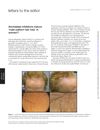
May 2013 in “Annals of Oncology”
19 citations
,
May 2013 in “Annals of Oncology” Aromatase inhibitors cause male pattern hair loss in women.
12 citations
,
February 2020 in “The Journal of Clinical Endocrinology & Metabolism” More body hair in young Australian women is linked to higher androstenedione levels.
9 citations
,
March 2008 in “PubMed” Low estrogen compared to androgen may cause female hair loss.
 5 citations
,
September 2020 in “Journal of The American Academy of Dermatology”
5 citations
,
September 2020 in “Journal of The American Academy of Dermatology” Men can experience female pattern hair loss, needing different treatments.
5 citations
,
January 1993 in “Hormone and Metabolic Research” DHEA and DHEA-S help maintain underarm hair in older women.
3 citations
,
February 2025 in “Journal of the American Academy of Dermatology” Feminizing hormone therapy increases hair counts and improves hair-related quality of life, while masculinizing therapy may reduce large terminal hairs.
 3 citations
,
March 2019 in “Post Reproductive Health”
3 citations
,
March 2019 in “Post Reproductive Health” Testosterone replacement can help menopausal women with various symptoms, but should be used carefully and is not yet officially licensed in the UK for women.
1 citations
,
November 2020 in “Cureus” Clinical signs of hyperandrogenism are related to female pattern hair loss severity, but biochemical markers are not.
 1 citations
,
October 2020 in “PubMed”
1 citations
,
October 2020 in “PubMed” Hormone testing may not be very helpful in diagnosing female pattern hair loss.
 1 citations
,
January 2018 in “Journal of Gynecologic Surgery”
1 citations
,
January 2018 in “Journal of Gynecologic Surgery” Removing both ovaries can treat increased testosterone and related symptoms in postmenopausal women with ovarian hyperthecosis.
 January 2024 in “Biomedicines”
 Using stem cells from hair follicles to treat female hair loss is safe and effective after six months.
 October 2023 in “Journal of the Endocrine Society”
 A woman's ovarian fibroma caused high testosterone levels, which normalized after surgery.
April 2019 in “Journal of the Endocrine Society” A young patient with unusual insulin resistance and high testosterone levels had a rare INSR gene mutation.
 January 2019 in “Indian Dermatology Online Journal”
 Stress, hypothyroidism, drug intake, and anemia are important factors in women's diffuse hair loss.
January 2017 in “STARS (University of Central Florida)” Steroid hormones can be preserved in ancient hair, revealing insights into past health and fertility.
The FDA did not approve a testosterone drug because of safety concerns.
January 2011 in “Bradford Scholars (University of Bradford)” Testosterone stimulates growth in intermediate hair follicles, but this can be blocked by cyproterone acetate.
January 1995 in “대한피부과학회지” Higher hormone levels may be linked to female hair loss.
 May 1963 in “American journal of obstetrics and gynecology”
 Injecting 2 ml of TEEV every 4 weeks is better because it has the same benefits but fewer side effects.
February 2023 in “Journal of Aesthetic Nursing” Various hair restoration methods can effectively promote hair growth.
December 2021 in “Faculty Opinions – Post-Publication Peer Review of the Biomedical Literature” Topical finasteride is promising for hair loss with minimal side effects but needs more research and approval.
October 2021 in “QJM: An International Journal of Medicine” PRP injections may help treat hair loss.
May 2021 in “Journal of the Endocrine Society” Female pattern hair loss severity is linked to physical signs of high androgens, not blood hormone levels.
 August 2019 in “Journal of Dermatology”
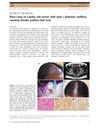
 Woman with diabetes had hair loss due to rare ovarian tumor; surgery improved hair growth.