23 citations
,
April 2018 in “PubMed” Topical finasteride reduces hair loss and promotes hair growth in men and women.
20 citations
,
March 2022 in “Journal of clinical medicine” Nearly half of the studied men with long COVID had low testosterone, including younger men.
 17 citations
,
June 2010 in “Journal of Cosmetic Dermatology”
17 citations
,
June 2010 in “Journal of Cosmetic Dermatology” Many women with hard-to-treat acne also have PCOS.
 16 citations
,
January 2003 in “Nuclear Receptor Signaling”
16 citations
,
January 2003 in “Nuclear Receptor Signaling” Androgens and SARMs play a role in body mass, frailty, skin health, and hair growth, and are used in treating prostate cancer, acne, and hair loss, with potential for new uses and improved versions in the future.
 14 citations
,
October 2006 in “Journal of The American Academy of Dermatology”
14 citations
,
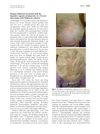
October 2006 in “Journal of The American Academy of Dermatology” A woman with Parkinson's disease experienced hair loss from the Parkinson's medication pramipexole, which improved after stopping the drug.
 13 citations
,
May 2018 in “Urologic Oncology: Seminars and Original Investigations”
13 citations
,
May 2018 in “Urologic Oncology: Seminars and Original Investigations” Finasteride does not prevent bladder cancer.
7 citations
,
April 2011 in “American journal of obstetrics and gynecology” A woman's virilization symptoms were caused by her partner's use of testosterone cream, which resolved after they separated.
6 citations
,
July 2018 in “DOAJ (DOAJ: Directory of Open Access Journals)” A woman had a rare liver tumor causing male-like physical changes, highlighting the need for thorough checks when such symptoms appear.
5 citations
,
January 2013 in “Spatula DD - Peer Reviewed Journal on Complementary Medicine and Drug Discovery” Trigonella foenum-graecum seeds and Butea monosperma flowers help promote hair growth and reduce hair loss after chemotherapy.
 4 citations
,
June 2005 in “Andrology”
4 citations
,
June 2005 in “Andrology” A woman's diabetes improved after removing ovarian tumors that caused high testosterone levels.
3 citations
,
January 2022 in “Anais Brasileiros De Dermatologia” Androgenetic alopecia in teens is linked to obesity and other metabolic risks, needing early diagnosis and management.
 3 citations
,
January 2020 in “Indian Dermatology Online Journal”
3 citations
,
January 2020 in “Indian Dermatology Online Journal” Skin problems in patients with polycystic ovarian disease are linked to body weight, blood sugar, and hormone levels.
 2 citations
,
August 2011 in “Revista Medica De Chile”
2 citations
,
August 2011 in “Revista Medica De Chile” A postmenopausal woman's high testosterone levels and symptoms improved after removing a tumor from her ovary.
 1 citations
,
August 2024 in “SAR Journal of Pathology and Microbiology”
1 citations
,
August 2024 in “SAR Journal of Pathology and Microbiology” Many Iraqi women with hirsutism also have hypothyroidism and acne.
 1 citations
,
December 2022 in “Gynecological Endocrinology”
1 citations
,
December 2022 in “Gynecological Endocrinology” The most common skin issues in females with Polycystic Ovary Syndrome (PCOS) are excessive hair growth, hair loss, oily skin, acne, dark skin patches, and skin tags, which may be linked to hormone and insulin levels.
 1 citations
,
September 2015 in “Reviews in Endocrine and Metabolic Disorders”
1 citations
,
September 2015 in “Reviews in Endocrine and Metabolic Disorders” The document discusses new insights into how hormones affect male sexual health and related conditions.
 1 citations
,
December 2010 in “Elsevier eBooks”
1 citations
,
December 2010 in “Elsevier eBooks” Cell transplantation faces challenges in genitourinary reconstruction, but alternative tissue sources and microencapsulation show promise.
 1 citations
,
December 1992 in “International Journal of Dermatology”
1 citations
,
December 1992 in “International Journal of Dermatology” No significant hormone differences found in postmenopausal women with androgenetic alopecia.
April 2025 in “The Obstetrician & Gynaecologist” Hirsutism is managed by assessing testosterone levels and using oral contraceptives, with ethical considerations on treatment access.
 October 2024 in “Journal of the Endocrine Society”
 Surgical removal of a rare ovarian tumor improved symptoms and hormone levels in a postmenopausal woman.
 October 2024 in “Journal of the Endocrine Society”
 Leydig cell tumors can cause high testosterone and symptoms in postmenopausal women, and removing them improves symptoms.
July 2024 in “Journal of the ASEAN Federation of Endocrine Societies” In post-menopausal women, signs of increased male hormones should be checked for possible ovarian cancer.
A thorough diagnostic process and teamwork are crucial for managing complex hyperandrogenism in postmenopausal women.
 July 2023 in “The journal of sexual medicine”
 Anabolic-androgenic steroids harm male hormone levels, sperm, metabolism, and can cause acne, hair loss, and breast growth.
 January 2023 in “Case Reports in Obstetrics and Gynecology”
 A woman's high testosterone levels and related symptoms improved after ovary removal surgery.
January 2023 in “Zenodo (CERN European Organization for Nuclear Research)” Hirsutism is common among Iraqi women, often without a known cause, but family history is significant.
 January 2020 in “Open Journal of Obstetrics and Gynecology”
 All women with Polycystic Ovary Syndrome (PCOS) in a study had at least one skin disorder, with the most common being excessive hair growth, acne, dark skin patches, hair loss, and oily skin.
 January 2020 in “Journal of South Asian Federation of Obstetrics and Gynaecology”
 Removing the ovaries can help treat hair loss caused by high androgen levels in postmenopausal women.
 September 2019 in “IP Indian journal of clinical and experimental dermatology”
 Hormones and iron deficiency are linked to female pattern hair loss, and hair thinning patterns are similar across different types of this condition.
 April 2019 in “Journal of the Endocrine Society”
 A woman's severe male-like symptoms were caused by a rare, benign tumor in her ovary that produced male hormones.