Different methods like wigs, extensions, and devices can help improve hair volume for thinning hair.
 1 citations
,
June 2021 in “bioRxiv (Cold Spring Harbor Laboratory)”
1 citations
,
June 2021 in “bioRxiv (Cold Spring Harbor Laboratory)” Activating β-catenin in mammary cells leads to changes that cause early-stage abnormal growths similar to skin structures.
 April 2026 in “International Journal of Molecular Sciences”
 Ageratum houstonianum extract and agerarin may help hair growth.
 February 1999 in “Strength and Conditioning Journal”
 Androstenedione, a hormone supplement, doesn't improve muscle or performance and can cause harmful side effects.
 May 2024 in “SPIRE - Sciences Po Institutional REpository”
 Understanding and treating alopecia areata improves patient care.
 17 citations
,
December 2006 in “Gene Expression Patterns”
17 citations
,
December 2006 in “Gene Expression Patterns” Scube3 gene affects mouse embryo growth in multiple areas, but needs more research.
 October 2023 in “Skin health and disease”
 Alopecia areata costs individuals about 3% of their income, with women, Asians, those with lower income, and more severe symptoms spending more.
1 citations
,
June 2018 in “Ukrainian Journal of Dermatology Venerology Cosmetology” Oral collagen improves skin, nails, hair, and reduces cellulite.
January 2026 in “Therapeutics” SCUBE3 is a potential target for cancer and alopecia treatment but is challenging to target due to its varied roles.
20 citations
,
October 2024 in “British Journal of Dermatology” The guideline provides recommendations for managing alopecia areata effectively.
July 2025 in “Journal of the Dermatology Nurses’ Association” Stress affects skin health, and mental health support is crucial for patients with skin conditions.
 47 citations
,
March 2016 in “Journal of dermatology”
47 citations
,
March 2016 in “Journal of dermatology” Understanding the genetics of rare inherited ichthyosis syndromes is key for better treatments and genetic counseling.
 7 citations
,
November 2010 in “Genesis”
7 citations
,
November 2010 in “Genesis” Mouse Scube3 affects teeth, tongue, vibrissae, and eye development, but not facial structure or limb growth.

There is no cure for myotonic dystrophy type 1, so treatment focuses on managing symptoms and complications.
November 2025 in “British Journal of Dermatology” The guideline recommends personalized treatment for alopecia areata, including new oral medications and psychological support.
 January 2025 in “Nature Communications”
 Large-scale reconstructions enhance understanding of vibrissal sensory mapping in the brain.
 1113 citations
,
August 1999 in “The New England Journal of Medicine”
1113 citations
,
August 1999 in “The New England Journal of Medicine” Hair follicle biology advancements may lead to better hair growth disorder treatments.
990 citations
,
October 1999 in “Development” Activated LEF/TCF complexes are crucial for hair development and cycling.
949 citations
,
January 2001 in “Cell” Adult mouse skin contains stem cells that can create new hair, skin, and oil glands.
854 citations
,
February 2002 in “The journal of investigative dermatology/Journal of investigative dermatology” Understanding hair follicle development can help treat hair loss, skin regeneration, and certain skin cancers.
 835 citations
,
October 2008 in “Nature Genetics”
835 citations
,
October 2008 in “Nature Genetics” Lgr5 is a marker for active, long-lasting stem cells in mouse hair follicles.
 829 citations
,
May 2007 in “Nature”
829 citations
,
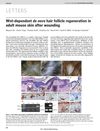
May 2007 in “Nature” Hair follicles can regrow in wounded adult mouse skin using a process like embryo development.
 759 citations
,
February 2009 in “Current Biology”
759 citations
,
February 2009 in “Current Biology” Hair follicles are complex, dynamic mini-organs that help us understand cell growth, death, migration, and differentiation, as well as tissue regeneration and tumor biology.
578 citations
,
April 1993 in “Cell” TGFα gene mutation in mice causes abnormal skin, wavy hair, curly whiskers, and sometimes eye inflammation.
567 citations
,
October 2007 in “Clinical and investigative medicine” Hair cortisol can be used to measure long-term stress exposure.
561 citations
,
April 2003 in “Journal of Investigative Dermatology” CD34 is a marker for isolating stem-like cells in mouse hair follicles.
550 citations
,
December 2005 in “The Journal of clinical investigation/The journal of clinical investigation” Researchers successfully isolated and identified key markers of stem cell-enriched human hair follicle bulge cells.
 521 citations
,
January 1954 in “Physiological Reviews”
521 citations
,
January 1954 in “Physiological Reviews” Hair growth is cyclic and influenced mainly by local factors.
 520 citations
,
February 2001 in “Journal of Clinical Investigation”
520 citations
,
February 2001 in “Journal of Clinical Investigation” VEGF helps hair grow and determines follicle size by increasing blood vessel growth.
 501 citations
,
October 2008 in “Psychoneuroendocrinology”
501 citations
,
October 2008 in “Psychoneuroendocrinology” Hair cortisol levels can show increased stress during late pregnancy but only for up to six months.