 September 2016 in “Hair transplant forum international”
 Methylene blue is less effective than normal saline solution for storing hair grafts and may reduce graft survival.

Plucked hair follicles grow faster than conventional ones, making them a potentially better option for hair transplants.
 January 2016 in “Georg Thieme Verlag eBooks”
 The document recommends personalized, culturally sensitive treatments to rejuvenate the aging Asian face, focusing on natural results and specific techniques for skin, hair, and facial features.
 August 2014 in “Plastic Surgery”
 Dr. WP Unger suggested that traditional strip harvesting might be better for hair transplants than Follicular Unit Extraction due to higher hair survival rates and less risk of a patchy look at the donor site.
 July 2013 in “Journal of Plastic Reconstructive and Aesthetic Surgery”
 The book is a detailed guide on aesthetic plastic surgery, essential for surgeons in the field.
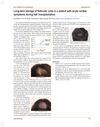 July 2013 in “International Society of Hair Restoration Surgery”
 Effective storage of hair follicles is crucial for successful hair transplants, especially in patients with heart issues.
 July 2012 in “Hair transplant forum international”
 Hair transplant improved self-perception in hair loss patients, but some still remained overly focused on their hair appearance.
 June 2008 in “Dermatologic Surgery”
 Hydrogen peroxide may have both positive and negative effects on wound healing, and its safe concentration for hair transplant surgery is unclear.
 September 2006 in “Plastic and Reconstructive Surgery”
 Hair transplant surgeries can be improved by preserving follicles in a special solution, and surgeries done at outpatient facilities are more profitable than those at hospitals.
 September 2002 in “Dermatologic Surgery”
 The evaluation system improves patient selection for hair loss surgery, leading to fewer but more successful surgeries.
 August 2001 in “Dermatologic Surgery”
 The KNU implanter for hair transplants showed a high survival rate of 90%+ for transplanted hairs after 6 months, with benefits like natural hair direction and fewer scars.

Different hair growth phases affect how follicles respond to X-rays, and hormones like testosterone and dihydrotestosterone play a key role in baldness; transplanted hair can grow on bald scalp areas.
1 citations
,
August 2021 in “Arhivʺ vnutrennej mediciny” Hormonal imbalances can cause hair loss, and understanding them can help develop better treatments.
 40 citations
,
August 2010 in “Archives of dermatology”
40 citations
,
August 2010 in “Archives of dermatology” A 5-year-old boy's skin condition improved with systemic valganciclovir after a cardiac transplant and immunosuppressive therapy.
22 citations
,
March 2017 in “Transplant Infectious Disease” Leflunomide successfully treated a rare skin condition in a liver transplant patient.
 3 citations
,
January 2021 in “Actas Dermo-Sifiliográficas”
3 citations
,
January 2021 in “Actas Dermo-Sifiliográficas” The document concludes that changing the scalp's microbiome might be a new way to treat hair loss.
 3 citations
,
April 2016 in “Wound Repair and Regeneration”
3 citations
,
April 2016 in “Wound Repair and Regeneration” Researchers successfully transplanted hair follicles in mice, which survived well and helped in wound healing.
 1 citations
,
February 2019 in “Journal of The American Academy of Dermatology”
1 citations
,
February 2019 in “Journal of The American Academy of Dermatology” Using three-hair grafts from the back of the head for eyebrow transplantation offers a natural look and reduces scarring.
1 citations
,
January 2019 in “PubMed” A woman developed a hair disorder after a bone marrow transplant, which improved with treatment.
 September 2015 in “Actas Dermo-Sifiliográficas”
 People with advanced chronic kidney disease often have skin problems, which can be treated with various medications and procedures to improve their quality of life.

Melanocyte transplantation can safely restore skin color, especially in stable vitiligo, but must be chosen carefully based on the disease phase.

Use the least toxic, most specific treatments for skin diseases, considering side effects and individual patient needs.
3 citations
,
September 2021 in “EClinicalMedicine” ALRV5XR effectively increases hair density in men with androgenetic alopecia without adverse effects.

The supplement improved hair growth and reduced hair loss in women.
 October 2024 in “Frontiers in Neurology”
 Interventional embolization is effective for treating scalp arteriovenous fistula but can cause complications like swelling and hair loss.
 October 2021 in “Más dermatología”
 Female androgenetic alopecia affects many women, is reversible with treatment like Minoxidil, and has significant psychological impacts.
 June 2026 in “Journal of Cutaneous and Aesthetic Surgery”
 Eyebrow transplants can improve looks and confidence but may have risks like scarring and uneven growth.
 June 2002 in “Seminars in Cutaneous Medicine and Surgery”
 Using a microscope during hair transplants cuts damage to follicles in half and could improve hair growth.
 3 citations
,
November 2018 in “Oncology issues”
3 citations
,
November 2018 in “Oncology issues” Cancer survivors often experience worse skin problems from treatment than expected, and working with dermatologists could help improve their condition.
 54 citations
,
August 2009 in “Dermatologic Surgery”
54 citations
,
August 2009 in “Dermatologic Surgery” Modern hair transplants use small grafts for a natural look and drugs to prevent further loss, with high patient satisfaction.