 April 2021 in “Advances in Cosmetic Surgery”
 Hair restoration can be achieved through non-surgical treatments like minoxidil, antiandrogens, phototherapy, and PRP procedures, or through surgical methods like hair transplantation. Continued treatment is needed to maintain results, and full results are visible after 12-18 months.

The document concludes that diagnosing female hair loss requires careful examination, with treatments varying by condition and psychological support often necessary.
 April 2019 in “Advances in Cosmetic Surgery”
 The document concludes that ongoing medical therapy is crucial for preventing hair loss, and surgical options can restore hair, with future treatments for hair loss being promising.
 October 2018 in “Springer eBooks”
 The document concludes that various hair disorders have different treatments, including medication, surgery, and addressing underlying causes.
 August 2018 in “Journal of The American Academy of Dermatology”
 Aging significantly affects the hair and scalp of nonbalding Caucasian women, with changes that differ from male pattern baldness.
 July 2018 in “Elsevier eBooks”
 The most common cause of hair loss in children is tinea capitis, followed by alopecia areata and telogen effluvium.
 July 2018 in “British Journal of Dermatology”
 Hair regrowth was seen in 83% of children with alopecia, immune system plays a role in the condition, and various treatments showed effectiveness for hair and nail disorders.

Sinsun-yukza-hwan extract promotes hair growth in mice.
 September 2017 in “Pediatric Dermatology”
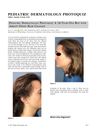
 A 14-year-old boy was diagnosed with a rare hair condition that may lead to hair thinning and has no known effective treatments.
 June 2017 in “Journal of The American Academy of Dermatology”
 Teriflunomide often causes mild to moderate hair thinning and loss in MS patients, which usually improves with or without treatment.
 January 2017 in “Clinical approaches and procedures in cosmetic dermatology”
 Cosmetic procedures can harm hair, but damage can be minimized with knowledge and care; however, once hair is damaged, it cannot be reliably repaired.
The document concludes that hair loss in women is complex, often linked to aging, health conditions, and nutritional deficiencies, and emotional impacts should not be underestimated.
 January 2016 in “Springer eBooks”
 The document concludes that there are various causes and treatments for hair loss, with hair transplantation being a notable option.
 March 2015 in “Zagazig University Medical Journal”
 Damage to hair follicle stem cells may cause permanent hair loss and scarring in PCA.
 January 2015 in “Springer eBooks”
 Hair damage shows as fragility, dullness, and discoloration, varies by ethnicity, and is worsened by cosmetic procedures and diseases.
 January 2015 in “Springer eBooks”
 Hair health is influenced by genetics, aging, and environmental factors, with proper care needed to maintain it.
 January 2014 in “International Journal of Athletic Therapy and training”
 A female runner's hair loss was caused by stress from surgery and recovery, but her hair returned to normal in 5 months.
 March 2012 in “Journal of The American Academy of Dermatology”
 Hair casts are often mistaken for head lice, scalp pain in hair loss is linked to certain nerve factors, eyelash growth treatment is safe and effective, and nail shedding in children may follow hand-foot-mouth disease.
 March 2012 in “Journal of The American Academy of Dermatology”
 Higher levels of certain nerve-related proteins are linked to hair loss in women with scalp pain.
 January 2012 in “Human health handbooks”
 Low-level light therapy is FDA-approved for male pattern hair loss, increases hair count and strength, and is considered safe for use.
 April 2011 in “ISRN Dermatology (Print)”
 The wigs made from human hair and polypropylene were mostly well-tolerated and durable in rabbits, suggesting they could be a new option for people with extensive hair loss.
 January 2011 in “Springer eBooks”
 Eating a balanced diet with the right vitamins and minerals is important for healthy hair, but too many supplements can be harmful.
 August 2009 in “Journal of Oral and Maxillofacial Surgery”
 Hair transplantation and micrografting are effective for cosmetic facial enhancement, requiring careful technique and postoperative care for successful outcomes.
 April 2008 in “Medical & surgical dermatology”
 Certain hairstyles can cause scalp diseases, smoking is linked to hair loss, 5% minoxidil foam is effective for hair loss treatment, and various factors influence wound healing and hair growth.

Biotin boosts wool growth and follicle health in sheep.
 September 2006 in “Plastic and Reconstructive Surgery”
 Hair transplant surgeries can be improved by preserving follicles in a special solution, and surgeries done at outpatient facilities are more profitable than those at hospitals.
 September 2003 in “Clinics in Family Practice”
 Different hair diseases affect people during childbearing years, with treatments ranging from medication to psychological support.
 October 2002 in “Dermatologic Surgery”
 The document concludes that careful planning, efficient use of every hair graft, and setting surgical priorities are crucial for successful hair restoration surgery.
 September 2002 in “Dermatologic Surgery”
 The best results in surgical hair restoration come from careful techniques, optimal use of limited hair supply, correct hair direction, saving hair for key areas, understanding scarring effects, and adjusting hair graft density.
 June 1999 in “Proceedings of SPIE”
 The CO₂ laser is better for hair transplantation because it causes less damage than the Ho:YAG laser.