10 citations
,
January 2015 in “International Journal of Trichology” Mechanical stress contributes to hair loss in androgenetic alopecia.
 April 2018 in “Journal of Investigative Dermatology”
 Higher levels of nidogen1 and type IV collagen are found in basal cell carcinoma compared to normal skin.
2 citations
,
January 2007 in “Actas Dermo-Sifiliográficas” Two cases of hairy elbows syndrome were described, with normal skin texture and symmetrical hair growth.
65 citations
,
December 2010 in “Current Pharmaceutical Biotechnology” TRPV1 is involved in pain, various body functions, and diseases, but targeting it for treatment is challenging.
 January 2025 in “Revista del Centro Dermatológico Pascua”
 Early diagnosis and treatment can help manage fibrosing alopecia in older women.

Hair shaft characteristics can affect mitochondrial DNA metrics, but more research is needed.
 356 citations
,
December 1986 in “The journal of cell biology/The Journal of cell biology”
356 citations
,
December 1986 in “The journal of cell biology/The Journal of cell biology” Hair and nail cells share similar proteins, indicating a common differentiation pathway.
7 citations
,
October 1992 in “PubMed” Sinus hair follicles in mammals have different nerve fiber types with species-specific patterns, especially in cats.
 October 1987 in “Clinics in Dermatology”
 Scalp reduction can improve hair distribution in certain baldness cases but requires careful patient selection and understanding of facial structure.
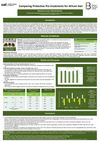 September 2019 in “University of the Arts London Research Online (University of the Arts London)”
 Plant oils and polymers can help protect African hair from damage during styling.
 31 citations
,
December 2002 in “Biochimica et biophysica acta. G, General subjects/Biochimica et biophysica acta. General subjects (Online)”
31 citations
,
December 2002 in “Biochimica et biophysica acta. G, General subjects/Biochimica et biophysica acta. General subjects (Online)” The research found two types of calcium in human hair, one that varies among individuals and another that is consistent across people.
39 citations
,
January 1979 in “Journal of the Society of Cosmetic Scientists of Korea” Surfactants can protect or harm hair, skin, and nails, depending on their type and use.
 4 citations
,
March 2021 in “JAMA”
4 citations
,
March 2021 in “JAMA” Primary care in 2021 focused on identifying nonscarring hair loss and managing common types based on the pattern of hair loss.
48 citations
,
August 1998 in “Developmental Biology” Deleting part of a gene in mice causes wavy hair and high pup loss.
 3 citations
,
November 2021 in “Applied Microscopy”
3 citations
,
November 2021 in “Applied Microscopy” Hair microscopy is a simple and cost-effective method to help diagnose systemic diseases in children.
1 citations
,
January 2012 in “Human health handbooks” Male pattern baldness is mainly caused by genetics and hormones, treatable with minoxidil and finasteride.
1 citations
,
January 1971 Hormones, especially androgens, affect hair growth and can cause hair loss or excess hair in both men and women.
June 2026 in “Integrative Medicine Research” Connarus semidecandrus extract may safely help regrow hair in androgenetic alopecia.
287 citations
,
July 2001 in “Journal of Cell Science” The study found 65 intermediate filament genes, including new keratins, and suggested updating keratin naming.
 April 2018 in “Journal of Investigative Dermatology”
 The document concludes that ERBB2 mutations are common in extramammary Paget disease and may respond to systemic treatments like cancer immunotherapy.
 November 2022 in “PubMed”
 Deep dermal tissue dislocation injury in pigs leads to thicker fibrotic tissue and increased type III collagen, affecting skin repair.
 2 citations
,
January 1997 in “Archives of Dermatology”
2 citations
,
January 1997 in “Archives of Dermatology” Alopecia areata can regrow hair in a pattern similar to androgenetic alopecia.
 3 citations
,
December 2018 in “Journal of Pakistan Association of Dermatology”
3 citations
,
December 2018 in “Journal of Pakistan Association of Dermatology” Alopecia areata mainly affects young people, often showing as patchy hair loss on the scalp.
 2 citations
,
January 2009 in “The Journal of Korean Medicine Ophthalmology and Otolaryngology and Dermatology”
2 citations
,
January 2009 in “The Journal of Korean Medicine Ophthalmology and Otolaryngology and Dermatology” Korean clinic alopecia patients were mostly 20-30 years old, had rapid onset, and showed different symptoms in men and women, with androgenic alopecia being the most common type.
27 citations
,
April 2012 in “Pediatrics in review” Common skin fungal infections can suggest a weak immune system, and for scalp infections, pills work better than creams, with several drug options available.
 October 2024 in “Journal of the Endocrine Society”
 Ovarian stromal hyperplasia can cause high testosterone in postmenopausal women and is treated by removing the ovaries.
 1 citations
,
May 2019 in “Journal of The European Academy of Dermatology and Venereology”
1 citations
,
May 2019 in “Journal of The European Academy of Dermatology and Venereology” New method, hair distribution width (HDW), improves accuracy in diagnosing androgenetic alopecia (AGA).
 3 citations
,
July 2019 in “Experimental Dermatology”
3 citations
,
July 2019 in “Experimental Dermatology” Hair loss patients may have different polyamine levels in various scalp areas.
 184 citations
,
November 2014 in “Developmental Cell”
184 citations
,
November 2014 in “Developmental Cell” Hair follicle dermal stem cells are key for regenerating parts of the hair follicle and determining hair type.
 8 citations
,
November 2022 in “International Journal of Cosmetic Science”
8 citations
,
November 2022 in “International Journal of Cosmetic Science” Human hair varies widely and should be classified by curl type rather than race.