 127 citations
,
January 2015 in “Journal of Biological Rhythms”
127 citations
,
January 2015 in “Journal of Biological Rhythms” The skin's internal clock affects healing, cancer risk, aging, immunity, and hair growth, and disruptions can harm skin health.
3 citations
,
April 2022 in “Research Square (Research Square)” PBX1 reduces aging and cell death in stem cells by boosting SIRT1 and lowering PARP1.
 February 2024 in “Australasian journal of dermatology”
 Inflammatory acne damages skin stem cells and reduces their growth, leading to atrophic acne scars.
 1 citations
,
June 2012 in “Actas Dermo-Sifiliográficas”
1 citations
,
June 2012 in “Actas Dermo-Sifiliográficas” Early and aggressive treatment of scarring alopecia is important to prevent further hair follicle damage.
 82 citations
,
March 2012 in “Development”
82 citations
,
March 2012 in “Development” Drosha and Dicer are essential for hair follicle health and preventing DNA damage in skin cells.
 1 citations
,
April 2016 in “CRC Press eBooks”
1 citations
,
April 2016 in “CRC Press eBooks” Skin aging reflects overall body aging and can indicate internal health conditions.
June 2006 in “Experimental dermatology” Hair follicle bulge cells are important for hair survival and help heal the skin after injury, which might be relevant for understanding hidradenitis suppurativa.
34 citations
,
June 2020 in “British journal of dermatology/British journal of dermatology, Supplement” Frontal fibrosing alopecia is linked to increased immune system activity and reduced stem cells, suggesting early treatment targeting this pathway might prevent hair follicle damage.
 August 2024 in “Cell Death and Disease”
 Activating TLR9 helps heal wounds and regrow hair by using specific immune cells.
Activating certain cells in hair follicles can prevent hair loss caused by cancer treatments.
 133 citations
,
September 2013 in “Nature Reviews Molecular Cell Biology”
133 citations
,
September 2013 in “Nature Reviews Molecular Cell Biology” Different types of stem cells and their environments are key to skin repair and maintenance.
November 2025 in “Journal of Pharmacy and Pharmacology” PEDF reduces oxidative damage and supports stem cells.
3 citations
,
January 2021 in “Oxidative Medicine and Cellular Longevity” Nrf-2-modified stem cells from hair follicles significantly improve ulcerative colitis in rats.

Valproic acid and rapamycin protect hair follicle stem cells from damage by activating a protective pathway.
 24 citations
,
March 2018 in “Pigment Cell & Melanoma Research”
24 citations
,
March 2018 in “Pigment Cell & Melanoma Research” The environment around melanocyte stem cells is key for hair regeneration and color, with certain injuries affecting hair color and potential treatments for pigmentation disorders.
7 citations
,
May 2022 in “Frontiers in Cell and Developmental Biology” Epigenetic and metabolic changes affect stem cell function and aging in skin.
38 citations
,
September 2017 in “Cancer Research” Boosting certain cell signals can prevent hair loss from cancer treatments.
Activating certain hair follicle cells could prevent hair loss from cancer treatments.
 124 citations
,
February 2018 in “Nature Reviews Genetics”
124 citations
,
February 2018 in “Nature Reviews Genetics” Stem cell plasticity is crucial for wound healing but can also contribute to cancer development.
3 citations
,
May 2008 in “Journal of Visualized Experiments” Mouse Epidermal Neural Crest Stem Cells can become various cell types.
July 2024 in “Journal of Investigative Dermatology” Linalool in fragrances may harm hair follicles and contribute to hair loss.
1 citations
,
January 2023 in “Science Advances” The skin's microbiome helps hair regrow by boosting certain cell signals and metabolism.
July 2022 in “Journal of Investigative Dermatology” Skin bacteria help hair regrow by boosting cell metabolism.
19 citations
,
August 2019 in “Journal of Cellular Biochemistry” ADSCs help protect skin from UV damage and aging.
 September 2021 in “CRC Press eBooks”
 Lichen planopilaris causes permanent hair loss and scarring due to damage to hair follicles and can be mistaken for other hair loss conditions.
Stress can cause hair loss and trigger autoimmunity by damaging hair follicle cells.
 218 citations
,
April 2008 in “Genes & Development”
218 citations
,
April 2008 in “Genes & Development” Skin stem cells help repair damage and maintain healthy skin.
61 citations
,
January 2011 in “PloS one” Notch signaling is essential for healthy skin and hair follicle maintenance.
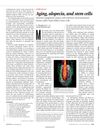 42 citations
,
February 2016 in “Science”
42 citations
,
February 2016 in “Science” The document concludes that both internal stem cell factors and external influences like the environment and hormones affect hair loss and aging, with potential treatments focusing on these areas.
 November 2023 in “PubMed”
 Combining stem cell-conditioned media with anti-androgen drugs can improve hair growth in male pattern baldness.