 40 citations
,
June 2013 in “Biomaterials”
40 citations
,
June 2013 in “Biomaterials” Scientists created 3D hair-like structures that could help study hair growth and test treatments.
 January 2018 in “Indian Dermatology Online Journal”
 Trichoscopy can help tell the difference between artificial hair fibers and other scalp artifacts.
 46 citations
,
January 2009 in “Textile Research Journal”
46 citations
,
January 2009 in “Textile Research Journal” Researchers developed a new method to identify animal hair in textiles, which is effective for various fibers and more reliable than previous methods.
 7 citations
,
October 1963 in “Textile Research Journal”
7 citations
,
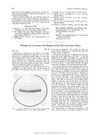
October 1963 in “Textile Research Journal” Merino wool fibers change shape with moisture, while human hair shape stays the same.
 June 2023 in “Livestock studies”
 The article concludes that understanding the molecular processes in hair follicle development can improve the quality of fibers like Angora and cashmere.
 161 citations
,
July 2003 in “ACM Transactions on Graphics”
161 citations
,
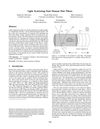
July 2003 in “ACM Transactions on Graphics” Researchers developed a new model for more realistic computer graphics rendering of hair by considering how light scatters on hair fibers.
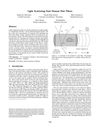
Researchers developed a new model for more realistic computer graphics of hair by considering how light scatters on hair fibers.
 15 citations
,
February 2017 in “International Journal of Women's Dermatology”
15 citations
,
February 2017 in “International Journal of Women's Dermatology” Hair aging and loss are caused by genetics, hormones, environment, and grooming, with treatments like minoxidil effective for certain types of hair loss.
 1 citations
,
February 2021 in “Journal of Dermatological Treatment”
1 citations
,
February 2021 in “Journal of Dermatological Treatment” Artificial hair implants can quickly improve looks and life quality, but they have risks like infection and early fiber loss, so more research is needed to confirm their safety and effectiveness.
98 citations
,
November 1999 in “Dermatology Online Journal” IGF-1 can boost hair growth by promoting cell growth and preventing cell death.
 42 citations
,
January 2011 in “Journal of Biomedical Optics”
42 citations
,
January 2011 in “Journal of Biomedical Optics” Infrared and Raman imaging can non-destructively analyze hair structure and help diagnose hair conditions.
 30 citations
,
April 2018 in “Experimental Dermatology”
30 citations
,
April 2018 in “Experimental Dermatology” The article concludes that developing in vitro models for human hair structures is important for research and reducing animal testing, but there are challenges like obtaining suitable samples and the models' limitations.
 7 citations
,
August 2009 in “Applied Mathematics and Mechanics-English Edition”
7 citations
,
August 2009 in “Applied Mathematics and Mechanics-English Edition” Hair fibers have fractal patterns with properties related to the golden mean, which may affect their functionality.
March 2026 in “Journal of the mechanical behavior of biomedical materials/Journal of mechanical behavior of biomedical materials” Bleaching and UV exposure significantly damage hair.
January 2014 in “Journal of Tissue Engineering and Reconstructive Surgery” Rabbit hair follicle stem cells and nano silk fibers can create a tissue-engineered urethra.
22 citations
,
May 2004 in “Tissue Engineering” PGA fiber-reinforced collagen sponges improve hair growth and skin structure.

The document concludes that understanding hair's composition and the effects of treatments can lead to better hair care products.
September 2019 in “Mağallaẗ al-ʿulūm al-ṭabīʿiyyaẗ wa-al-ḥayātiyyaẗ wa-al-taṭbīqiyyaẗ” Camel hair from Afif can be improved for textiles by adding chemicals or blending with other fibers.
30 citations
,
August 1993 in “PubMed” IL-1 alpha stops hair follicle growth and hair production.
Otter rabbit, mink, and blue fox fur can be identified by their unique hair structures.
6 citations
,
December 2019 in “International Journal of Cosmetic Science” White hair has weaker tryptophan fluorescence than other unpigmented fibers, possibly due to UV exposure or unknown substances.
 4 citations
,
May 2014 in “PubMed”
4 citations
,
May 2014 in “PubMed” Monoethanolamine-based hair colorants can cause more damage to hair than ammonia-based ones.
July 2026 in “arXiv (Cornell University)” Hair has varying structures and properties along its length.
 7 citations
,
January 2018 in “Materials Today: Proceedings”
7 citations
,
January 2018 in “Materials Today: Proceedings” Adding human hair fibers and glass micro-spheres to epoxy improves its wear resistance and strength.
March 2024 in “International journal of molecular sciences” The research identified key proteins that affect wool fiber thickness in Angora rabbits.
 13 citations
,
January 1995 in “Journal of the American Institute for Conservation”
13 citations
,
January 1995 in “Journal of the American Institute for Conservation” Researchers developed a less damaging way to extract red dyes from wool using EDTA and DMF, preserving the fiber's strength for further analysis.
 36 citations
,
October 2014 in “Langmuir”
36 citations
,
October 2014 in “Langmuir” Bleaching hair removes its protective top layer and exposes more hydrophilic groups, changing its chemical surface and affecting how it interacts with products.
 February 2025 in “International Journal of Cosmetic Science”
 Protein carbonylation is a sensitive marker for oxidative damage in hair, especially from light exposure.
 October 2023 in “International journal of women’s dermatology”
 Hair camouflage methods like wigs and extensions can help Black women with alopecia feel better but may also damage hair if not used carefully.
 46 citations
,
May 2012 in “Molecular and Cellular Endocrinology”
46 citations
,
May 2012 in “Molecular and Cellular Endocrinology” Human skin produces sex hormones like estrogen and testosterone, influenced by ARO and StAR, which may affect skin elasticity and hair growth.