January 2025 in “Clinical Case Reports” Timely and aggressive treatment is crucial for improving outcomes in severe complications of adult-onset Still's disease.

Early diagnosis and management of Sheehan's syndrome are crucial for improving quality of life and fertility.
 December 2024 in “Chemical Senses”
 Taste disorders in Cronkhite-Canada syndrome are severe in the front of the tongue but improve with treatment.
 December 2024 in “Eastern Medical College Journal”
 Acne and PCOS are linked due to hormonal imbalances and metabolic issues.
 December 2024 in “Era s journal of medical research”
 Genetic variants in CYP genes may worsen PCOS symptoms.
 October 2024 in “Medicine”
 Cronkhite-Canada syndrome is rare, has a poor prognosis, and requires early diagnosis and ongoing treatment.

Women with PCOS often face menstrual issues, weight gain, and stress, affecting their quality of life.
 October 2024 in “Journal of the Endocrine Society”
 Ayme-Gripp Syndrome was confirmed in a woman through genetic testing, highlighting the need to consider rare genetic conditions in diagnoses.
 September 2024 in “Research Square (Research Square)”
 Many North African women with acne also have PCOS, showing more severe symptoms and higher testosterone levels.
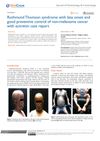 August 2024 in “Journal of Dermatology & Cosmetology”
 Acitretin effectively prevented skin cancer in a patient with late-onset Rothmund-Thomson syndrome.
July 2024 in “Medical alphabet” "Burning scalp" syndrome causes discomfort and may be managed with special cosmetics.
 June 2024 in “Biological and Clinical Sciences Research Journal”
 Thyroid dysfunction worsens symptoms in women with PCOS, so regular thyroid checks are important.
 May 2024 in “International Journal of Advanced Academic Studies”
 Vitamin E helps reduce PCOS symptoms and improves hormonal balance.
 March 2024 in “Journal of Rawalpindi Medical College/Journal Rawalpindi Medical College”
 Skin issues are common and important for diagnosing PCOS.
 February 2024 in “Journal of ayurveda and integrated medical sciences”
 Ayurvedic herbs can help manage Polycystic Ovarian Syndrome (PCOS).
 January 2024 in “Authorea (Authorea)”
 STK11 gene polymorphism does not predict metformin response in PCOS.
 January 2024 in “Современные проблемы науки и образования (Modern Problems of Science and Education)”
 Treating post-COVID hair loss leads to full recovery, while not treating it often results in ongoing symptoms.
 January 2024 in “Genetics in Medicine Open”
 A new IL6ST gene variant may cause a unique form of hyper-IgE syndrome with skin abscesses and high IgE levels.

PCOS phenotypes A and B are more common and linked to higher health risks in women from the Ecuadorian Andes.
 November 2023 in “Manuju”
 Treating hyperprolactinemia can help manage PCOS symptoms.

PCOS requires personalized treatment to improve life quality and reduce health risks.
 September 2023 in “Kerala Journal of Ayurveda”
 Ayurvedic treatment helped a woman with PCOS resume regular periods and improve symptoms without side effects.
 September 2023 in “Reproductive health of woman”
 PCOS is common, affects fertility, and requires personalized treatment to manage symptoms and health risks.

The case shows the difficulty in diagnosing certain conditions when standard tests are negative.
 May 2023 in “International Journal of Home Science”
 PCOS is linked to metabolic issues and infertility, needing more research.
 April 2023 in “The journal of investigative dermatology/Journal of investigative dermatology”
 Tet2 and Tet3 enzymes are important for controlling hair growth and shape by affecting gene activity and DNA structure in hair follicles.
 April 2023 in “Elsevier eBooks”
 PCOS is a common and costly condition in North American women, causing various health issues like obesity, diabetes, and fertility problems.

Women with Polycystic Ovary Syndrome (PCOS) have a higher risk of developing type 2 diabetes due to insulin resistance.
 January 2023 in “International journal of homoeopathic sciences”
 Homeopathic remedies can help manage PCOS symptoms in girls aged 17-21.
 December 2022 in “International journal of preventive, curative & community medicine”
 PCOS is a common hormonal disorder in women, causing symptoms like acne and irregular periods, and is managed with medication and lifestyle changes.