January 2025 in “EXPERIMENTAL ANIMALS” Gamma-ray exposure improves genome editing efficiency in mice using the i-GONAD method.
 December 2024 in “Indian Journal of Dermatology”
 Dermoscopy is useful for diagnosing Atrichia with Papular Lesions in children without needing a biopsy.
December 2023 in “JEADV Clinical Practice” Brownish halos around axillary hair can help diagnose frontal fibrosing alopecia.
 November 2023 in “Scientific Reports”
 A gene mutation in Lama3 is linked to a common type of hair loss.
 August 2023 in “The Kitakanto Medical Journal”
 Image analysis can effectively identify changes in scalps affected by chemotherapy-induced hair loss.
 February 2023 in “Cosmoderma”
 An infant with complete hair loss was diagnosed with a genetic disorder affecting hair growth.
 December 2022 in “Curēus”
 Genetic testing confirmed a young girl has Atrichia with Papular Lesions due to mutations in the hairless gene.
 September 2022 in “IP Indian journal of clinical and experimental dermatology”
 An 8-year-old girl has a rare genetic disorder causing complete, irreversible hair loss and skin bumps.
 September 2021 in “CRC Press eBooks”
 Acne keloidalis nuchae is a hair loss condition affecting men of African descent, causing scar-like bumps on the scalp and neck.
 April 2020 in “International journal of research in dermatology”
 An 8-year-old girl has a rare, irreversible hair loss condition caused by a genetic mutation.
January 2018 in “bioRxiv (Cold Spring Harbor Laboratory)” The mutant HR bmh protein mis-localizes in cells, affecting skin and hair development.
 January 2018 in “bioRxiv (Cold Spring Harbor Laboratory)”
 Researchers found key regions in the mouse hairless gene that control its activity in skin and brain cells, affecting hair follicle function.
 January 2017 in “Jikken doubutsu ihou/Jikken doubutsu/Experimental animals/Jikken Dobutsu”
 Mice with a changed Hr gene lose and regrow hair due to changes in the gene's activity.
 September 2016 in “Journal of Dermatological Science”
 A gene mutation worsens skin irritation in mice due to a lack of certain fats.
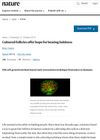
Growing hair follicles from cultured cells could potentially treat baldness, but more research is needed.
Vitamin D is made by the skin, helps control various body functions, and affects skin health and immunity.
Melatonin increased the activity of a hair growth gene in Cashmere goats.
 April 2012 in “Encyclopedia of Life Sciences”
 Different genes are linked to various types of hair loss.
April 2012 in “Journal of evolution of medical and dental sciences” No effective treatment exists to stimulate hair growth in atrichia with papular lesions.
 March 2012 in “Journal of The American Academy of Dermatology”
 Temporal triangular alopecia usually starts in early childhood and treatment with Minoxidil has limited effectiveness.
January 2012 in “Human health handbooks” The skin produces and uses vitamin D for bone health, cell growth, and immune function.
 October 2005 in “Nature reviews. Molecular cell biology (Print)”
 Hairless protein is key for hair growth, cell differences cause gene expression variation, and the N-end rule pathway senses nitric oxide for protein breakdown.
 January 2000 in “BioScience”
 The document concludes that understanding hair biology is key to treating hair disorders, with gene therapy showing potential as a future treatment.
 94 citations
,
September 2008 in “Journal of the American Academy of Dermatology”
94 citations
,
September 2008 in “Journal of the American Academy of Dermatology” Traction alopecia is more common in African women than girls, especially when traction is applied to chemically relaxed hair; avoiding such hairstyles may reduce the risk.
 1 citations
,
April 2015 in “Current problems in dermatology”
1 citations
,
April 2015 in “Current problems in dermatology” The document concludes that the trichogram is a useful tool for diagnosing hair loss and suggests semi-organ cultures for practical trichological research.
 November 2023 in “BMC women's health”
 Older age and specific haircare practices increase the risk of traction alopecia, and education on these factors could help prevent it.
 January 2021 in “Journal of Allergy and Therapy”
 Electric Follicle Stimulation may promote hair growth and density with no known side effects.
30 citations
,
July 2021 in “Annals of Botany” Localized nutrients boost maize growth and phosphorus uptake by enhancing root hairs and lateral roots.
1 citations
,
October 2000 in “Journal of Investigative Dermatology” The Thr1022Ala variant in the hairless gene is not a disease-causing mutation.
 November 2023 in “Journal of plant nutrition and soil science”
 Boron deficiency in maize affects leaf boron levels and nutrient uptake differently depending on root hair presence and soil type.