 October 2013 in “Faculty Opinions – Post-Publication Peer Review of the Biomedical Literature”
 FGF9 from certain T cells helps create new hair follicles during wound healing, which could potentially be used for hair loss treatments.
31 citations
,
September 1996 in “Differentiation” The upper dermal sheath can regenerate hair in rats.
1 citations
,
July 2025 in “Scientific Reports” CD133+ cells are crucial for hair growth.
28 citations
,
July 1993 in “The journal of investigative dermatology/Journal of investigative dermatology”  September 1980 in “PubMed”
 Using selenium disulfide on guinea pigs increased hair loss.
 15 citations
,
July 2017 in “PubMed”
15 citations
,
July 2017 in “PubMed” Injecting a mix of human skin and hair cells into mice can grow new hair.
4 citations
,
February 2023 in “Stem Cell Research & Therapy” Mouse skin cells can become sperm-like cells in the lab.
 15 citations
,
January 2019 in “Experimental Dermatology”
15 citations
,
January 2019 in “Experimental Dermatology” Lanyu pigs show that partial-thickness wounds can partially regenerate important skin structures, which may help improve human skin healing.
5 citations
,
February 2023 in “Frontiers in Veterinary Science” Ovine dermal papilla cells are promising for hair growth research due to their stable properties and hair-inducing abilities.
7 citations
,
October 2017 in “Journal of exotic pet medicine” A guinea pig with ovarian cysts had a uterine infection and abnormal uterus lining due to a piece of hay inside it.
 2 citations
,
April 2021 in “International Journal of Molecular Sciences”
2 citations
,
April 2021 in “International Journal of Molecular Sciences” The study concluded that changing the culture conditions can cause sika deer skin cells to switch from a flat to a 3D pattern, which is important for creating hair follicles.
2 citations
,
February 2022 in “Genomics” Researchers discovered new cell types in goat hair follicles that could help understand hair regrowth and human hair loss.
13 citations
,
May 2019 in “Archives of dermatological research” Tranexamic acid reduces skin aging more in female mice.
August 2016 in “The journal of investigative dermatology/Journal of investigative dermatology” Different types of skin cells create unique support structures that can affect skin cell growth and could help in skin repair.
 June 2013 in “Faculty Opinions – Post-Publication Peer Review of the Biomedical Literature”
 FGF9 from certain cells can trigger new hair growth during wound healing, but humans have fewer of these cells, which may limit hair regrowth.
19 citations
,
January 2019 in “Animals” PDGFA helps activate hair growth in cashmere goats.
 7 citations
,
December 2016 in “Journal of The Taiwan Institute of Chemical Engineers”
7 citations
,
December 2016 in “Journal of The Taiwan Institute of Chemical Engineers” Pig blood plasma can be used to promote human hair growth and is a good alternative to the commonly used serum additive.
55 citations
,
September 2003 in “Experimental Dermatology” PDGF signaling may play a role in hair growth cycle regulation.
January 2003 in “Zhonghua shaoshang zazhi” Murine fetal epidermal stem cells can help regenerate hair follicles.
 April 2017 in “Journal of Investigative Dermatology”
 Deleting the CRIF1 gene in mice disrupts skin and hair formation, certain proteins affect hair growth, a new compound may improve skin and hair health, blood cell-derived stem cells can create skin-like structures, and hair follicle stem cells come from embryonic cells needing specific signals for development.
 1 citations
,
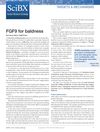
June 2013 in “Science-business Exchange”
1 citations
,
June 2013 in “Science-business Exchange” Increasing the levels of a protein called FGF9 can promote hair growth, but humans may not respond the same way due to a lack of certain cells.
The skin can still regenerate and function well even with fewer fibroblasts.
125 citations
,
August 1992 in “Development” Implanted dermal papillae can induce hair growth in rat ear wounds.
Dermal papilla cells can help form hair-like structures in lab-grown skin cells.

Human dermal papilla cell vesicles can reduce skin fibrosis in mice.
 33 citations
,
September 2016 in “British journal of dermatology/British journal of dermatology, Supplement”
33 citations
,
September 2016 in “British journal of dermatology/British journal of dermatology, Supplement” Human hair follicle dermal cells can effectively replace other cells in engineered skin.
34 citations
,
January 1983 in “Journal of Investigative Dermatology” August 2000 in “Chinese Journal of Dermatology” Dermal papilla cells can successfully grow and maintain hair follicles.
 3 citations
,
January 2018 in “PeerJ”
3 citations
,
January 2018 in “PeerJ” Researchers created a long-lasting mouse skin cell strain that may help with hair growth research and treatments.
 37 citations
,
April 2017 in “npj Regenerative Medicine”
37 citations
,
April 2017 in “npj Regenerative Medicine” PDGF signaling is crucial for maintaining and renewing hair follicle stem cells, which could help treat hair loss.