11 citations
,
October 2021 in “Journal of The European Academy of Dermatology and Venereology” Topical finasteride is an effective and safer treatment for male hair loss.
4 citations
,
January 2015 in “Indian Journal of Dermatology” 15.33% of young Caucasian men have severe hair loss, with higher rates in Jewish men and links to age, BMI, and possibly metabolic syndrome.
 17 citations
,
January 2010 in “PubMed”
17 citations
,
January 2010 in “PubMed” Optimal storage solutions and effective additives are crucial for improving the survival of hair transplant grafts.
 December 2010 in “Dermatologic Surgery”
 Finasteride's effectiveness on the frontal hair loss area is not well-studied or confirmed.
 11 citations
,
August 2013 in “Facial Plastic Surgery Clinics of North America”
11 citations
,
August 2013 in “Facial Plastic Surgery Clinics of North America” Tissue expanders effectively repair large scalp defects and restore a natural-looking scalp.
1 citations
,
December 2007 The micropunctiform technique for hair restoration is safe, simple, and creates a natural hairline.
 61 citations
,
January 2019 in “American Journal of Clinical Dermatology”
61 citations
,
January 2019 in “American Journal of Clinical Dermatology” The cause of Frontal Fibrosing Alopecia is unclear, diagnosis involves clinical evaluation and various treatments exist, but their effectiveness is uncertain.
 13 citations
,
January 2013 in “Dermatologic Surgery”
13 citations
,
January 2013 in “Dermatologic Surgery” Experienced hair transplant surgeons suggest a limited number of hair follicles can be used for transplants, and recommend conservative methods to avoid scarring and depletion.
 86 citations
,
July 2002 in “Clinical and Experimental Dermatology”
86 citations
,
July 2002 in “Clinical and Experimental Dermatology” FPHL is a common, age-related, genetic hair loss with unclear causes and limited treatment options.
 17 citations
,
October 2017 in “Journal of Cutaneous Medicine and Surgery”
17 citations
,
October 2017 in “Journal of Cutaneous Medicine and Surgery” No treatment has been proven to effectively stop hair loss or regrow hair in Frontal Fibrosing Alopecia, and more research is needed.
 13 citations
,
November 2018 in “Annals of Plastic Surgery”
13 citations
,
November 2018 in “Annals of Plastic Surgery” Nonshaven follicular unit extraction is a good hair transplant option that doesn't require shaving and can transplant up to 3000 grafts daily.
 2 citations
,
April 2017 in “Actas Dermo-Sifiliográficas”
2 citations
,
April 2017 in “Actas Dermo-Sifiliográficas” Best treatment for Frontal Fibrosing Alopecia is 5-alpha-reductase inhibitors and intralesional corticosteroids.
 June 2026 in “Clinical Cosmetic and Investigational Dermatology”
 Cell-based therapies offer better repigmentation for larger vitiligo areas, with CD8+ T cell count as a potential biomarker for success.
 March 2026 in “Frontiers in Medicine”
 Diffuse unpatterned alopecia can affect donor areas, but treatment with finasteride and minoxidil can improve hair density.
 June 2024 in “BioSCIENCE”
 Microinfusion of methotrexate can help treat frontal fibrosing alopecia.
 30 citations
,
May 2014 in “American Journal of Clinical Dermatology”
30 citations
,
May 2014 in “American Journal of Clinical Dermatology” The conclusion is that better understanding and more research are needed to effectively manage follicular and scarring disorders in skin of color, with an emphasis on patient education and cultural awareness.
 26 citations
,
August 2016 in “Actas Dermo-Sifiliográficas”
26 citations
,
August 2016 in “Actas Dermo-Sifiliográficas” Frontal Fibrosing Alopecia in men is often missed and can come with symptoms like facial bumps and hair loss on eyebrows and limbs.
 13 citations
,
May 2004 in “Dermatologic Surgery”
13 citations
,
May 2004 in “Dermatologic Surgery” The paper concludes that copying the natural direction and angle of hair in transplants is key for a natural look and doesn't harm hair survival.
 7 citations
,
January 2013 in “Indian Journal of Plastic Surgery”
7 citations
,
January 2013 in “Indian Journal of Plastic Surgery” Body and beard hair can be used for hair transplants in baldness treatment but keep their original color and curl.
 2 citations
,
June 1997 in “The American Journal of Cosmetic Surgery”
2 citations
,
June 1997 in “The American Journal of Cosmetic Surgery” Hair transplant megasessions are safe up to 1500 grafts but larger sessions have more risks and challenges.
 March 2026 in “Clinical Cosmetic and Investigational Dermatology”
 Effective hair removal is crucial for better cosmetic results in forehead flap reconstruction, with laser hair removal being the preferred method.
 January 2016 in “Georg Thieme Verlag eBooks”
 The document recommends personalized, culturally sensitive treatments to rejuvenate the aging Asian face, focusing on natural results and specific techniques for skin, hair, and facial features.
 April 2020 in “Journal of Cosmetic and Laser Therapy”
 Optimal transplant density for Chinese male hair loss patients is 35-50 hair/cm², with minimum 106.88 hair/cm² left in donor area for esthetic satisfaction.
 8 citations
,
November 2018 in “Australasian Journal of Dermatology”
8 citations
,
November 2018 in “Australasian Journal of Dermatology” Frontal fibrosing alopecia in families shows similar signs to individual cases and may have a genetic link.
 1 citations
,
June 2016 in “Aesthetic Surgery Journal”
1 citations
,
June 2016 in “Aesthetic Surgery Journal” Body hair is a safe and effective option for hair transplants when scalp hair is limited.
 38 citations
,
February 2016 in “Surgery Journal”
38 citations
,
February 2016 in “Surgery Journal” Facial plastic surgery has evolved to focus on less invasive techniques and innovative technologies for cosmetic and reconstructive procedures.
 10 citations
,
May 2012 in “Journal of Plastic Reconstructive and Aesthetic Surgery”
10 citations
,
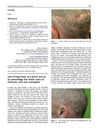
May 2012 in “Journal of Plastic Reconstructive and Aesthetic Surgery” Beard hair can effectively hide hair transplant scars.
1 citations
,
September 2017 For East Asians, using a deeper and larger punch in FUE is crucial to avoid follicle damage.
 March 2025 in “International Journal of Trichology”
 FAPD in children may not depend on androgens and should be treated with anti-inflammatory measures and minoxidil.

Frontal fibrosing alopecia in men is often misdiagnosed and needs better diagnostic criteria and treatments.