November 2022 in “International journal of trichology” Glyoxylic acid straighteners cause more protein loss but have similar hair strength effects as traditional alkaline straighteners.
February 2023 in “Reactions Weekly” 11 citations
,
December 2017 in “Orphanet Journal of Rare Diseases” A new mutation in the ST14 gene broadens the understanding of ichthyosis-hypotrichosis syndrome.
89 citations
,
March 1990 in “PubMed” Shaving is the most effective temporary hair removal method for facial hirsutism.
9 citations
,
October 1995 in “Clinical Dysmorphology” The family has a unique form of ectodermal dysplasia similar to Clouston syndrome but with different hair and skin symptoms.
August 2000 in “Microscopy and Microanalysis” The method successfully visualizes iodine in biological tissues.
16 citations
,
March 2022 in “Clinica Chimica Acta” Idiopathic hirsutism may be linked to increased enzyme activity.
 February 2026 in “Chromatographia”
 A reliable method was developed to detect hair growth compounds in products, ensuring safety and compliance.
 10 citations
,
May 1995 in “Journal of General Internal Medicine”
10 citations
,
May 1995 in “Journal of General Internal Medicine” Most women with excessive hair growth have PCOS; treatment varies and focuses on preventing new hair, with electrolysis as the only permanent removal method.
March 2023 in “Reactions Weekly” January 2023 in “Reactions Weekly” January 2023 in “Reactions Weekly” June 2018 in “Dermatologic Surgery” January 2023 in “Reactions Weekly” April 2006 in “Pediatrics in Review” Graves disease is the main cause of hyperthyroidism in kids, especially girls aged 11-15, and requires lifelong follow-up.
 December 2016 in “Springer eBooks”
 Chrousos Syndrome is caused by mutations that make the body less sensitive to glucocorticoids, leading to various symptoms and requiring high-dose treatment.
February 2026 in “The Laryngoscope” Airway issues can occur in Conradi–Hünermann–Happle syndrome and can be managed with minimally invasive procedures.
48 citations
,
January 2008 in “European Neurology” Thallium poisoning causes pain, hair loss, and nerve issues, treatable with hemoperfusion and hemodialysis.
February 2009 in “Journal of the American Academy of Dermatology” Both skin products were equally effective in improving facial discoloration and skin quality.
 58 citations
,
March 1985 in “Journal of The American Academy of Dermatology”
58 citations
,
March 1985 in “Journal of The American Academy of Dermatology” The document concludes that electrolysis and thermolysis can permanently remove hair but calls for better regulation to ensure safety, and notes a possibility of hair regrowth and rare complications.
 1 citations
,
September 2014 in “Hormones”
1 citations
,
September 2014 in “Hormones” Over a third of women thought to have non-classical congenital adrenal hyperplasia didn't have it confirmed by genetic tests.
 February 2024 in “Journal of Molecular Structure”
 The new minoxidil and salicylic acid hydrogel improves alopecia treatment.
16 citations
,
March 1986 in “Biochemical Pharmacology”  1 citations
,
October 2020 in “Current Drug Discovery Technologies”
1 citations
,
October 2020 in “Current Drug Discovery Technologies” The research found that compound 6, a newly created steroid, is more effective at inhibiting 5α-reductase (an enzyme) than current treatments, suggesting it could be a better option for treating urinary tract symptoms in men.
5 citations
,
January 1964 in “Naunyn-Schmiedeberg s Archives of Pharmacology” Iodine is absorbed by hair just below the skin surface.
January 2014 in “edoc (University of Basel)” Anabolic steroids and inflammation can disrupt androgen metabolism, potentially causing health issues.
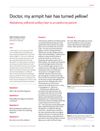
A 15-year-old boy's smelly, yellow armpit hair improved with clindamycin treatment.
 September 2014 in “International Journal of Dermatology and Venereology”
 Certain histamine receptors (H2R, H3R, H4R) have unique roles in treating skin diseases, with H2R helping with chronic urticaria and other conditions, H3R providing pain relief and allergy benefits, and H4R reducing inflammation and itchiness.
May 2021 in “Journal of the Endocrine Society” A woman developed male characteristics after using unregulated hormone therapy.
 100 citations
,
May 2011 in “Journal of Pediatric and Adolescent Gynecology”
100 citations
,
May 2011 in “Journal of Pediatric and Adolescent Gynecology” The document concludes that proper diagnosis and a multidisciplinary approach are crucial for managing Congenital Adrenal Hyperplasia effectively.