
EfficientNet improves accuracy in diagnosing hair loss stages.
 16 citations
,
October 2012 in “The Journal of Dermatology”
16 citations
,
October 2012 in “The Journal of Dermatology” The BASP classification is more reliable than the Norwood-Hamilton for classifying hair loss in men and women.
 September 2020 in “Hair transplant forum international”
 O'Tar T. Norwood was a key figure in creating a system to classify male baldness and founding hair restoration societies.
 9 citations
,
January 2017 in “International Journal of Trichology”
9 citations
,
January 2017 in “International Journal of Trichology” No current system perfectly classifies male-pattern hair loss, indicating a need for a new system for better diagnosis and treatment.
 101 citations
,
January 2016 in “Journal of Cutaneous and Aesthetic Surgery”
101 citations
,
January 2016 in “Journal of Cutaneous and Aesthetic Surgery” Different types of hair loss need specific treatments, and while many classification systems exist, each has its flaws; more research is needed to refine these systems and treatments.
 1 citations
,
September 2016 in “Hair transplant forum international”
1 citations
,
September 2016 in “Hair transplant forum international” Dr. Muhammad Ahmad created a simpler system to better describe male pattern hair loss.
 July 2007 in “Faculty Opinions – Post-Publication Peer Review of the Biomedical Literature”
 The BASP classification is a detailed system for categorizing hair loss in both men and women, but it may be complex for beginners and not fully suitable for grading female hair loss.
 1 citations
,
January 2017 in “Springer eBooks”
1 citations
,
January 2017 in “Springer eBooks” The document explains how hair loss patterns in men and women, known as Androgenetic alopecia, are classified using the Hamilton-Norwood system for men and the Ludwig grade system for women.
October 2022 in “Hair Transplantation” Male pattern hair loss is mainly caused by genetics and hormones, especially DHT.
 January 2016 in “Springer eBooks”
 The document explains how hair loss in men and women, known as Androgenetic alopecia, is categorized using the Hamilton-Norwood system for men and the Ludwig grade system for women.
March 2026 in “Frontiers in Medicine” A hybrid model using traditional methods, trichoscopy, and AI improves hair loss assessment.
 November 2009 in “Hair transplant forum international”
 Dr. Bernard Cohen created a new system to classify hair loss using numbers and a detailed scalp map.
 41 citations
,
May 2001 in “PubMed”
41 citations
,
May 2001 in “PubMed” Different thicknesses of hair strands can indicate the severity of hair thinning.
 5 citations
,
January 1995 in “Journal of Investigative Dermatology”
5 citations
,
January 1995 in “Journal of Investigative Dermatology” A trial found that using finasteride, a hair growth drug, can be effectively measured by comparing before and after photos.
 4 citations
,
October 2012 in “Archives of Dermatology”
4 citations
,
October 2012 in “Archives of Dermatology” Hair diameter diversity is a key sign for diagnosing and managing male pattern baldness.
 50 citations
,
December 2008 in “Clinical Endocrinology”
50 citations
,
December 2008 in “Clinical Endocrinology” Hair loss in young men linked to higher risk of insulin resistance and metabolic issues.
 9 citations
,
November 1993 in “Journal of The American Academy of Dermatology”
9 citations
,
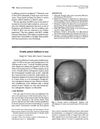
November 1993 in “Journal of The American Academy of Dermatology” Some men can have female pattern baldness without hormonal abnormalities or signs of feminization.
 9 citations
,
October 1988 in “Clinics in Dermatology”
9 citations
,
October 1988 in “Clinics in Dermatology” Hair loss is caused by genetics and hormones, diagnosed through examination and biopsy, and treated with medications or surgery.
 6 citations
,
May 2006 in “Skinmed”
6 citations
,
May 2006 in “Skinmed” Androgens contribute to common male hair loss; more research needed for hair growth medication.
 3 citations
,
January 2015 in “DOAJ (DOAJ: Directory of Open Access Journals)”
3 citations
,
January 2015 in “DOAJ (DOAJ: Directory of Open Access Journals)” There's no link between hair loss type androgenic alopecia and benign prostatic hyperplasia, but early hair loss and family history can mean more severe alopecia.

The document concludes that the new model realistically simulates male baldness and could be useful for medical purposes and entertainment.
 November 2018 in “Springer eBooks”
 Finasteride and minoxidil are effective, low-risk treatments for male hair loss, and patient education on these therapies is important.
 January 2010 in “Ciencia UANL”
 Young men with hair loss may have a higher risk of insulin resistance and related health issues.
October 2021 in “DOAJ (DOAJ: Directory of Open Access Journals)” Trichoscopy effectively distinguishes between severe and mild male pattern hair loss.
2 citations
,
May 2002 in “PubMed” Micro-graft hair transplantation is an effective, simple, and painless method for permanent hair restoration in men and women.
 103 citations
,
June 2007 in “Endocrinology and Metabolism Clinics of North America”
103 citations
,
June 2007 in “Endocrinology and Metabolism Clinics of North America” Male pattern hair loss is genetic and influenced by hormones, with treatments like minoxidil and surgery available.
8 citations
,
January 2019 in “Clinical research and trials” Finasteride is effective and safe for long-term treatment of hair loss in Japanese men.
 4 citations
,
January 2013 in “European Journal of Dermatology”
4 citations
,
January 2013 in “European Journal of Dermatology” Epigenetic differences affect hair loss in identical Japanese male twins.
1 citations
,
January 2017 in “대한피부과학회지” Male pattern hair loss is diagnosed and treated earlier and is milder, possibly due to early puberty.