 13 citations
,
July 2007 in “Pediatric dermatology”
13 citations
,
July 2007 in “Pediatric dermatology” Vitamin D3 ointment improved skin bumps on the chin but didn't give lasting results after stopping use.
July 2024 in “Journal of Investigative Dermatology” Bioengineered skin models aging well, useful for studying aging and testing treatments.
 1 citations
,
June 2022 in “Experimental dermatology”
1 citations
,
June 2022 in “Experimental dermatology” The SHJH hr mice with a mutated Hr gene show signs of faster skin aging due to poor antioxidative protection.
January 2006 in “Dianzi xianwei xuebao” Netherton syndrome causes specific skin and hair changes that help in early diagnosis.
2 citations
,
June 2003 in “American Journal of Dermatopathology” A unique case of skin cancer showed unusual calcification, possibly linked to calcium-binding proteins.
June 2016 in “Annals of the Rheumatic Diseases” Long-term glucocorticoid use can cause skin problems like easy bruising and poor wound healing, especially at higher doses.
30 citations
,
January 1999 in “Journal of Cutaneous Pathology” Spiny keratoderma may be ectopic hair formation on palms and soles.
 March 2023 in “International journal of integrated medical research”
 Keratosis pilaris is a common skin condition where hair follicles get clogged with keratin, mostly on the arms and thighs.
26 citations
,
August 2007 in “Annals of Anatomy - Anatomischer Anzeiger” Feathers become harder as they develop due to a change in keratin type.
22 citations
,
January 1990 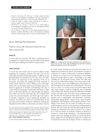 4 citations
,
November 2012 in “Dermatitis”
4 citations
,
November 2012 in “Dermatitis” A man got severe skin irritation after using marking nut sap for hair loss.
 19 citations
,
February 2017 in “Journal of radiation research”
19 citations
,
February 2017 in “Journal of radiation research” High-dose radiation speeds up aging in skin stem cells.
 January 1953 in “Nihon Chikusan Gakkaiho”
 Soaking calf skin in lime solution dissolves cells at different rates, with optimal dehairing after 4-7 days.
November 2024 in “Journal of Investigative Dermatology” Nerve fibers may worsen mast cell activity, leading to abnormal elastic fiber buildup from sun exposure.
32 citations
,
August 2003 in “Journal of the European Academy of Dermatology and Venereology” cGVHD often severely affects the skin, causing rapid aging and other issues.
11 citations
,
January 2005 in “Brazilian Journal of Medical and Biological Research” Hairless USP mice have enlarged skin cysts as they age.
 2 citations
,
December 2017 in “Skin appendage disorders”
2 citations
,
December 2017 in “Skin appendage disorders” An elderly man's non-healing scalp lesion was successfully treated with a strong topical steroid.
 56 citations
,
June 1970 in “The BMJ”
56 citations
,
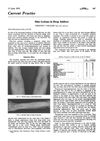
June 1970 in “The BMJ” Drug addicts often have scars, skin color changes, blocked veins, and bruising, with severe ulcers from barbiturate injections.
7 citations
,
April 2004 in “International Journal of Dermatology” The newborn's skin blistering is due to a genetic condition called epidermolytic hyperkeratosis.
9 citations
,
July 2008 in “Archives of Dermatological Research”  September 2021 in “CRC Press eBooks”
 Pregnancy can cause normal skin changes, including darkening of certain areas, nail changes, vascular changes, and breast changes like stretch marks.
 March 2015 in “Plastic and reconstructive surgery”
 Human skin has multiple layers and functions, with key roles in protection, temperature control, and appearance.
19 citations
,
November 1985 in “Archives of Dermatology” The newborn's skin blisters healed without scarring, leaving some light spots, and stopped forming after four months.

Patients on long-term hemodialysis often experience severe itching and various skin and nail problems.
 January 2024 in “Clinical, cosmetic and investigational dermatology”
 Dermatologists should customize cosmetic treatments for dark-skinned patients to minimize risks and complications.
81 citations
,
February 2014 in “EMBO molecular medicine” Activating Nrf2 in skin cells causes skin disease similar to chloracne in mice.
 November 2022 in “Journal of Investigative Dermatology”
 Skin aging and cancer development are influenced by the competition between stem cells.
 35 citations
,
January 2009 in “Indian Journal of Dermatology, Venereology and Leprology”
35 citations
,
January 2009 in “Indian Journal of Dermatology, Venereology and Leprology” Older adults commonly experience wrinkles, itchy skin, psoriasis, fungal infections, skin growths, grey hair, hair loss, and nail ridging, but no skin cancer was found in this group.
 28 citations
,
April 1996 in “Cell biology international”
28 citations
,
April 1996 in “Cell biology international” Changes in keratin affect skin health and can lead to skin disorders like blistering diseases and psoriasis.
June 2012 in “Data Archiving and Networked Services (DANS)” Severe skin damage in children affects their health and social interactions.