7 citations
,
January 1986 in “Prenatal Diagnosis” Fetal skin biopsy can help diagnose protein-related disorders before birth.
January 2026 in “Clinical Case Reports” A 6-year-old girl had both monilethrix and trichorrhexis nodosa, causing brittle hair, with minimal improvement from treatment.
July 2025 in “Clinical Case Reports” A new genetic mutation in the TRPS1 gene causes Trichorhinophalangeal Syndrome, leading to specific hair, dental, and bone issues.
1 citations
,
January 2015 in “Journal of clinical case reports” KFSD causes scarring hair loss and skin roughness, mainly in males.
 3 citations
,
May 2018 in “The American Journal of Medicine”
3 citations
,
May 2018 in “The American Journal of Medicine” A woman's long-term scalp issues were diagnosed as a rare skin disorder called cutaneous Langerhans cell histiocytosis.
11 citations
,
January 1977 in “Archives of dermatological research” Mouse tail skin has different keratinization near hair follicles and scales.
 March 2024 in “Indian Journal of Dermatology”
 The man was diagnosed with Cronkhite-Canada syndrome, a rare disorder with GI polyps, skin issues, hair loss, and nail problems.
4 citations
,
April 2012 in “The journal of investigative dermatology/Journal of investigative dermatology” Krt16-deficient mice help understand skin disorders like PC and FNEPPK.
July 2023 in “International journal of physiology” Hypertrichosis lanuginosa causes excessive fine hair growth, often linked to genetics or cancer, with limited treatment options.
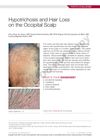 September 2023 in “Cutis”
 A baby girl has a hair disorder called monilethrix, causing fragile hair that may improve over time.
 14 citations
,
August 2006 in “Clinical and Experimental Dermatology”
14 citations
,
August 2006 in “Clinical and Experimental Dermatology” A girl with no hair neglect developed plica neuropathica in the hospital, lost all her hair, but it grew back.
61 citations
,
September 1994 in “Journal of Medical Genetics” Pachyonychia congenita is linked to a keratin gene on chromosome 17.
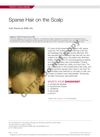
A 5-year-old girl has sparse, dry, and brittle hair but is otherwise healthy.
 16 citations
,
April 2012 in “Journal of mammalogy”
16 citations
,
April 2012 in “Journal of mammalogy” Young female Australian fur seals are losing hair due to low tyrosine and zinc levels and high pollution exposure.
November 2025 in “Indian Dermatology Online Journal” Clouston syndrome can lead to skin cancer, so monitoring is crucial.
372 citations
,
December 2004 in “Nature Genetics” 2 citations
,
February 2022 in “bioRxiv (Cold Spring Harbor Laboratory)” Impaired LEF1 activation speeds up skin cell development in Hutchinson-Gilford Progeria Syndrome.
 July 2023 in “The Keio Journal of Medicine”
 Certain gene variants can cause inherited hair diseases, which are important to diagnose and understand for patient care.
2 citations
,
May 2020 in “The journal of investigative dermatology/Journal of investigative dermatology” A TP63 gene mutation causes significant hair loss and mild skin, nail, and tooth abnormalities.
 19 citations
,
March 1988 in “International Journal of Dermatology”
19 citations
,
March 1988 in “International Journal of Dermatology” Hair shaft dysplasias are abnormal hair conditions that can be inherited or acquired and may signal other health issues, with limited treatment options available.
 1 citations
,
June 2022 in “Chinese medical journal/Chinese Medical Journal”
1 citations
,
June 2022 in “Chinese medical journal/Chinese Medical Journal” Two new mutations in the CDH3 gene cause hair loss and vision problems in a young girl.
 May 2024 in “Animal genetics”
 A cat's poor wound healing was linked to a genetic deletion in the COL5A1 gene.
 1 citations
,
January 2019 in “Acta dermato-venereologica”
1 citations
,
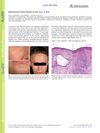
January 2019 in “Acta dermato-venereologica” The woman's skin and hair symptoms were confirmed as frontal fibrosing alopecia, and while facial papules are common in such cases, there's no effective local treatment, but systemic treatments can help.
1 citations
,
October 2019 in “European Journal of Dermatology” Salicylic acid ointment effectively treated a toddler's skin condition.
January 2024 in “Skin Appendage Disorders” 3 citations
,
March 2016 in “Experimental Dermatology” A mutation in the hairless gene speeds up severe itchy skin in mice on a special diet.
6 citations
,
February 2020 in “Journal of Cutaneous Pathology” Nevus psiloliparus lacks mature hair follicles but keeps other skin structures intact.
26 citations
,
October 2002 in “Journal of Investigative Dermatology” A specific gene mutation causes congenital hair loss.
 52 citations
,
November 2003 in “Journal of Investigative Dermatology”
52 citations
,
November 2003 in “Journal of Investigative Dermatology” Different harmful mutations in the CDH3 gene cause HJMD, but symptoms vary among individuals.
2 citations
,
May 1991 in “PubMed” Nevus comedonicus is a rare skin condition causing dark bumps, treatable with retinoic acid or surgery.