5 citations
,
January 2017 in “Arquivos Brasileiros de Oftalmologia” A rare genetic disorder causes sparse hair and vision loss due to a CDH3 gene mutation.
September 2025 in “Indian Journal of Dermatology” A Turkish woman has a hair condition caused by a LIPH gene mutation.
 June 2021 in “International journal of research in dermatology”
 A boy and his father with hereditary hypotrichosis simplex were treated for hair loss, but the treatment result is unknown.
8 citations
,
January 2014 in “Indian Journal of Paediatric Dermatology” Congenital atrichia with papular lesions causes permanent hair loss and skin bumps from birth.
5 citations
,
June 2008 in “British Journal of Dermatology” 29 citations
,
August 1999 in “Journal of Investigative Dermatology” New mutations in hair keratin genes cause the rare hair disorder monilethrix.
26 citations
,
April 2011 in “British Journal of Dermatology” New mutations in the DSG4 gene cause a rare hair condition.
18 citations
,
January 2018 in “BMC dermatology” A new mutation in the PLEC gene causes a rare condition with skin blistering, muscle weakness, and hair loss.
97 citations
,
March 2006 in “Journal of Investigative Dermatology” Mutations in the DSG4 gene cause a severe form of brittle hair and skin issues.
22 citations
,
January 1990 June 2010 in “Chinese Journal of Dermatology” A new gene mutation is linked to monilethrix in the studied family.
March 2003 in “中華皮膚科醫學雜誌” Trichothiodystrophy causes unusual hair and developmental issues.
 5 citations
,
September 1986 in “Pediatric Dermatology”
5 citations
,
September 1986 in “Pediatric Dermatology” A family showed a new condition with inherited hair loss and skin changes, possibly due to one genetic disorder.
62 citations
,
October 1999 in “Journal of Investigative Dermatology” New mutations in hair keratin genes can change hair structure and cause monilethrix, with nail issues more common in certain gene mutations.
23 citations
,
July 2003 in “Journal of Investigative Dermatology” Genetic testing for hairless gene mutations is crucial to correctly diagnose and treat atrichia with papular lesions.
January 1962 in “Archives of Dermatology” A 5-year-old girl has lipoid proteinosis, causing voice issues, hair thinning, skin lesions, and tongue movement problems.
March 2021 in “Revista da Associação Médica Brasileira” 152 citations
,
April 2002 in “The journal of investigative dermatology/Journal of investigative dermatology” A new mutation in the Connexin 26 gene was found in a patient with KID syndrome, expanding the known disorders linked to this gene.
47 citations
,
April 2000 in “Experimental Dermatology” A new gene mutation causes a rare type of hair loss.
4 citations
,
August 2006 in “The Journal of Dermatology” HLA can be linked to autoimmune hepatitis.
 August 2018 in “Pediatric Dermatology”
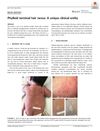
 A baby had a unique skin condition with a pale patch and surrounding dark hairs, not linked to other health issues.
February 2024 in “Pediatric Dermatology” A 5-year-old girl with a rare genetic disorder, lipoid proteinosis, showed reduced new lesions but persistent scars after avoiding skin trauma.
78 citations
,
May 2012 in “Journal of Investigative Dermatology” A specific gene mutation causes woolly hair and hair loss.
21 citations
,
April 2004 in “Australasian Journal of Dermatology” A 3-year-old girl has a rare condition causing sparse hair and nail issues, with minimal improvement from treatment.
Spiny keratoderma is a rare skin condition with small spines on palms and soles, possibly linked to abnormal hair formation.
10 citations
,
January 2003 in “Dermatology” The E413K mutation in the hHb6 gene causes monilethrix, a hair disorder, but doesn't show consistent symptoms.
 December 2022 in “Curēus”
 Genetic testing confirmed a young girl has Atrichia with Papular Lesions due to mutations in the hairless gene.
2 citations
,
March 2024 in “Pediatric Dermatology” Two siblings have a rare hair condition caused by a new genetic variant.
14 citations
,
June 1989 in “Journal of dermatology” Three siblings had both Vohwinkel's disease and congenital alopecia, with no effective treatment.
6 citations
,
February 1985 in “Archives of Dermatology” Systemic corticosteroids can cause unusual skin issues in people with juvenile rheumatoid arthritis.