 29 citations
,
March 2016 in “Cell cycle/Cell cycle (Georgetown, Tex. Online)”
29 citations
,
March 2016 in “Cell cycle/Cell cycle (Georgetown, Tex. Online)” Isoproterenol helps hair follicle stem cells turn into beating heart muscle cells.

Ashwagandha-derived nanoparticles can promote human hair growth.
9 citations
,
February 2001 in “Journal of Dermatological Science” p21waf1/cip1 and p27kip1 help in hair follicle differentiation in rats.
April 2021 in “The journal of investigative dermatology/Journal of investigative dermatology” CTCF protein is essential for skin and hair follicle development in mice.
 November 2023 in “Animal Bioscience”
 miR-133a-3p and miR-145-5p help goat hair follicle stem cells differentiate by controlling NANOG and SOX9.
33 citations
,
April 2003 in “Oncogene” 11 citations
,
June 1979 in “British Journal of Dermatology” The enzyme system in hair follicles is similar to the liver's and is affected by certain inhibitors.
August 2023 in “Stem cell reviews and reports”  17 citations
,
June 2019 in “BMC genomics”
17 citations
,
June 2019 in “BMC genomics” Non-coding RNAs help control hair growth in cashmere goats.
14 citations
,
March 2015 in “Stem Cell Research & Therapy” ABCG2 protein marks stem-like skin cells in human epidermis.
 5 citations
,
January 2023 in “Cell proliferation”
5 citations
,
January 2023 in “Cell proliferation” Chick embryo extract helps rat hair follicle stem cells potentially turn into Schwann cells, important for the nervous system.
 1 citations
,
November 2023 in “Rice”
1 citations
,
November 2023 in “Rice” PRX102 is essential for rice root hair growth by helping transport substances to the tips.
October 2022 in “British Journal of Dermatology”  8 citations
,
October 2020 in “International Journal of Molecular Sciences”
8 citations
,
October 2020 in “International Journal of Molecular Sciences” Nonanal from fruits and vegetables promotes hair growth by increasing growth factors.
 July 2022 in “The journal of investigative dermatology/Journal of investigative dermatology”
 Increasing type 17 collagen reduces aging signs in skin cells caused by UV light.
 25 citations
,
April 2015 in “Journal of Investigative Dermatology”
25 citations
,
April 2015 in “Journal of Investigative Dermatology” GasderminA3 is important for normal hair cycle transitions by controlling Wnt signaling.
41 citations
,
January 2001 in “Journal of Investigative Dermatology” Boosting certain cell signals can prevent hair loss from chemotherapy and radiation.
 1 citations
,
August 2023 in “Biomolecules & therapeutics”
1 citations
,
August 2023 in “Biomolecules & therapeutics” HAPLN1 can promote hair growth and may help treat hair loss.
 April 2018 in “Journal of Investigative Dermatology”
 CREB, a protein that can promote cancer traits, is controlled by β-catenin in skin cancer cells.
16 citations
,
August 2022 in “Biogerontology” 252 citations
,
November 1995 in “The EMBO Journal” Blocking EGFR in mice causes hair loss and skin changes.
21 citations
,
June 2004 in “Experimental Dermatology” Ber‐EP4 marks cells related to the secondary hair germ in hair follicles.
 1 citations
,
August 2012 in “Journal der Deutschen Dermatologischen Gesellschaft”
1 citations
,
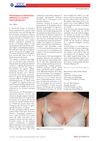
August 2012 in “Journal der Deutschen Dermatologischen Gesellschaft” A woman's hyperandrogenism was caused by a genetic mutation leading to non-classic adrenogenital syndrome.
 May 2026 in “BMC Medicine”
 ACOD1 deficiency worsens hair loss by causing cell aging and mitochondrial problems, but 4-OI may help.
49 citations
,
March 2004 in “Journal of Investigative Dermatology” The hHa7 gene is regulated by androgens in certain body hair, not scalp hair.
January 2026 in “PLoS Biology” ARHGEF3 is essential for proper hair follicle development in mice.
 April 2016 in “Journal of Investigative Dermatology”
 Double-stranded RNA activates a pathway that causes a skin protein to be expressed in the wrong place.
2 citations
,
March 2005 in “Journal of the American Academy of Dermatology” Equol may help with antiaging and skin health by boosting collagen and blocking certain hormones.
 October 2022 in “Frontiers in Genetics”
 The research found new potential mechanisms in mouse hair growth by studying RNA interactions.