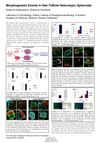
Researchers developed a method to create artificial hair follicles that may help with hair loss treatment and research.
July 2025 in “Journal of Investigative Dermatology” Hhip-Cre effectively targets dermal papilla cells for gene manipulation in hair biology.
 7 citations
,
October 2020 in “Wiener medizinische Wochenschrift”
7 citations
,
October 2020 in “Wiener medizinische Wochenschrift” THA is a rare condition with no significant clinical consequences if thyroid function is normal.
 December 2012 in “Journal of dermatological science”
 Langerhans cells and melanocytes migrate to the skin and hair follicles during early human development.
 February 2013 in “Journal of Visualized Experiments”
 The document's conclusion cannot be provided because the document is not available for analysis.
9 citations
,
March 2018 in “Journal of the Formosan Medical Association” Chitosan enhances melanocyte growth and function better than PVA.
January 2009 in “China Animal Husbandry & Veterinary Medicine” The B2C promoter works in sheep cells but not in mouse embryos.
July 2008 in “Planta Medica” Acanthus montanus extract harms fetal development and causes infertility in offspring.
 13 citations
,
July 2016 in “BMC Complementary and Alternative Medicine”
13 citations
,
July 2016 in “BMC Complementary and Alternative Medicine” Hominis Placenta helps hair grow back by increasing cell growth and a specific growth factor.
4 citations
,
February 2023 in “Stem Cell Research & Therapy” Mouse skin cells can become sperm-like cells in the lab.
33 citations
,
January 2014 in “Pediatric Research” 66 citations
,
June 2004 in “Development” FGF signaling is crucial for starting feather development in chicken embryos.
 June 2025 in “International Journal of Applied Pharmaceutics”
 A testosterone-induced hair loss model in mice was successfully created for future research and treatment testing.
14 citations
,
September 2001 in “Archives of Dermatological Research” Blocking hair follicle development stops key gene signals needed for hair growth in mice.
 May 2026 in “International Journal of Veterinary Science”
 Higher dihydrotestosterone levels reduce crowing complexity in Kokok Balenggek roosters.
Retinoic acid can change skin development, like turning scales into feathers or forming glands.
48 citations
,
March 1993 in “The Laryngoscope” Cholesteatoma shows abnormal and increased EGF receptor expression, indicating its rapid growth.
 1 citations
,
January 2018 in “Journal of Cosmetics, Dermatological Sciences and Applications”
1 citations
,
January 2018 in “Journal of Cosmetics, Dermatological Sciences and Applications” Ostrich antibodies helped regrow hair in men with hair loss, but the application needs to be easier.
 1 citations
,
March 2019 in “KnE life sciences”
1 citations
,
March 2019 in “KnE life sciences” HDPCM treatment healed a baby's congenital skin defect caused by varicella infection.

A stable sheep ovarian cell line was created for studying reproduction and hormones.
98 citations
,
September 1981 in “Fertility and Sterility”  15 citations
,
October 2018 in “Reproductive Biomedicine Online”
15 citations
,
October 2018 in “Reproductive Biomedicine Online” Measuring the distance from the anus to the clitoris may moderately help diagnose polycystic ovary syndrome, especially in certain cases.
The new testosterone detection kit is accurate, cost-effective, and useful for diagnosing diseases.
24 citations
,
June 2021 in “Annals of Translational Medicine” Human placental extract may help treat osteoarthritis, but more research is needed.
January 2026 in “PLoS Biology” ARHGEF3 is essential for proper hair follicle development in mice.
 7 citations
,
October 1985 in “Genetics Research”
7 citations
,
October 1985 in “Genetics Research” Beige and leaden pigment genes act within melanocytes, affecting pigment patterns.
7 citations
,
September 2022 in “International journal of molecular sciences” The research found that the molecule lncRNA-H19 helps hair follicle cells grow by affecting certain cell pathways in cashmere goats.
43 citations
,
July 2005 in “Journal of Chromatography B” A new method accurately measures hair lipids, revealing individual differences.
 23 citations
,
June 2010 in “Journal of Investigative Dermatology”
23 citations
,
June 2010 in “Journal of Investigative Dermatology” A mutation in the Soat1 gene causes hair structure defects and other health issues in AKR/J mice.
1 citations
,
January 1989 Four antibodies were developed to help study hair follicle cell differentiation.