 April 2023 in “Journal of Investigative Dermatology”
 The specific skin disease variant p.(Arg2000Trp) in plectin can cause a wide range of symptoms, which should be considered when diagnosing patients.
13 citations
,
August 2005 in “Journal of Investigative Dermatology Symposium Proceedings” Mutations in the DSG4 gene cause fragile, sparse hair in humans, mice, and rats.
 6 citations
,
June 2021 in “Developmental biology”
6 citations
,
June 2021 in “Developmental biology” Dermal EZH2 controls skin cell development and hair growth in mice.
June 2005 in “Journal of Investigative Dermatology” A bull with a gene mutation was asymptomatic, synthetic retinoids cause hair loss, and new therapeutic targets were identified for skin diseases.
85 citations
,
March 2008 in “Journal of Cell Science” The mutation causing Hutchinson-Gilford progeria syndrome leads to severe skin problems and early death in mice.
Diagnosing oral ulcers can be complex and requires careful examination and follow-up.
 September 2016 in “Journal of Dermatological Science”
 A specific mutation known for causing cancer is also found to cause a skin condition in a young girl.
 15 citations
,
July 2013 in “Cell Reports”
15 citations
,
July 2013 in “Cell Reports” Indian Hedgehog helps control skin cell growth and protects against aggressive skin cancer.
11 citations
,
November 2019 in “The FASEB Journal” A mutation in the MAP2 gene causes reduced hair follicle density, leading to hairlessness.
7 citations
,
January 2008 in “Indian Journal of Dermatology” Pigmentary mosaicism causes skin color changes and can affect multiple body systems, but has no cure.

Men with benign prostate hyperplasia have more meibomian gland loss and tear film problems.
August 2018 in “Chinese journal of plastic surgery” Buccal mucosa grafts work well for urethroplasty in rabbits.

mEphA1 receptor tyrosine kinase is important for skin and hair development and may play a role in certain diseases.

A genetic mutation in the EDA gene causes hypohidrotic ectodermal dysplasia in cats.
 April 2018 in “Journal of Investigative Dermatology”
 The document concludes that ERBB2 mutations are common in extramammary Paget disease and may respond to systemic treatments like cancer immunotherapy.
16 citations
,
July 2008 in “BMC Genomics” Alpha 6 + /MHCI - cells have stem cell traits and are similar to mouse hair follicle stem cells.
20 citations
,
January 2002 in “Laboratory Animals” Mutations in the hairless gene cause hair loss and skin cysts in rhesus macaques.
175 citations
,
September 1998 in “British Journal of Dermatology” Keratin 17 gene mutations cause both steatocystoma multiplex and pachyonychia congenita type 2.
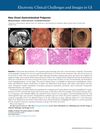 August 2013 in “Gastroenterology”
 A 60-year-old man with Cronkhite-Canada syndrome improved with treatment, but the condition has a high mortality rate and a risk of colorectal cancer.
41 citations
,
May 2020 in “Frontiers in immunology” Hidradenitis suppurativa might be a type of autoinflammatory skin disease.
July 2011 in “Journal of Pediatric and Adolescent Gynecology” A 15-year-old girl has a skin condition causing blisters on her feet, likely inherited from her family.
 2 citations
,
November 2022 in “Skin research and technology”
2 citations
,
November 2022 in “Skin research and technology” 5% topical minoxidil improves hair density and quality in monilethrix patients.
2 citations
,
January 2022 in “International journal of trichology” Eruptive vellus hair cysts are often missed in diagnoses.
 7 citations
,
July 1975 in “Acta dermato-venereologica”
7 citations
,
July 1975 in “Acta dermato-venereologica” A patient with Rothmund-Thomson syndrome showed skin changes, hair loss, and dental defects but no cataracts or skeletal issues.
January 1983 in “Elsevier eBooks” Masculinization in affected individuals occurs gradually after puberty due to hormone changes.
 21 citations
,
January 2013 in “Clinical Endoscopy”
21 citations
,
January 2013 in “Clinical Endoscopy” First Korean case of Cronkhite-Canada syndrome with colon cancer and serrated adenoma.
 January 2023 in “Pesquisa Veterinária Brasileira”
 A KRT71 mutation in Hereford cattle in Uruguay causes thin, curly hair and scaly skin.
August 2020 in “bioRxiv (Cold Spring Harbor Laboratory)” Normal cells outcompete and remove mutant cells in the pancreas with the help of the EphA2 receptor.
 10 citations
,
January 2010 in “Veterinary pathology”
10 citations
,
January 2010 in “Veterinary pathology” A new mutation in the hairless gene causes hair loss and skin wrinkling in mice.
 5 citations
,
August 2020 in “Curēus”
5 citations
,
August 2020 in “Curēus” The document concludes that recent studies help tell apart desmoplastic trichoepitheliomas from other skin tumors, but more research is needed for clear differentiation.