
Early diagnosis and lifelong zinc supplementation are crucial for treating acrodermatitis enteropathica effectively.
 January 2003 in “Springer eBooks”
 Androgenic alopecia is a type of hair loss that's partly inherited and can be due to hormonal imbalance.
35 citations
,
May 2006 in “Journal of Investigative Dermatology” Monilethrix involves multiple genes affecting hair structure, including DSG4 mutations.
 24 citations
,
May 1963 in “Archives of Dermatology”
24 citations
,
May 1963 in “Archives of Dermatology” Most new moms had their hair grow back within 4-6 months after childbirth, and hair loss is likely due to hormonal changes.
5 citations
,
January 2012 in “Indian Journal of Dermatology Venereology and Leprology” Werner's syndrome causes early aging and increases cancer risk, requiring early diagnosis and symptom management.
November 2025 in “Indian Journal of Dermatology” Early diagnosis and multidisciplinary care are crucial for improving the quality of life in patients with ectodermal dysplasia.
 January 2023 in “International Journal of Contemporary Pediatrics”
 A rare genetic disease causes rickets and often hair loss in young children, which can improve with specific treatments.
 December 2017 in “Revista Brasileira de Saúde Materno Infantil”
 Pregnant women with Systemic Lupus Erythematosus have a higher risk of blood clotting problems.
May 2017 in “Journal of the American Academy of Dermatology” Monilethrix is a rare, inherited condition causing fragile hair and hair loss, with no cure but some treatments may help.
January 2009 in “La ley penal: revista de derecho penal, procesal y penitenciario” Androgenetic alopecia is the most common hair loss, more severe in men, and best treated with a combination of hair growth promoters and antiandrogens.
61 citations
,
September 1994 in “Journal of Medical Genetics” Pachyonychia congenita is linked to a keratin gene on chromosome 17.
54 citations
,
January 1995 in “Human Molecular Genetics” Monilethrix is linked to a gene cluster on chromosome 12.
33 citations
,
October 2014 in “Veterinary Dermatology” Epidermolysis bullosa is a genetic disease causing fragile skin and blisters in both animals and humans.
6 citations
,
December 2015 in “Medicine” Cronkhite-Canada syndrome may be more treatable and less severe than previously thought.
2 citations
,
January 2014 in “Case Reports in Clinical Medicine” Cronkhite-Canada syndrome is a rare condition causing gut polyps, hair loss, skin changes, and nail issues, often with a poor outlook.
 June 2026 in “World Journal of Gastrointestinal Pathophysiology”
 Cronkhite-Canada syndrome is a rare disorder needing early recognition and treatment with immunosuppressive therapies and nutritional support to manage symptoms and prevent complications.
 October 2022 in “Medičnì perspektivi”
 Darier-White disease causes skin and nail issues, starts around age 20, worsens until 40-50, and has poor treatment options.

Caffeine in Alpecin shampoo may help prolong hair root activity and reduce hair loss.
October 2017 in “The American Journal of Gastroenterology” Early diagnosis and nutritional support are crucial for managing Cronkhite-Canada Syndrome.
January 2016 in “Zurich Open Repository and Archive (University of Zurich)” Dietary L-serine supplementation can reduce symptoms of HSAN1 by lowering harmful 1-deoxySL levels.
57 citations
,
August 1997 in “Pediatrics International” VDDR I and II are genetic disorders affecting vitamin D use, causing rickets, with VDDR I treatable by vitamin D supplements and VDDR II needing high doses and calcium.
 7 citations
,
November 2000 in “Clinics in Dermatology”
7 citations
,
November 2000 in “Clinics in Dermatology” Most hair loss in children is caused by a few common conditions and is easy to diagnose, but rare types require careful evaluation.
5 citations
,
February 2022 in “Molecular genetics & genomic medicine” New gene variants linked to a rare inherited hair loss disorder were found in three Chinese families.
5 citations
,
January 2016 in “Open Journal of Regenerative Medicine” Myoblast transplantation shows promise for treating various muscle and heart conditions.
4 citations
,
January 2013 in “International Journal of Trichology” Monilethrix has no effective treatment, but avoiding hair trauma helps manage it.
3 citations
,
January 2017 in “Dermatology online journal” Dermoscopy helped diagnose a rare hair disorder in a 2-year-old boy.
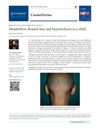 January 2026 in “Cosmoderma”
 A 9-year-old girl has a rare hair disorder causing beaded, sparse hair.
April 2023 in “Zenodo (CERN European Organization for Nuclear Research)” Frequent blood transfusions in beta thalassemia patients can lead to thyroid problems.
 April 2023 in “World Journal of Advanced Research and Reviews”
 Frequent blood transfusions in beta thalassemia can lead to thyroid problems.
 September 2022 in “JAMC. Journal of Ayub Medical College, Abbotabad, Pakistan/Journal of Ayub Medical College”
 A boy with a rare skin condition improved quickly after starting zinc supplements.