13 citations
,
January 2001 in “Pediatric dermatology” A dark-haired Chinese girl had hair that looked banded under certain light but was normal under a microscope.
78 citations
,
May 2012 in “Journal of Investigative Dermatology” A specific gene mutation causes woolly hair and hair loss.
May 2010 in “Faculty Opinions – Post-Publication Peer Review of the Biomedical Literature” A mutation in the KRT74 gene causes woolly hair by affecting hair texture.
29 citations
,
July 2015 in “Journal of Medical Genetics” A genetic variant in the KRT25 gene causes tightly curled hair.
41 citations
,
January 2018 in “Advances in experimental medicine and biology” 2 citations
,
January 1987 in “PubMed” Woolly hair syndrome is a genetic condition causing frizzy, fragile hair.
90 citations
,
July 1993 in “Journal of Investigative Dermatology” 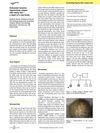 1 citations
,
August 2011 in “Dermatology Reports”
1 citations
,
August 2011 in “Dermatology Reports” Two siblings were found to have a genetic condition causing progressive hair loss and woolly hair, which may often be misdiagnosed.
11 citations
,
April 1993 in “PubMed” Human hair cells can change based on their environment, especially interactions with certain skin cells.
24 citations
,
November 1997 in “Journal of Biological Chemistry” Mouse high-glycine/tyrosine proteins have distinct patterns in hair follicles, peaking at specific hair cycle days.
 12 citations
,
November 1987 in “Pediatric dermatology”
12 citations
,
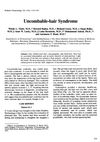
November 1987 in “Pediatric dermatology” Four children had unmanageable pale blond hair due to uncombable-hair syndrome.
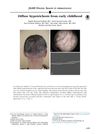 September 2016 in “Journal of The American Academy of Dermatology”
 The girl has a genetic hair condition causing thin hair since childhood.
65 citations
,
February 1992 in “Development” Type II keratin genes are crucial for hair follicle differentiation and have a conserved structure and expression pattern.
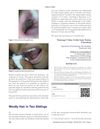 January 2012 in “International Journal of Trichology”
 Two siblings have a rare genetic condition causing curly, coarse hair.
 5 citations
,
September 2012 in “Journal of Investigative Dermatology”
5 citations
,
September 2012 in “Journal of Investigative Dermatology” Scientists can mimic hair disorders by altering genes in lab-grown human hair follicles, but these follicles lack some features of natural ones.
Genetic factors might cause fibrosing alopecia linked to hair shaft abnormalities.
2 citations
,
November 1996 in “PubMed” Most people have similar hair protein patterns, but a rare variant was found in two women.
 January 2019 in “Global Dermatology”
 Genetic hair shaft abnormalities can be seen with microscopes and often affect scalp hair.
 19 citations
,
October 1985 in “British Journal of Dermatology”
19 citations
,
October 1985 in “British Journal of Dermatology” The document concludes that unruly hair can be congenital or acquired, often lacks specific treatments, and can be managed with oils and short hairstyles.
 33 citations
,
March 2006 in “Seminars in cutaneous medicine and surgery”
33 citations
,
March 2006 in “Seminars in cutaneous medicine and surgery” The document explains how to identify different hair problems using a microscope.
38 citations
,
July 1993 in “Journal of Investigative Dermatology”  11 citations
,
September 2012 in “The journal of investigative dermatology/Journal of investigative dermatology”
11 citations
,
September 2012 in “The journal of investigative dermatology/Journal of investigative dermatology” A mutation in the KRT71 gene causes a hair disorder by disrupting hair follicle structure and texture.
 42 citations
,
September 2000 in “British Journal of Dermatology”
42 citations
,
September 2000 in “British Journal of Dermatology” Some children are born with unusually short, fine hair because their hair growth phase is short, but this often gets better by itself during puberty.
 11 citations
,
March 2001 in “Clinics in Dermatology”
11 citations
,
March 2001 in “Clinics in Dermatology” Hair microscopy is useful for diagnosing hair disorders, but clear definitions are needed for accurate genetic analysis.
7 citations
,
May 1988 in “International Journal of Dermatology” The patient's hair has unique structural differences with alternating bright and dark bands.
 34 citations
,
August 1966 in “Experimental cell research”
34 citations
,
August 1966 in “Experimental cell research” Keratin fibrils in hair form and stop growing at specific points in the follicle.
235 citations
,
July 1999 in “Journal of biological chemistry/The Journal of biological chemistry” Human hair is made up of different keratins, some strong and some weak, with specific types appearing at various stages of hair growth.
 7 citations
,
November 2013 in “Pediatric and Developmental Pathology”
7 citations
,
November 2013 in “Pediatric and Developmental Pathology” Over half of the children had abnormal hair under a microscope, with many having genetic hair conditions.
 December 2024 in “Australian Journal of General Practice”
 The woman's hair loss pattern doesn't match typical conditions like alopecia areata or female pattern hair loss.
100 citations
,
November 1997 in “Human Genetics” A new mutation in the hHb1 keratin gene is linked to the hair disorder monilethrix.