 339 citations
,
February 2014 in “Journal of The American Academy of Dermatology”
339 citations
,
February 2014 in “Journal of The American Academy of Dermatology” Most patients with frontal fibrosing alopecia are postmenopausal women, and treatments like finasteride and dutasteride can improve or stabilize the condition.
 4 citations
,
February 2020 in “Cell & tissue research/Cell and tissue research”
4 citations
,
February 2020 in “Cell & tissue research/Cell and tissue research” Hair follicle stem cells might help treat traumatic brain injury.
Most excessive hair growth is due to idiopathic hirsutism or PCOS; treatment starts with cosmetic methods and drugs like cyproterone acetate or spironolactone, with results in 6-12 months.
February 2025 in “Actas Dermo-Sifiliográficas” Low-dose oral minoxidil can help improve hair and eyebrow growth in people with frontal fibrosing alopecia.
March 1997 in “Fertility and sterility” Finasteride is an effective and well-tolerated treatment for hirsutism.
 5 citations
,
January 2023 in “International Journal of Molecular Sciences”
5 citations
,
January 2023 in “International Journal of Molecular Sciences” Hair follicles could be used to noninvasively monitor our body's internal clock and help identify risks for related diseases.
 49 citations
,
September 2012 in “The Journal of clinical endocrinology and metabolism/Journal of clinical endocrinology & metabolism”
49 citations
,
September 2012 in “The Journal of clinical endocrinology and metabolism/Journal of clinical endocrinology & metabolism” The document concludes with guidance for doctors on diagnosing and treating hirsutism effectively and safely.
 January 1981 in “The Journal of Toxicological Sciences”
 Hydrocortisone 17-butyrate 21-propionate ointment caused reversible side effects like skin issues, weight gain, and organ changes in dogs.
2 citations
,
March 2015 in “Human & Experimental Toxicology” Hyperbaric oxygen therapy significantly altered rat facial skin structure.
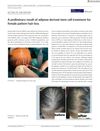 April 2021 in “Journal of Cosmetic Dermatology”
 Stem cell treatment improved hair density in female hair loss patient.
8 citations
,
July 2020 in “Clinical, cosmetic and investigational dermatology” Excessive sun protection might cause frontal fibrosing alopecia by disrupting skin immune balance.
40 citations
,
March 2014 in “Journal of Family Planning and Reproductive Health Care” PCOS is a common hormonal disorder in women, marked by high androgen levels and often seen in 20% of women via ultrasound.
 April 2024 in “Journal of applied cosmetology”
 Using hyaluronic acid fillers in the temple area of the face can improve looks but has risks, so choosing the right technique and product is important for safety.
 36 citations
,
November 1995 in “Clinical endocrinology”
36 citations
,
November 1995 in “Clinical endocrinology” Low-dose flutamide helps reduce excessive hair growth and is even more effective with birth control, without bad effects on blood fats.
December 2023 in “̒Ulūm-i dārūyī” New treatments for excessive hair growth in women, including advanced drugs and nanotechnology, show promise for better results.
 70 citations
,
January 2000 in “Hormone Research in Paediatrics”
70 citations
,
January 2000 in “Hormone Research in Paediatrics” SAHA syndrome is a condition in women involving skin and hair issues, often related to hormonal imbalances, and is treated based on the underlying cause.
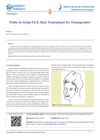
A hair transplant using hair from the back of the head and pubic area was successful in creating a feminine hairline for a male-to-female transgender person.
17 citations
,
June 2016 in “Archives de Pédiatrie” Frontal fibrosing alopecia can occur in children, not just postmenopausal women.
October 2022 in “Hair Transplantation” The ISHRS standardized FUE terminology for global use in hair restoration.
 January 2021 in “Hair transplant forum international”
 The T-Fast multi-implanter makes hair transplant surgeries quicker and cheaper.
26 citations
,
May 2023 in “Journal of Nanobiotechnology” The hydrogel speeds up healing of normal and MRSA-infected wounds.
 20 citations
,
January 2012 in “International Journal of Trichology”
20 citations
,
January 2012 in “International Journal of Trichology” Most cases of excessive hair growth in women are caused by polycystic ovarian syndrome and are linked to higher free testosterone levels.
46 citations
,
January 2000 in “The Journal of Clinical Endocrinology and Metabolism”  33 citations
,
January 2015 in “Journal of Cosmetic Dermatology”
33 citations
,
January 2015 in “Journal of Cosmetic Dermatology” Familial frontal fibrosing alopecia affects premenopausal women too, and early diagnosis is important, but no proven medication exists yet.
 11 citations
,
February 2008 in “British journal of nursing”
11 citations
,
February 2008 in “British journal of nursing” Idiopathic hirsutism causes excessive hair growth in women, can be treated with medication and hair removal, but cannot be fully reversed.
 November 2000 in “Current problems in dermatology”
 New treatments for hair loss and excessive hair growth show promise with few side effects and advancements in laser technology.
 October 2004 in “Australian Prescriber”
 Lifestyle changes are more effective than medication for managing PCOS-related risks.
 15 citations
,
April 2001 in “Journal of Dermatological Science”
15 citations
,
April 2001 in “Journal of Dermatological Science” KF19418 promotes hair growth similarly to minoxidil but is not better in live mice.
October 2025 in “Journal of the Endocrine Society” Ovarian hyperthecosis can cause high testosterone and symptoms like hair loss, and surgery can help improve these symptoms.
18 citations
,
January 1985 in “Acta Obstetricia Et Gynecologica Scandinavica” Hirsutism severity is linked to androgen levels, especially in women with a lower LH/FSH ratio.