 53 citations
,
April 2018 in “Journal of The American Academy of Dermatology”
53 citations
,
April 2018 in “Journal of The American Academy of Dermatology” Cancer treatments often cause hair disorders, significantly affecting patients' quality of life, and better management methods are needed.
 13 citations
,
July 2004 in “Skinmed”
13 citations
,
July 2004 in “Skinmed” Common types of non-scarring hair loss have various causes and treatments, but more effective solutions are needed.
 39 citations
,
May 2004 in “Clinics in Dermatology”
39 citations
,
May 2004 in “Clinics in Dermatology” The document concludes that treatment for cutaneous T-cell lymphoma should be customized to each patient's disease stage, balancing benefits and side effects, with no cure but many patients living long lives.
 61 citations
,
May 2010 in “Integrative Cancer Therapies”
61 citations
,
May 2010 in “Integrative Cancer Therapies” There is no clear recommendation for using selenium in cancer patients; it may be beneficial to correct low selenium levels before treatment.
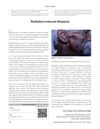 17 citations
,
January 2010 in “International journal of trichology”
17 citations
,
January 2010 in “International journal of trichology” A man experienced hair loss from radiotherapy, which can be temporary or permanent depending on radiation dose, with potential treatments available.
4 citations
,
July 2024 in “Radiotherapy and Oncology” A standardized scoring system is needed to improve model reliability for predicting hair loss in brain tumor patients treated with proton therapy.
 October 2022 in “Journal of Pharmaceutical Negative Results”
 Photobiomodulation therapy shows promise in treating various health conditions by using specific light wavelengths.
41 citations
,
July 2016 in “Radiation Research” Radiation damages salivary glands by harming blood vessels, but antioxidants might help protect them.
June 2023 in “University of Thi-Qar Journal of Science” Retinoids effectively treat skin aging but have safety and stability issues.
6 citations
,
March 2022 in “International journal of molecular sciences” Natural skincare products may help reduce sun damage and support the skin's daily cycle.
 2 citations
,
March 2005 in “Cancer biology & therapy”
2 citations
,
March 2005 in “Cancer biology & therapy” Bexxar treatment led to a high response rate in patients with advanced-stage, treatment-resistant follicular lymphoma.
1 citations
,
March 2024 in “International journal of molecular sciences” Radiation therapy damages skin structure and immune function, causing inflammation and potential hair loss.
 31 citations
,
August 2022 in “Frontiers in Oncology”
31 citations
,
August 2022 in “Frontiers in Oncology” Photobiomodulation therapy helps manage cancer treatment side effects but needs more research for optimization.
March 2015 in “Oncology Times” Extending androgen suppression before radiotherapy offers no extra survival benefit for intermediate-risk prostate cancer.
5 citations
,
August 2025 in “Journal of Radiation Research” Understanding skin reactions to radiation has improved, helping to reduce injuries and prevent skin cancer.
 18 citations
,
October 2020 in “Radiation Research”
18 citations
,
October 2020 in “Radiation Research” Some drugs may help treat both COVID-19 and radiation injury.
 8 citations
,
August 2019 in “Dermatologic surgery”
8 citations
,
August 2019 in “Dermatologic surgery” Nonsteroid treatments for alopecia areata show promise but need more high-quality research.
 July 2025 in “American Journal of Clinical Dermatology”
 Alopecia treatments like 5α-reductase inhibitors and spironolactone are safe for breast cancer patients and high-risk women.
 3 citations
,
September 2023 in “Skin research and technology”
3 citations
,
September 2023 in “Skin research and technology” New treatments for skin damage from UV light using stem cells and their secretions show promise for skin repair without major risks.
 65 citations
,
January 2017 in “Postępy Dermatologii i Alergologii”
65 citations
,
January 2017 in “Postępy Dermatologii i Alergologii” High-frequency ultrasonography is a useful but underused tool in dermatology for assessing skin cancers, monitoring diseases, and evaluating treatments.
 44 citations
,
October 2017 in “Scientific Reports”
44 citations
,
October 2017 in “Scientific Reports” Far-infrared radiation improves stem cell growth and movement, helping heart therapy.
 2 citations
,
July 2004 in “Proceedings of SPIE, the International Society for Optical Engineering/Proceedings of SPIE”
2 citations
,
July 2004 in “Proceedings of SPIE, the International Society for Optical Engineering/Proceedings of SPIE” Near-infrared laser therapy with Indocyanine Green dye improves acne by reducing inflammation without side effects.
 13 citations
,
April 2016 in “Journal of Dermatology”
13 citations
,
April 2016 in “Journal of Dermatology” 308-nm excimer light therapy helped over a third of treatment-resistant alopecia universalis patients regrow most of their hair.
 14 citations
,
January 2014 in “Cells Tissues Organs”
14 citations
,
January 2014 in “Cells Tissues Organs” Ionizing radiation causes irreversible skin damage, with single doses leading to acute injury and hair graying, and fractional doses causing more severe long-term tissue damage.
 108 citations
,
December 2003 in “Lasers in surgery and medicine”
108 citations
,
December 2003 in “Lasers in surgery and medicine” ICG-enhanced NIR laser therapy may be a promising acne treatment with improvement and no side effects.
 4 citations
,
April 2011 in “International Journal of Radiation Biology”
4 citations
,
April 2011 in “International Journal of Radiation Biology” Radiation significantly slows down wound healing in mice.
 60 citations
,
December 2015 in “Lasers in Medical Science”
60 citations
,
December 2015 in “Lasers in Medical Science” Low-level laser therapy is safe and can increase hair growth for male and female pattern hair loss.
 18 citations
,
December 1996 in “Seminars in Cutaneous Medicine and Surgery”
18 citations
,
December 1996 in “Seminars in Cutaneous Medicine and Surgery” Chemotherapy and cytokine therapy can cause various skin reactions, including hair loss and hypersensitivity.
 January 2011 in “Journal of The American Academy of Dermatology”
 Treating generalized granuloma annulare is difficult, with PUVA being the most effective option, but relapses are common.
 47 citations
,
April 2016 in “Lasers in Surgery and Medicine”
47 citations
,
April 2016 in “Lasers in Surgery and Medicine” Low-level laser therapy may improve hair regrowth and thickness for androgenetic alopecia, but more research is needed.