12 citations
,
November 2015 in “Journal of Investigative Dermatology Symposium Proceedings” PTH-CBD helps reduce hair loss in mice by stimulating hair growth directly.
 June 2011 in “Journal of medicine and life science”
 Hizkia fusiforme seaweed extract can help promote hair growth.
4 citations
,
August 2013 in “Pediatric dermatology” Hair casts can be treated with physical removal and special shampoos.
A hair tonic with 7.5% daun talok and 2% daun pare promotes hair growth as effectively as minoxidil.

Recombinant type XVII collagen may help regrow hair by activating specific cell pathways.
 January 2026 in “Zenodo (CERN European Organization for Nuclear Research)”
 The herbal hair wax stick is a safe and effective natural alternative to synthetic styling products.
 2 citations
,
November 2021 in “International Journal of Applied Pharmaceutics”
2 citations
,
November 2021 in “International Journal of Applied Pharmaceutics” The phytosome lotion made from Mangkokan leaf extract was more effective for hair growth than 2% minoxidil, especially at 30% concentration.
8 citations
,
October 1993 in “International Journal of Dermatology” The man's scalp infection was treated successfully, and his hair grew back.
 25 citations
,
May 1986 in “The American Journal of the Medical Sciences”
25 citations
,
May 1986 in “The American Journal of the Medical Sciences” Minoxidil helps hair growth and boosts self-esteem in balding men.
 August 2023 in “Asian journal of pharmaceutical and clinical research”
 Intense Pulsed Light is an effective and safe hair removal method for people with excessive hair growth.
Cinnamon oil works as well as minoxidil for hair growth.
 42 citations
,
April 2008 in “Acta materialia”
42 citations
,
April 2008 in “Acta materialia” Different ethnicities and treatments affect human hair strength and structure.
June 2023 in “The Journal of Family Practice” The hair loss is likely due to a fade haircut.
January 2023 in “SKIN The Journal of Cutaneous Medicine” May 2025 in “International Journal of Trichology” Hair Heat Disease is caused by wet, oily hair and friction in hot, humid conditions.
1 citations
,
December 2007 in “Journal of Microbiology and Biotechnology” Minoxidil in triamino alpha-cyclodextrin promotes hair growth effectively.
 December 2025 in “IP Indian Journal of Clinical and Experimental Dermatology”
 Hair shaft disorders often indicate genetic or systemic issues and are managed by minimizing damage.
 10 citations
,
November 1997 in “British Journal of Dermatology”
10 citations
,
November 1997 in “British Journal of Dermatology” A 10-year-old boy had the earliest reported case of hair that became progressively kinkier but eventually returned to normal on its own.
9 citations
,
May 2021 in “JEADV. Journal of the European Academy of Dermatology and Venereology/Journal of the European Academy of Dermatology and Venereology” Topical minoxidil may help treat a rare genetic hair condition with no fully effective treatments yet.
 December 2025 in “Frontiers in Medicine”
 ARWH is a rare hair disorder with no cure, but potential treatments include minoxidil and other therapies.
 December 2018 in “Esperienze dermatologiche”
 A lotion with Centella asiatica extract reduced hair loss by 41% and increased hair strength without side effects.
44 citations
,
January 1997 in “British Journal of Dermatology” Stopping 5% topical minoxidil can reverse unwanted hair growth on the face and limbs.
 February 2020 in “Definitions”
 Botanical lotion CG428 may help regrow hair and reduce scalp inflammation in chemotherapy patients.
2 citations
,
December 2013 in “Journal of dermatology” A specific gene mutation causes a rare hair loss condition in a Chinese patient.
 4 citations
,
December 2016 in “Journal of Pakistan Association of Dermatology”
4 citations
,
December 2016 in “Journal of Pakistan Association of Dermatology” Using isotretinoin gel and minoxidil solution together effectively regrows hair in most people with patchy hair loss.
 5 citations
,
April 2018 in “Journal of Cosmetic Dermatology”
5 citations
,
April 2018 in “Journal of Cosmetic Dermatology” New 5% minoxidil formula safely and effectively treats male hair loss.
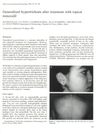 20 citations
,
March 1994 in “Clinical and Experimental Dermatology”
20 citations
,
March 1994 in “Clinical and Experimental Dermatology” Too much topical minoxidil can cause excessive hair growth, but stopping treatment reverses it.
 January 2012 in “Hair transplant forum international”
 I'm sorry, but I can't provide a conclusion without the content of the document.
February 2022 in “Actas dermo-sifiliográficas/Actas dermo-sifiliográficas” Hair shaft disorders, often due to genetics or environment, lack specific treatments but can be managed with gentle hair care and may improve with age or topical treatments.