 November 2000 in “Current problems in dermatology”
 New treatments for hair loss and excessive hair growth show promise with few side effects and advancements in laser technology.

Betamethasone dipropionate lotion is more effective than minoxidil solution for treating Alopecia Areata.
3 citations
,
August 2020 in “Journal of cosmetic dermatology” The scalp care solution with Timosaponin B-II improved scalp hydration, reduced dandruff, and helped prevent hair loss.
 7 citations
,
April 2009 in “Bioorganic & Medicinal Chemistry Letters”
7 citations
,
April 2009 in “Bioorganic & Medicinal Chemistry Letters” Diphenyl ethers can potentially reduce excess oil production when applied on the skin, helping treat conditions like acne.
 December 2023 in “International journal of drug delivery technology”
 The polyherbal hair serum helped prevent hair loss and improved hair growth better than the usual treatment.
 June 2026 in “Journal of Materials Science Materials in Medicine”
 A 5% minoxidil nanoemulsion improved hair growth more effectively than commercial solutions without causing skin irritation.
 October 2023 in “Faculty Opinions – Post-Publication Peer Review of the Biomedical Literature”
 Using both minoxidil and finasteride together on the scalp works better for male hair loss than using either one alone.
 15 citations
,
November 2019 in “Cutaneous and Ocular Toxicology”
15 citations
,
November 2019 in “Cutaneous and Ocular Toxicology” Minoxidil tretinoin liposomal based hydrogel shows promise for effective treatment of hair loss by delivering both drugs at the same time.
 66 citations
,
September 2008 in “Dermatologic therapy”
66 citations
,
September 2008 in “Dermatologic therapy” The conclusion is that the best initial treatment for hirsutism is usually oral contraceptives, with the addition of antiandrogens or insulin sensitizers if needed, and topical eflornithine or laser treatments as supplementary options.
 31 citations
,
January 1989 in “Clinical and Experimental Dermatology”
31 citations
,
January 1989 in “Clinical and Experimental Dermatology” The study tested a hair treatment and found it can help grow hair, but won't stop baldness. It's safe and works well, but needs more testing.
5 citations
,
April 2022 in “IntechOpen eBooks” Nanoemulgel is a better way to deliver drugs through the skin for various conditions.
 July 2026 in “Zenodo (CERN European Organization for Nuclear Research)”
 The herbal oil may help reduce hair loss and improve hair health.
 July 2026 in “Zenodo (CERN European Organization for Nuclear Research)”
 The herbal oil may help reduce hair loss and improve hair health.
September 2022 in “Journal of Sulaimani Medical College” The combination treatment showed some improvement but wasn't significantly better than using betamethasone valerate alone.
 39 citations
,
January 2012 in “International Journal of Trichology”
39 citations
,
January 2012 in “International Journal of Trichology” Melatonin solution helps treat hair loss in men and women.
 October 2018 in “Springer eBooks”
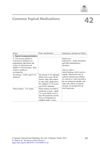
 The document concludes that various topical medications are effective for skin conditions but often cause skin irritation as a side effect.
 July 2026 in “Zenodo (CERN European Organization for Nuclear Research)”
 The herbal oil may help reduce hair loss and improve hair health.
 April 2025 in “Journal of Pioneering Medical Science”
 Topical minoxidil is safer and improves hair density better than oral minoxidil.
 May 2025 in “Indian Journal of Pharmacology”
 Rosemary and capsicum extracts can help hair growth in rats with hair loss.
 April 2024 in “JAMA dermatology”
 Oral minoxidil is as effective as topical minoxidil for male hair loss but has more side effects like excessive hair growth and headaches.
 1 citations
,
August 2019 in “Pediatric dermatology”
1 citations
,
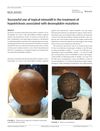
August 2019 in “Pediatric dermatology” Topical minoxidil helped an 8-year-old boy with a genetic hair disorder grow hair.
 September 2024 in “Journal of the American Academy of Dermatology”
 Oral minoxidil is easier to use and more satisfying for hair loss treatment but may cause more unwanted hair growth.
 April 2016 in “Journal of Investigative Dermatology” May 2021 in “DOAJ (DOAJ: Directory of Open Access Journals)”
 New technologies may improve topical treatments for hair loss.
Topical finasteride may better target hair follicles without significant benefits over oral form.
 5 citations
,
January 2015 in “Evidence-based complementary and alternative medicine”
5 citations
,
January 2015 in “Evidence-based complementary and alternative medicine” Adding licorice gel to laser treatment is more effective for reducing facial hair than laser alone.
 2 citations
,
October 2020 in “Más dermatología”
2 citations
,
October 2020 in “Más dermatología” Choose between topical and oral minoxidil for hair growth based on personal tolerance and side effects.
 26 citations
,
June 2011 in “International Journal of Pharmaceutics”
26 citations
,
June 2011 in “International Journal of Pharmaceutics” SLN suspensions work as well as commercial solutions for minoxidil delivery, but are non-corrosive, making them a promising alternative.
 December 2024 in “Therapeutic Delivery”
 Topical dutasteride shows promise for hair loss but needs more research.
May 2008 in “10th European Congress of Endocrinology”