Trichoscopy is a valuable tool for accurately diagnosing scalp conditions without invasive procedures.
 April 2024 in “Journal of cancer research and clinical oncology”
 Tissue-derived extracellular vesicles are crucial for cancer diagnosis, prognosis, and treatment.
 September 2023 in “International journal of medicine”
 AI is revolutionizing healthcare by improving diagnosis, treatment, and monitoring, but still needs close supervision.
 October 2019 in “Journal of Evolution of Medical and Dental Sciences”
 A 56-year-old man was diagnosed with Cronkhite-Canada Syndrome after showing symptoms like diarrhea, weight loss, and skin changes.

Optical Coherence Tomography has potential in diagnosing hair loss and monitoring blood clotting, and could be improved for deeper tissue observation and better hair loss understanding.
 May 2017 in “InTech eBooks”
 Trichoscopy and trichogram are useful for diagnosing hair and scalp conditions.
 178 citations
,
December 2011 in “Journal of Dermatological Case Reports”
178 citations
,
December 2011 in “Journal of Dermatological Case Reports” Trichoscopy is a useful tool for diagnosing different hair and scalp diseases by their unique visual features.
 64 citations
,
January 2004 in “American journal of clinical dermatology”
64 citations
,
January 2004 in “American journal of clinical dermatology” Folliculitis is an inflammation of hair follicles that requires proper diagnosis and treatment based on the specific cause.
 42 citations
,
October 2012 in “Dermatologic Clinics”
42 citations
,
October 2012 in “Dermatologic Clinics” Trichoscopy is a useful tool for diagnosing different hair and scalp diseases without surgery.
 34 citations
,
January 2014 in “International Journal of Trichology”
34 citations
,
January 2014 in “International Journal of Trichology” Polarized dermoscopy is slightly better than nonpolarized for diagnosing hair disorders, with each method having its own strengths.
 28 citations
,
August 2018 in “Dermatologic Clinics”
28 citations
,
August 2018 in “Dermatologic Clinics” Trichoscopy is a useful tool for diagnosing hair and scalp issues, but doctors must be careful to avoid mistakes.
 21 citations
,
March 2006 in “Seminars in Cutaneous Medicine and Surgery”
21 citations
,
March 2006 in “Seminars in Cutaneous Medicine and Surgery” Most hair loss disorders can be accurately diagnosed and treated in an outpatient setting.
 16 citations
,
January 2010 in “American Journal of Neuroradiology”
16 citations
,
January 2010 in “American Journal of Neuroradiology” Specific brain and bone imaging findings can help diagnose Trichothiodystrophy.
 15 citations
,
May 2016 in “Archives of Dermatological Research”
15 citations
,
May 2016 in “Archives of Dermatological Research” ULBP3 could be a marker for diagnosing alopecia areata incognita and may be linked to its cause and development.
 6 citations
,
October 2022 in “American journal of clinical dermatology”
6 citations
,
October 2022 in “American journal of clinical dermatology” The review shows how to properly diagnose and treat the loss of eyebrow and eyelash hair.
 6 citations
,
January 2015 in “Journal of The European Academy of Dermatology and Venereology”
6 citations
,
January 2015 in “Journal of The European Academy of Dermatology and Venereology” Different hair loss types need accurate diagnosis for proper treatment.
 3 citations
,
May 2023 in “Precision clinical medicine”
3 citations
,
May 2023 in “Precision clinical medicine” Researchers found four genes that could help diagnose severe alopecia areata early.
 2 citations
,
July 2018 in “Elsevier eBooks”
2 citations
,
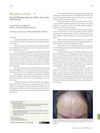
July 2018 in “Elsevier eBooks” Trichoscopy is a useful tool for diagnosing and managing hair and scalp conditions, often better than traditional methods.
 May 2019 in “Anais brasileiros de dermatologia/Anais Brasileiros de Dermatologia”
 Frontal fibrosing alopecia mostly affects postmenopausal women, with diagnosis often delayed by 3 years.
 August 2018 in “Journal of The American Academy of Dermatology”
 A 54-year-old man with painful skin blisters and fever was diagnosed with Sweet syndrome and successfully treated with corticosteroids.
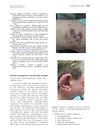
A 72-year-old man was diagnosed with a rare skin form of Rosai-Dorfman disease after years of misdiagnosis.
 40 citations
,
May 2012 in “British Journal of Dermatology”
40 citations
,
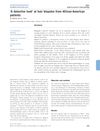
May 2012 in “British Journal of Dermatology” Recognizing specific features of African-American hair can help diagnose hair loss conditions.
 1 citations
,
January 2023 in “IEEE access”
1 citations
,
January 2023 in “IEEE access” Deep learning helps detect skin conditions and is advancing dermatology diagnosis and treatment.
 176 citations
,
May 2020 in “Dermatologic Therapy”
176 citations
,
May 2020 in “Dermatologic Therapy” COVID-19 can cause different skin symptoms that may help with early diagnosis and show how severe the disease is.
 67 citations
,
January 2013 in “Indian Journal of Dermatology, Venereology and Leprology”
67 citations
,
January 2013 in “Indian Journal of Dermatology, Venereology and Leprology” Chronic Telogen Effluvium may resolve after years and is diagnosed by examining the patient's history and clinical signs, with treatment aimed at underlying causes and possibly minoxidil.
 39 citations
,
October 2018 in “Lupus Science & Medicine”
39 citations
,
October 2018 in “Lupus Science & Medicine” Different types of hair loss in lupus need careful diagnosis for proper treatment.
 13 citations
,
October 2017 in “Anais Brasileiros de Dermatologia”
13 citations
,
October 2017 in “Anais Brasileiros de Dermatologia” Yellow dots in hair and scalp examinations are important for diagnosing different scalp conditions.
 11 citations
,
April 2016 in “The American Journal of Dermatopathology”
11 citations
,
April 2016 in “The American Journal of Dermatopathology” Special and immunohistochemical stains are not routinely needed for diagnosing hair disorders.
3 citations
,
September 2019 in “European Medical Journal” Scalp sarcoidosis can cause hair loss and needs accurate diagnosis and treatment with specific medications.
 April 2026 in “International Journal of Drug Delivery Technology”
 Trichoscopy is a reliable, non-invasive tool for diagnosing scalp alopecias.