 January 2022 in “Dermatology Review”
 Microneedling with bleomycin effectively treats plantar warts with fewer sessions.
 November 2021 in “International Journal of Research in Medical Sciences & Technology”
 Skin surface chemistry and OCT can improve skin disease diagnosis.
 September 2021 in “Rumphius Pattimura Biological Journal”
 Wetar Island honey has varying potassium and iron levels, affecting its health benefits.

Researchers found a genetic link for hereditary hair loss but need more analysis to identify the exact gene.
 June 2021 in “Current Biochemistry”
 Stingless bee propolis at a 6.25% concentration effectively stops dandruff-causing bacteria growth, performing better than ketoconazole.
 April 2021 in “The journal of investigative dermatology/Journal of investigative dermatology”
 Patients using social media have mixed feelings about alopecia treatments, noting hair growth but also frustration with treatment recurrence.
Placental cell medium boosts blood vessel growth in lab tests.
 January 2021 in “Journal of Scientific Research of the Banaras Hindu University”
 Lifestyle changes and medical treatment can help manage PCOS symptoms in young adults.
 June 2020 in “The journal of investigative dermatology/Journal of investigative dermatology”
 The enzymes Tet1, Tet2, and Tet3 are important for the development of hair follicles and determining hair shape by controlling hair keratin genes.
Spironolactone may be a better acne treatment for adult women than antibiotics.

Human hair keratins can self-assemble and support cell growth, useful for biomedical applications.
 January 2020 in “Durham e-Theses (Durham University)”
 UK law does not effectively ensure workplace equality for people with visible differences.
 April 2019 in “The journal of investigative dermatology/Journal of investigative dermatology”
 Scientists discovered a new way UVB light increases skin pigmentation through the ATP-P2X7 pathway.
 April 2019 in “Journal of Investigative Dermatology”
 DPP4-positive fibroblasts play a major role in producing proteins that lead to skin fibrosis.
 April 2019 in “Journal of Investigative Dermatology”
 Removing REDD1 in mice increases skin fat by making fat cells larger and more numerous.
 April 2019 in “Journal of Investigative Dermatology”
 Fractional photothermolysis helps wounds heal with minimal scarring.
 April 2019 in “Journal of Investigative Dermatology”
 New vitamin D3 forms need the vitamin D receptor to reduce fibrosis in human cells.
 April 2019 in “Journal of Investigative Dermatology”
 BRG1 is essential for skin cells to move and heal wounds properly.
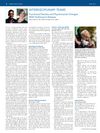
The interdisciplinary approach improved the quality of life for a Parkinson's patient and eased staff workload.
 February 2019 in “Institutional Repositories DataBase (IRDB)”
 April 2018 in “Journal of Investigative Dermatology”
 The conclusion is that the cornea has two types of stem cells, with Lrig1+ cells being key for renewal in aging corneas, independent of CD44.
 April 2018 in “Journal of Investigative Dermatology”
 A new treatment using AGED to modulate PPAR-γ shows promise for treating scarring hair loss by protecting and repairing hair follicle cells.
 April 2018 in “Journal of Investigative Dermatology”
 Macrophages are more involved in Lichen planopilaris than in Frontal fibrosing alopecia.
 April 2018 in “Journal of Investigative Dermatology”
 DNMT3A is crucial for healthy skin and hair growth.
 April 2018 in “Journal of Investigative Dermatology”
 Fat under the skin can help hair grow longer, darker, and increase cell growth.
 April 2018 in “Journal of Investigative Dermatology”
 Different types of stem cells in the skin contribute to the variety of melanoma forms.
 January 2018 in “Springer eBooks”
 Lasers are less favored for hair transplant surgery but show promise for hair growth in controlled trials.
 December 2017 in “The journal of investigative dermatology. Symposium proceedings/The Journal of investigative dermatology symposium proceedings”
 The summit aimed to speed up finding treatments for alopecia areata.
 December 2017 in “Journal of Medical Science And clinical Research”
 The PCOS questionnaire is valid for Indian women, but metformin doesn't significantly improve symptoms beyond oral contraceptives.