16 citations
,
June 2015 in “The journal of investigative dermatology/Journal of investigative dermatology” The enzyme DHHC13 is essential for healthy hair and skin, and its deficiency leads to hair loss and skin problems.
January 2017 in “Seoul National University Open Repository (Seoul National University)” AIMP1 can boost hair growth by increasing stem cell activity.
8 citations
,
June 2016 in “Journal of Investigative Dermatology” A rare genetic deletion in the KRT1 gene causes unique skin symptoms in a family.
 2 citations
,
August 2020 in “Scientific reports”
2 citations
,
August 2020 in “Scientific reports” Genes related to keratin, skin cell differentiation, and immune functions are key in hedgehog skin and spine development.
 November 2022 in “The journal of investigative dermatology/Journal of investigative dermatology”
 Researchers made a detailed map of gene activity for different parts of human hair follicles to help create targeted hair disorder treatments.
 January 2008 in “Journal of Clinical Dermatology”
 Integrin alpha-6 and p63 proteins may play a role in hair loss and are important for hair growth and maintenance.
198 citations
,
October 1986 in “Differentiation” 33 citations
,
September 2017 in “Journal of Investigative Dermatology” A mutation in the KRT25 gene causes woolly hair and hair loss.
 April 2023 in “Journal of Investigative Dermatology”
 Dkk4 protein helps control how hair grows and its arrangement.
 53 citations
,
July 2011 in “Biomaterials”
53 citations
,
July 2011 in “Biomaterials” Human liver cells stick to hair protein materials mainly through the liver's asialoglycoprotein receptor.
 28 citations
,
July 2007 in “Development”
28 citations
,
July 2007 in “Development” TAF4 is important for skin cell growth and helps prevent skin cancer in mice.
 10 citations
,
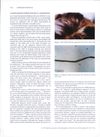
November 1997 in “British Journal of Dermatology”
10 citations
,
November 1997 in “British Journal of Dermatology” A 10-year-old boy had the earliest reported case of hair that became progressively kinkier but eventually returned to normal on its own.
 9 citations
,
February 2018 in “The Journal of Dermatology”
9 citations
,
February 2018 in “The Journal of Dermatology” A new mutation in the LIPH gene was found to cause a rare hair disorder in a Japanese boy.
46 citations
,
November 1998 in “Experimental Cell Research” K15 gene is mainly active in the basal layers of hair follicles and epithelia, aiding early skin cell development.
 April 2023 in “The journal of investigative dermatology/Journal of investigative dermatology”
 Too much IKZF1 and Ikaros protein may cause alopecia areata.
September 2023 in “Journal of the American Academy of Dermatology” BAP1 mutations are rare in pediatric melanocytic tumors and may develop later in life.
7 citations
,
January 1971 in “Archives of Dermatological Research”  6 citations
,
September 2015 in “Journal of Investigative Dermatology”
6 citations
,
September 2015 in “Journal of Investigative Dermatology” Using special RNA to target a mutant gene fixed hair problems in mice.
 19 citations
,
November 1993 in “Mammalian Genome”
19 citations
,
November 1993 in “Mammalian Genome” A gene mutation in mice causes permanent hair loss and skin issues.
January 2014 in “生命科学(ISSN1934-7391)” A certain gene variation can affect protein production and is linked to male pattern baldness.
39 citations
,
December 2012 in “The American Journal of Human Genetics” Mutations in the SNRPE gene cause hereditary hair loss.
14 citations
,
November 1979 in “Pediatric Research” GPC1 is important for blood vessel growth in hair follicles and could help treat hair loss.
2 citations
,
August 2021 in “Animal Cells and Systems” Egfl6 is not needed for zebrafish face development.
 10 citations
,
July 2015 in “Journal of Cosmetic Dermatology”
10 citations
,
July 2015 in “Journal of Cosmetic Dermatology” Higher DKK-1 levels found in hair loss patients; L-ascorbic acid 2-phosphate, L-threonate, and ginsenoside F2 may help promote hair growth.
 January 2024 in “Journal of Hard Tissue Biology”
 A high-fat diet may weaken tongue structure by reducing certain protein genes.
Low IRES/Cap translation is linked to higher stem cell potential.
 April 2017 in “Journal of Investigative Dermatology”
 PRC1 influences skin stem cell development by both turning genes on and off, affecting hair growth and skin cell types.
 354 citations
,
February 2011 in “Genes & Development”
354 citations
,
February 2011 in “Genes & Development” EZH1 and EZH2 are crucial for healthy hair growth and skin repair.
July 2026 in “bioRxiv (Cold Spring Harbor Laboratory)” FAKΔe4 helps cells sense and respond to different stiffness levels in their environment.