 January 2019 in “Przegląd Dermatologiczny”
 An 87-year-old woman was diagnosed with type 3 autoimmune polyendocrine syndrome and had multiple autoimmune issues.
 January 2019 in “Przegląd Dermatologiczny”
 Patients with one autoimmune disease should be checked for other autoimmune disorders.
 January 2019 in “Revista Medicina Cutánea Ibero-Latino-Americana”
 Vitamin D is important for skin health and can help improve various skin conditions.
 April 2018 in “bioRxiv (Cold Spring Harbor Laboratory)”
 A gene variant causes patched hair loss in mice, similar to alopecia areata in humans.
 March 2018 in “Suez Canal University Medical Journal”
 New drugs targeting the JAK-STAT pathway show promise for treating inflammatory skin diseases.
 February 2018 in “Egyptian Journal of Radiation Sciences and Applications”
 Patients with Discoid Lupus Erythematosus have lower vitamin D and antioxidant levels and higher oxidative stress.
 January 2018 in “Elsevier eBooks”
 The document concludes that alopecia has significant social and psychological effects, leading to a market for hair loss treatments.

Botulinum toxin type A significantly reduces scalp psoriasis severity compared to placebo.
 January 2018 in “Springer eBooks”
 Different races and genders have unique skin and hair issues, requiring specialized care and more research for effective treatment.
 June 2017 in “Journal of clinical and investigative dermatology”
 Red blood cell folate levels are reliable indicators of long-term folate status in alopecia areata patients.
SLC24A5 shows a clear selective sweep, but no link to UV radiation intensity.
 March 2017 in “Fundamental & Clinical Pharmacology”
 The model and estimator can predict drug exposure in kidney transplant patients well.
 January 2017 in “Springer eBooks”
 The document explains various skin conditions and their treatments.

Lichen planopilaris and frontal fibrosing alopecia are likely the same disease with different clinical appearances.

The document provides 70 multiple choice questions to improve haematology skills.

The document tests knowledge and decision-making in hematology through multiple-choice questions.
 October 2015 in “Elsevier eBooks”
 Aldesleukin can treat certain cancers and increase HIV patient CD4+ counts but often causes severe side effects.
Some vaccines, like the hepatitis B vaccine, might be linked to the hair loss condition Alopecia Areata, but more research is needed.
Lupus is a complex disease that requires personalized treatment because it varies greatly between individuals.

Chemicals and stem cells combined have advanced regenerative medicine with few safety concerns, focusing on improving techniques and treatment effectiveness.
 December 2013 in “Research Portal (King's College London)”
 Hair loss in Lichen Planopilaris is caused by immune system issues damaging hair follicles and stem cells.
 September 2013 in “Experimental Dermatology”
 The document concluded that stem cells are crucial for skin repair, regeneration, and may help in developing advanced skin substitutes.

Accurate diagnosis of cicatricial alopecias requires thorough scalp examination and multiple biopsy techniques.
 January 2011 in “International Journal of Trichology”
 The conference highlighted new diagnostic tools, the role of genetics in hair loss, and emerging treatments.
 August 2009 in “Expert Review of Dermatology”
 Pregnancy can cause skin changes and conditions that need correct diagnosis and treatment for the health of the mother and baby.
 January 2009 in “Springer eBooks”
 The document concludes that managing skin conditions during pregnancy is important and requires specialized care.
 October 2007 in “Journal of Investigative Dermatology”
 The meeting highlighted the genetic basis of female pattern hair loss and various skin health insights.
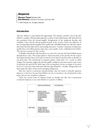 January 2007 in “Elsevier eBooks”
 Alopecia areata is a reversible, autoimmune-related hair loss that can have significant emotional impact and uncertain treatment effectiveness.
Tacrolimus causes fewer acute rejections than cyclosporin A in kidney transplants but doesn't necessarily improve kidney function after one year; cardiovascular risks and side effects vary between the two drugs.
 January 2005 in “Elektronische Hochschulschriften der LMU München (Ludwig-Maximilians-Universität München)”
 Topical immunotherapy with DPCP is most effective for certain alopecia areata types, with success linked to age and disease duration, and influenced by a gene polymorphism.