1 citations
,
September 2023 in “Frontiers in Genetics” A heterozygous mutation in HTRA1 can cause severe CARASIL symptoms.
Mycophenolate mofetil is a good alternative for autoimmune hepatitis patients who can't tolerate azathioprine.
27 citations
,
April 2008 in “Journal of Biological Chemistry” HMG-CoA reductase is crucial for skin wound healing by regulating keratinocyte growth and blood vessel formation.
November 2025 in “Journal of Investigative Dermatology” Alpha-MSH affects mitochondrial function, and MC1R mutations may increase skin aging.
70 citations
,
February 2009 in “Biological Trace Element Research” September 2015 in “American journal of biomedicine” 3 citations
,
November 2005 in “British Journal of Dermatology” A man with alopecia universalis regrew hair temporarily after a bone treatment.
 January 2026 in “Clinical Chemistry and Laboratory Medicine (CCLM)”
 The procedure accurately measures 5-alpha-dihydrotestosterone in blood, useful for standard tests.
IL-26 has antimicrobial and pro-inflammatory effects in the chronic skin condition Hidradenitis Suppurativa.
 2 citations
,
January 2019 in “Annals of Dermatology”
2 citations
,
January 2019 in “Annals of Dermatology” Melandrium firmum extract helps mice grow hair by blocking a hair loss enzyme and changing hair growth genes.
 12 citations
,
May 2003 in “Journal of dermatological science”
12 citations
,
May 2003 in “Journal of dermatological science” Hsc70 protein may influence hair growth by responding to androgens.
 5 citations
,
July 2021 in “Endocrinology, diabetes & metabolism”
5 citations
,
July 2021 in “Endocrinology, diabetes & metabolism” Glioblastoma cells can make androgens, which might help the tumor grow.
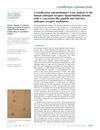 1 citations
,
November 2008 in “Acta crystallographica”
1 citations
,
November 2008 in “Acta crystallographica” Scientists successfully created and analyzed the structure of a part of the human androgen receptor with specific modulators and a peptide to understand how it binds differently in various tissues.
2 citations
,
August 2024 in “Molecular Genetics & Genomic Medicine” Biotin mega-dose therapy led to dramatic improvement in a newborn with a rare metabolic disorder.
 January 2019 in “Springer eBooks”
 Modified HDL can better deliver drugs and genes, potentially improving treatments and reducing side effects.
 19 citations
,
August 1999 in “European journal of endocrinology”
19 citations
,
August 1999 in “European journal of endocrinology” The study concluded that testing hormone levels after stimulation is not reliable for identifying carriers of 21-hydroxylase deficiency; genetic testing is necessary.
 April 2018 in “Journal of Investigative Dermatology” July 2024 in “Journal of Investigative Dermatology”
 Sex and race affect immune responses and treatment outcomes in Hidradenitis suppurativa.
15 citations
,
January 1991 in “Mammalian Genome” 1 citations
,
August 2025 in “Clinica Chimica Acta”  16 citations
,
November 2011 in “PubMed”
16 citations
,
November 2011 in “PubMed” The treatment improved hair growth in people with male pattern baldness.
1 citations
,
February 2024 in “Journal of the European Academy of Dermatology and Venereology” Certain genetic factors may contribute to frontal fibrosing alopecia in Brazil.
 1 citations
,
January 2017 in “Tohoku journal of experimental medicine”
1 citations
,
January 2017 in “Tohoku journal of experimental medicine” A woman's mature cystic teratoma caused her virilization by producing testosterone.
 6 citations
,
September 2012 in “Clinical Interventions in Aging”
6 citations
,
September 2012 in “Clinical Interventions in Aging” Honokiol might help reduce male skin aging by maintaining testosterone levels.
20 citations
,
October 1995 in “Biochimica et Biophysica Acta (BBA) - Gene Structure and Expression” hHb1, hHb3, and hHb6 mRNAs start expressing at the same time in hair follicles.
13 citations
,
October 2021 in “International Journal of Molecular Sciences” The HATMSC1 cell line from fat tissue can produce helpful factors for regenerative and immune therapies.
January 2026 in “Biochemical Pharmacology” 36 citations
,
July 1996 in “The journal of investigative dermatology/Journal of investigative dermatology” Mice with the 'lanceolate hair' mutation have abnormal hair and skin similar to human Netherton's syndrome.
56 citations
,
November 2007 in “Molecular and cellular endocrinology” Two enzymes regulate androgen receptor activity, affecting treatments for androgen insufficiency and benign prostatic hyperplasia.
 17 citations
,
May 2011 in “Gene Therapy”
17 citations
,
May 2011 in “Gene Therapy” Using polyethylenimine-DNA to deliver the hTERT gene can stimulate hair growth and may be useful in treating hair loss, but there could be potential cancer risks.