28 citations
,
December 2007 in “Proceedings of the National Academy of Sciences” Root hair growth happens in bursts, not continuously.
27 citations
,
January 2000 in “Developmental Dynamics” Mutations in the Whn gene affect hair keratin gene expression differently.
26 citations
,
October 2002 in “Journal of Investigative Dermatology” A specific gene mutation causes congenital hair loss.
26 citations
,
October 1998 in “Experimental Dermatology” A keratin hHb6 mutation causes a hair disorder with varying severity, influenced by other factors.
 23 citations
,
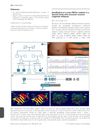
December 2013 in “British Journal of Dermatology”
23 citations
,
December 2013 in “British Journal of Dermatology” A new gene mutation linked to a skin condition was found in a Spanish family.
 20 citations
,
December 2000 in “Fertility and Sterility”
20 citations
,
December 2000 in “Fertility and Sterility” The N363S gene variant does not cause higher adrenal androgen levels in women with polycystic ovary syndrome.
19 citations
,
July 2020 in “EBioMedicine” A gene variant increases the risk of a type of hair loss by affecting hair protein production.
 19 citations
,
November 1993 in “Mammalian Genome”
19 citations
,
November 1993 in “Mammalian Genome” A gene mutation in mice causes permanent hair loss and skin issues.
 14 citations
,
October 2000 in “Genomics”
14 citations
,
October 2000 in “Genomics” Rat dermal papilla cells have unique genes crucial for hair growth.
 13 citations
,
July 2012 in “Pigment Cell & Melanoma Research”
13 citations
,
July 2012 in “Pigment Cell & Melanoma Research” A mutation in the Adam10 gene causes freckle-like spots on Hairless mice.
 10 citations
,
October 2014 in “Journal of Ovarian Research”
10 citations
,
October 2014 in “Journal of Ovarian Research” The IRS-2 Asp/Asp genotype may increase the risk of PCOS in Chinese women, especially if they are not obese.
 7 citations
,
January 2015 in “Case reports in genetics”
7 citations
,
January 2015 in “Case reports in genetics” Using SNP array testing helped quickly find the gene causing Woodhouse-Sakati syndrome in two related individuals.
5 citations
,
October 2022 in “Biology” CAP1 helps Arabidopsis plants grow better under ammonium stress.
5 citations
,
January 2021 in “Indian Journal of Critical Care Medicine” Testing for the NUDT 15 variant is crucial before starting azathioprine, especially in Asians.
5 citations
,
January 2017 in “Arquivos Brasileiros de Oftalmologia” A rare genetic disorder causes sparse hair and vision loss due to a CDH3 gene mutation.
5 citations
,
February 2005 in “Journal of the American Academy of Dermatology” Focal palmoplantar callosities may help diagnose non-Herlitz junctional epidermolysis bullosa.
 3 citations
,
June 2017 in “Methods”
3 citations
,
June 2017 in “Methods” Researchers created a model to understand heart aging, highlighting the role of microRNAs and identifying key genes and pathways involved.
3 citations
,
May 2002 in “PubMed” The document concludes that treatment for excessive hair growth depends on the cause, with options including hair removal methods and medications like anti-androgens or insulin-sensitizing drugs.
 2 citations
,
October 1990 in “The Lancet”
2 citations
,
October 1990 in “The Lancet” Some people have a genetic variation that makes them less effective at breaking down drugs.
 1 citations
,
June 2025 in “Journal of Allergy and Clinical Immunology Global”
1 citations
,
June 2025 in “Journal of Allergy and Clinical Immunology Global” A young boy with Netherton syndrome improved significantly using IVIG, dupilumab, and dietary changes.
1 citations
,
October 2024 in “Canine Medicine and Genetics” The MLPH gene is not linked to seasonal hair loss in Rhodesian Ridgeback dogs.
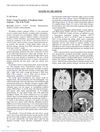 1 citations
,
August 2021 in “Canadian journal of neurological sciences”
1 citations
,
August 2021 in “Canadian journal of neurological sciences” Woodhouse-Sakati syndrome can cause writer's cramp and other varied symptoms, highlighting the importance of genetic testing for diagnosis.
1 citations
,
December 2020 in “International journal of molecular sciences” External factors can cause skin cancer cells that usually don't spread to grow and form tumors in mice.
 1 citations
,
December 2016
1 citations
,
December 2016 Researchers created a model to understand heart aging, highlighting key genes and pathways, and suggesting miR-208a as a potential heart attack biomarker.
1 citations
,
May 2011 in “DOAJ (DOAJ: Directory of Open Access Journals)” The study found genetic diversity in coat color dilution among Czech pointers in Slovakia.
1 citations
,
May 2007 in “PubMed” Early diagnosis and treatment of haemochromatosis are crucial for reversing organ damage and improving fertility.
A rare genetic mutation causes Woodhouse-Sakati syndrome symptoms.

A new AIRE gene mutation causes rare autoimmune symptoms in a Lebanese boy.
October 2025 in “OPAL (Open@LaTrobe) (La Trobe University)” Early genetic testing and zinc therapy are crucial for managing acrodermatitis enteropathica effectively.
October 2025 in “OPAL (Open@LaTrobe) (La Trobe University)” Early genetic testing and zinc therapy are crucial for managing acrodermatitis enteropathica in infants.